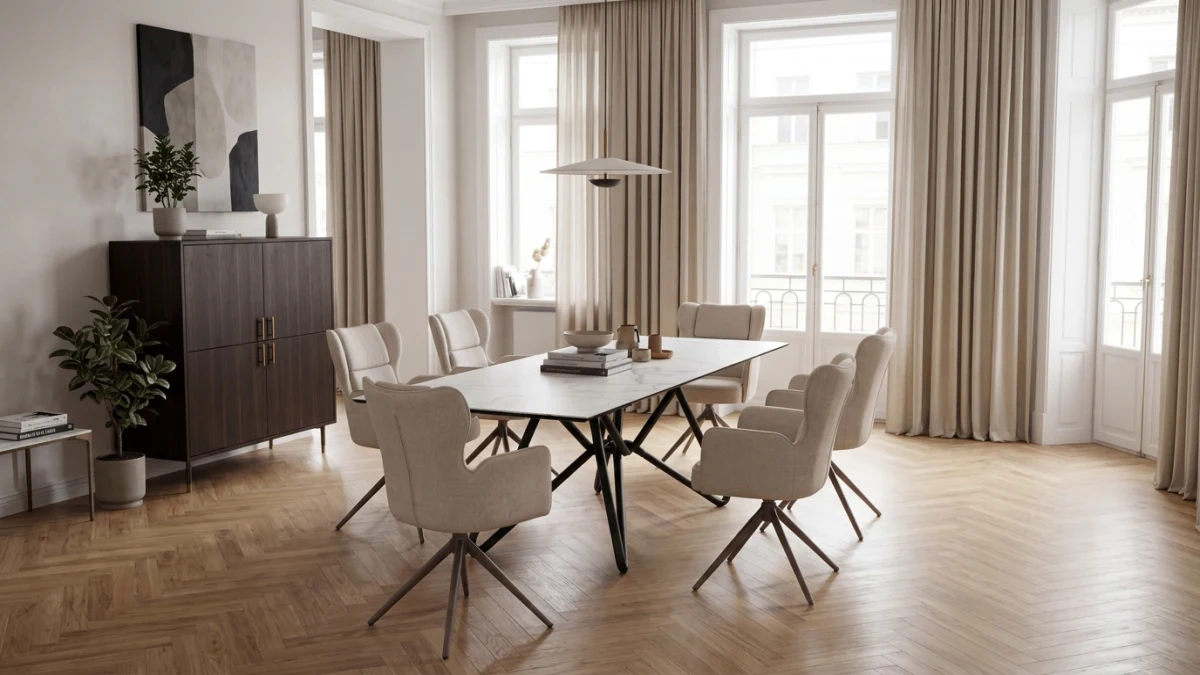
Sintered Stone vs Ceramic vs HPL Tabletop: A Sourcing Guide for European Furniture Buyers
Choosing between sintered stone, ceramic, and high-pressure laminate (HPL) tabletops depends directly on your commercial target market, retail margin requirements, and supply chain logistics models. Sintered stone provides premium natural mineral aesthetics, extreme scratch resistance, and direct heat immunity for mid-to-high-end collections; ceramic delivers hard-wearing, non-porous performance at competitive commercial volumes; and HPL offers impact-resistant, lightweight structural resilience with minimal transit breakage risks for high-turnover hospitality, commercial dining, and flat-pack e-commerce programs.
What Are the Core Structural and Manufacturing Differences Between Sintered Stone, Ceramic, and HPL?
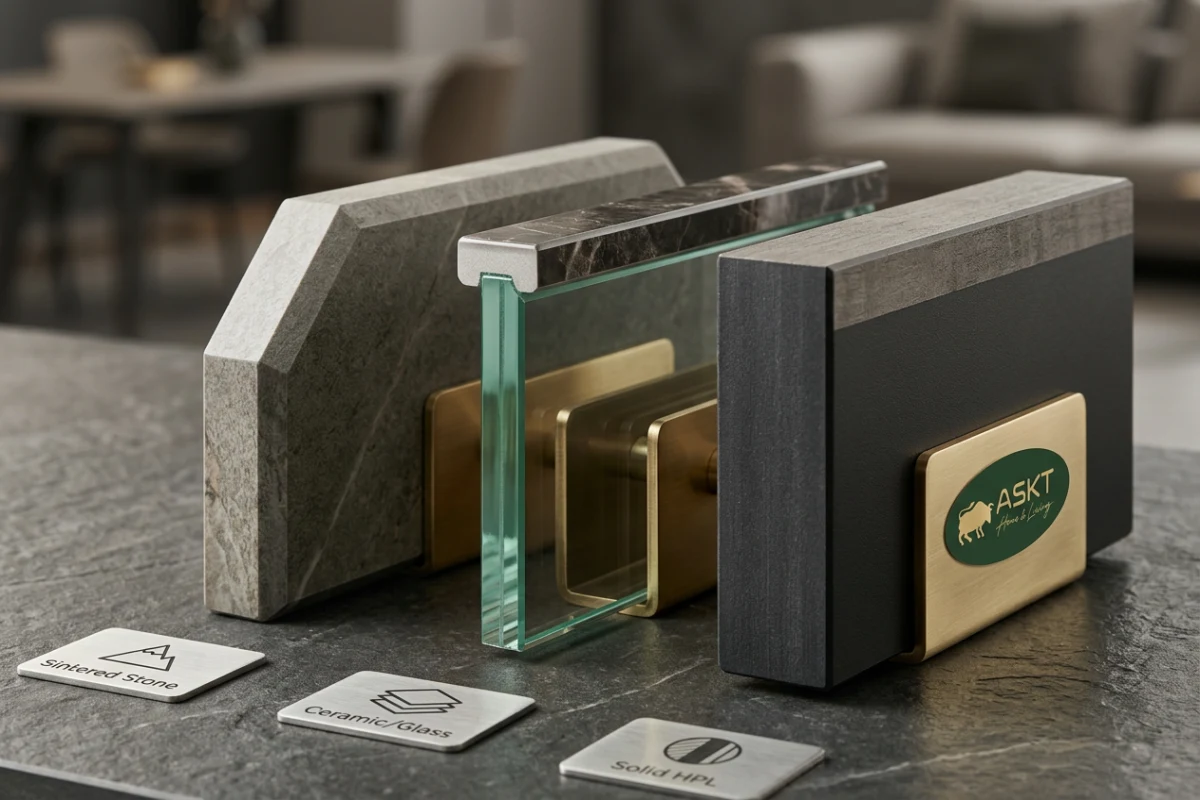
To make informed procurement decisions, commercial buyers must first understand the structural engineering, raw materials, and processing principles behind each material. While ceramic and sintered stone are frequently grouped together due to their mineral nature, their density, flexural strength, and slab constructions differ substantially. In contrast, high-pressure laminate (HPL) is an engineered resin-composite surface designed for structural stability and impact resistance.
1. Sintered Stone Tabletops
Sintered stone is produced from pure natural mineral clays, feldspar, and mineral pigments. These raw minerals undergo ultra-high mechanical compression followed by kiln firing at temperatures well above standard industrial ceramics. This intense process mimics natural metamorphic rock formation over thousands of years, resulting in a completely non-porous, monolithic mineral slab. Sintered stone features consistent body density, allowing manufacturers to create continuous marble veining, natural slate textures, or refined matte architectural finishes without requiring an underlying glass substrate.
2. Ceramic Furniture Tabletops
Ceramic tops used in dining furniture are formulated from refined clays and mineral glazes fired in standard kiln cycles. While ceramic surfaces are non-porous and highly scratch-resistant, standalone thin ceramic slabs can lack the flexural elasticity needed to span long dining tables independently. Consequently, dining table manufacturers frequently bond the glazed ceramic sheet to a tempered safety glass substrate using structural adhesives. This composite structure provides tensile support while controlling raw material costs.
3. High-Pressure Laminate (HPL) Tabletops
High-pressure laminate is a thermosetting composite material constructed from multiple layers of kraft paper impregnated with synthetic resins, bonded under simultaneous heat and heavy mechanical pressure. The top layer features a printed decorative pattern sealed beneath a clear melamine wear layer. In furniture manufacturing, HPL is either supplied as a thin decorative laminate bonded onto an engineered wood substrate (such as MDF or high-density particleboard with matching edge banding) or manufactured as self-supporting compact laminate with a dense, solid core.
| Material Dimension | Sintered Stone Slab | Ceramic (Glass-Backed Composite) | High-Pressure Laminate (HPL / Compact) |
|---|---|---|---|
| Core Material Base | 100% Compressed Mineral Aggregate | Glazed Refined Clay + Tempered Glass | Resin-Impregnated Kraft Layers + Melamine |
| Structural Type | Monolithic Solid Slab | Laminated Dual-Layer Composite | Solid Compact Core or Laminated Board |
| Surface Porosity | Virtually Non-Porous | Non-Porous Glaze Layer | Sealed, Non-Porous Surface Layer |
| Relative Weight | High Mass per Square Metre | High Mass per Square Metre | Medium to Light Mass per Square Metre |
| Edge Profiles | Chamfered, Bevelled, Straight Polished | Polished Glass Edge or Metal Capping Frame | Chamfered Solid Core or Edge Banding |
| Flexural Resilience | Rigid Structural Mass | Rigid Composite Mass | Flexible, High Impact Elasticity |
How Do Durability, Scratch Resistance, and Heat Performance Compare in High-Frequency Commercial Use?
When specifying commercial dining table top materials for hotels, restaurants, corporate cafeterias, or residential furniture catalogues, durability directly dictates customer return rates and after-sales warranty claims. Each tabletop material reacts differently to daily physical wear, heat exposure, impact, and chemical cleaning agents.
Resistance to Scratches, Cutlery Friction, and Surface Abrasion
- Sintered Stone: Sintered stone provides exceptional mineral hardness. Daily friction from dinnerware, metallic cutlery, sharp serving tools, and sliding glassware leaves no visible scratches or dull marks. In modern residential and contract dining, users can cut directly on the stone surface without damaging the slab.
- Ceramic: High-grade glazed ceramic surfaces provide strong scratch resistance against everyday tableware. However, lower-grade or soft-glazed ceramics may show minor metal transfer marks when dragged with heavy stainless steel utensils over prolonged commercial cycles.
- High-Pressure Laminate: HPL features an abrasion-resistant protective melamine surface that easily handles normal dining activity, laptop sliding, and dishware movement. Nevertheless, sliding heavy, sharp-edged metallic items or cutting directly with serrated blades can permanently scratch the decorative laminate layer.
Heat Tolerance and Thermal Shock Resistance
- Sintered Stone: Due to its mineral composition and ultra-high-temperature firing, sintered stone is completely immune to direct heat. Boiling cookware, hot serving platters, and heated chafing dishes can be placed directly on the tabletop without causing scorching, surface discoloration, or internal thermal fracturing.
- Ceramic (Glass-Backed): The top ceramic surface itself is heatproof. However, commercial buyers must consider the underlying adhesive and tempered glass backing. Rapid, concentrated thermal shock on a small surface zone can cause uneven thermal expansion between the ceramic layer, adhesive, and glass substrate.
- High-Pressure Laminate: HPL handles warm plates, hot coffee cups, and standard food service temperatures without deformation. However, hot pans, sizzling skillets, or boiling containers must not be placed directly on HPL without protective trivets, as excessive heat can scorch, blister, or delaminate the melamine resin layer.
Impact Resistance and Edge Behaviour
- Sintered Stone and Ceramic: Both materials are rigid mineral surfaces. While they withstand heavy vertical loads and even distribution of weight, their perimeter edges can be susceptible to chipping if struck directly with heavy, hard objects at high velocity. Manufacturers resolve this by applying precise chamfered or bevelled edge profiles and mounting the slabs onto robust sub-frame supports.
- High-Pressure Laminate: HPL excels in impact absorption. Its fibrous composite structure absorbs mechanical impacts without chipping, cracking, or shattering. Compact laminate edges withstand knocks from dining chairs and service carts, making it an exceptionally durable choice for high-traffic environments.
How Do Sintered Stone vs Ceramic vs HPL Tabletop Aesthetics Align with European Dining Trends?
European dining furniture markets, particularly Germany, the Netherlands, the UK, Switzerland, Poland, and Ireland, show clear structural shifts toward architectural minimalism, tactile natural textures, and low-maintenance indoor living. Selecting the right tabletop material enables furniture importers and retail buyers to position their collections precisely against these market trends.
Contemporary Sintered Stone Collections
Sintered stone represents the benchmark for modern luxury and natural mineral authenticity in European retail showrooms. Advanced surface printing and continuous through-body sintering enable manufacturers to replicate the intricate veining, soft tactile textures, and refined matte finishes of Italian Calacatta, Carrara, Nero Marquina, and travertine. European homeowners and contract designers appreciate that sintered stone delivers the visual prestige of natural stone without its susceptibility to acid etching, wine staining, and oil absorption. Sintered stone pairs naturally with sculptural powder-coated metal legs, KD frames, and modern upholstered dining chairs.
Architectural Ceramic Dining Collections
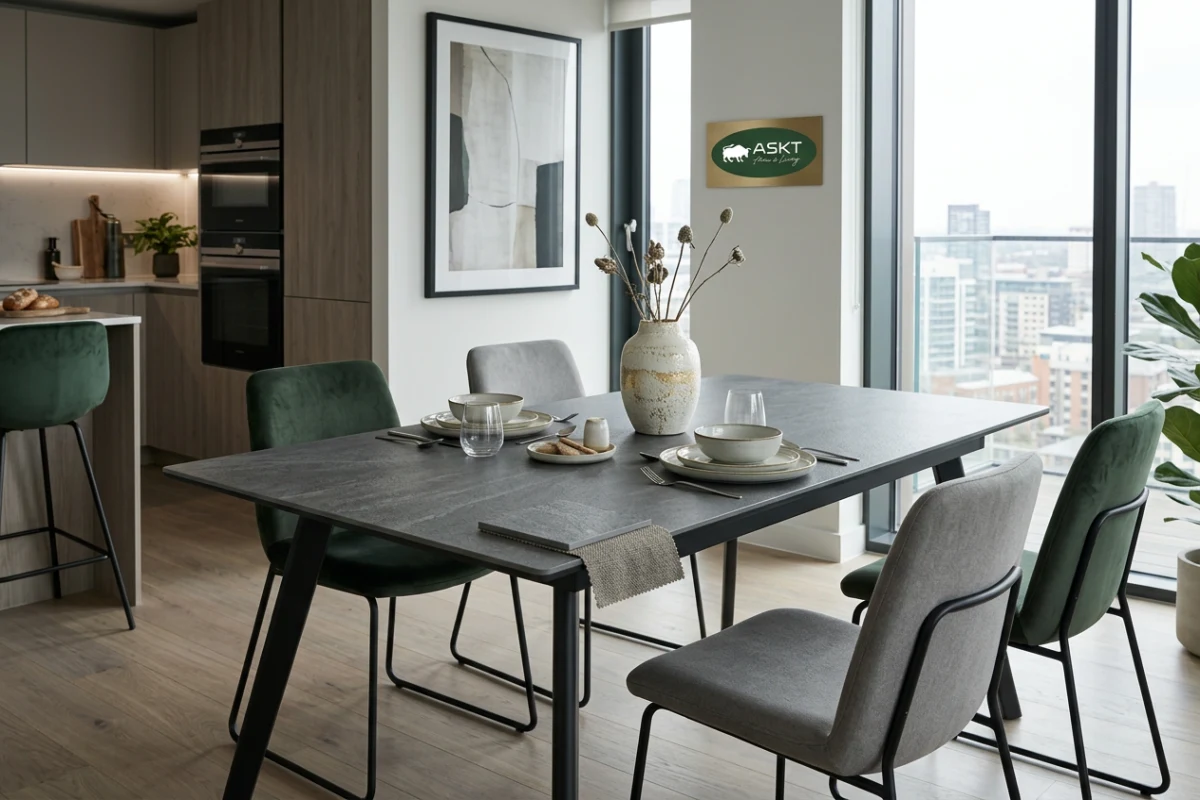
In modern European retail assortments, ceramic dining tables provide a sleek, contemporary, and urban aesthetic. Popular finishes include industrial concrete tones, slate greys, anthracite textures, and understated mineral patterns. Because ceramic is frequently bonded over tempered glass, the edge profile presents a slim, dual-layer silhouette that complements minimalist metal frames and extendable table mechanisms.
Versatile High-Pressure Laminate (HPL) Programs
High-pressure laminate offers tremendous decorative diversity for Scandinavian modern, industrial, and contract hospitality settings. Melamine decors accurately recreate natural oak veneer grains, walnut tones, industrial brushed metals, and ultra-matte anti-fingerprint monochrome solids. Compact HPL slabs with solid black or colour-matched cores provide razor-thin, minimalist table profiles that integrate seamlessly into modern cafes, co-working spaces, and outdoor-to-indoor dining transitions.
What Are the Procurement Cost and Margin Implications for Furniture Retailers and Wholesalers?
Managing a profitable furniture assortment requires balancing unit production costs (FOB China), container packing efficiency, perceived retail value, and warranty allocations. Each material serves a distinct tier in a commercial product portfolio.
Sintered Stone: Premium Retail Positioning and High Margin Potential
When developing a sintered stone dining table wholesale program, unit procurement costs are higher due to raw slab processing, diamond-tool waterjet cutting, and precision edge bevelling. However, the perceived consumer value of sintered stone is substantially higher. Retailers across DACH and UK markets position sintered stone dining tables as accessible luxury centerpieces, capturing healthy commercial retail margins that exceed standard wooden or tempered glass tables.
Ceramic: Mid-Tier Volume Campaigns and Balanced Price Points
Ceramic tables bonded with glass substrates occupy the high-volume middle market. They provide an attractive upgrade path for consumers moving away from basic glass tables, giving retailers a compelling marketing story around stain and scratch resistance. Production processes for composite ceramic-glass tops are highly standardized, making ceramic an ideal choice for high-volume promotional furniture campaigns.
HPL: Low Breakage Risk and Cost-Effective Contract Scaling
When evaluating HPL table tops sourcing China, buyers benefit from predictable raw material costs, rapid manufacturing cycles, and competitive pricing. Because HPL carries minimal transit breakage risks, wholesalers and contract suppliers can price projects aggressively while maintaining dependable profit margins. In high-density commercial fit-outs such as hotel breakfast rooms, university dining halls, and fast-casual restaurant chains, HPL represents the most cost-effective solution per seat.
How Do Packaging, Transit Safety, and Container Optimization Differ Across These Tabletop Materials?
For international furniture importers, logistics management and packaging durability represent critical cost drivers. A minor packaging failure on a rigid mineral top can turn a profitable container import into an expensive after-sales issue. Sintered stone, ceramic, and HPL require completely different packaging and logistics handling protocols.
Sintered Stone Packaging and Logistics Protection
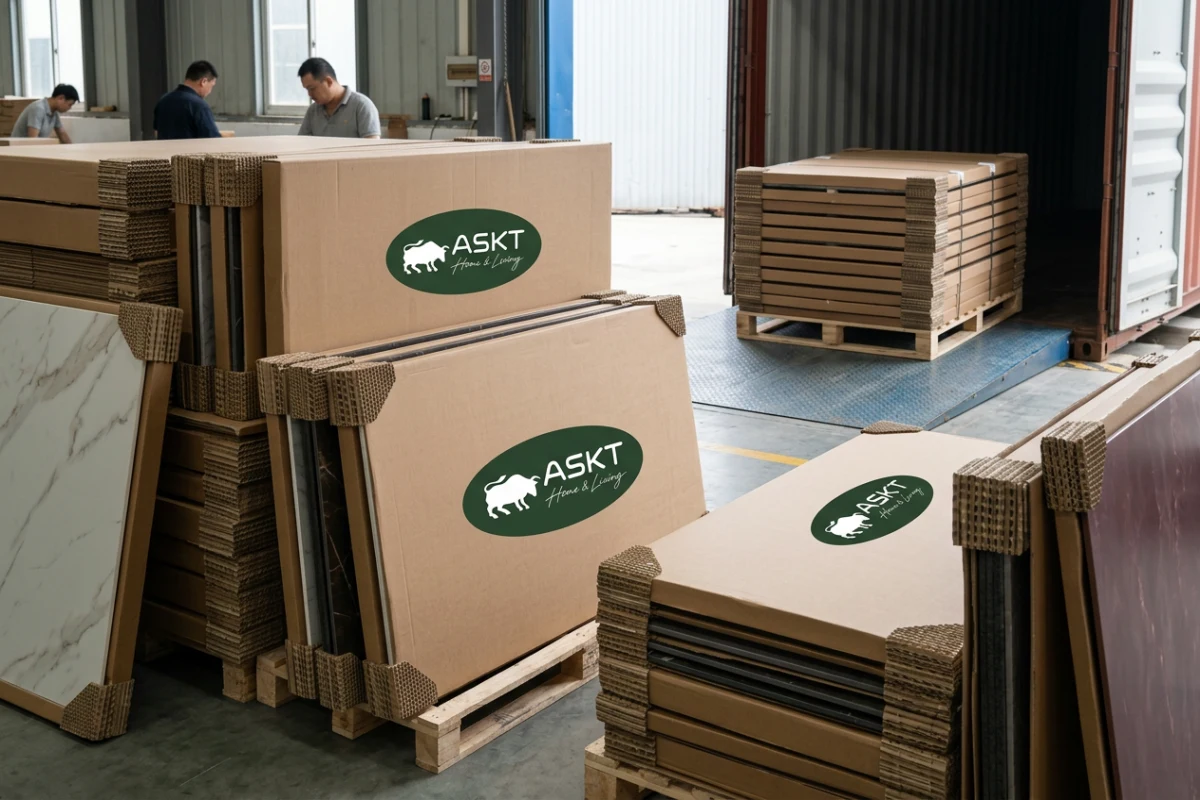
- Packaging Engineering: Sintered stone slabs are heavy and rigid. To prevent perimeter chipping and flexural cracking during long-haul ocean freight and domestic courier distribution, tops must be packed in heavy-duty corrugated export cartons reinforced with high-density honeycomb paper boards and heavy-duty plastic or paper corner protectors.
- Sub-Frame Support: Slabs spanning longer dimensions (such as 180 cm to 240 cm) require integrated structural crossbars or timber reinforcement support boards within their Knock-Down (KD) frames to prevent flex fatigue during transit.
- Container Optimization: Sintered stone tops should be packed flat, palletized where feasible, and placed on the container floor. Lighter dining chairs or boxed metal leg components can then be stacked above them to maximize container volume without placing crushing loads on the tabletops.
Ceramic Composite Packaging Considerations
- Edge Cushioning: Although the tempered glass backing reinforces the ceramic sheet, exposed perimeter edges remain vulnerable to point impact. Packaging requires rigid corner caps, full-perimeter expanded foam buffers, and reinforced master cartons.
- Handling Protocols: Pallets and crates containing ceramic tables must be clearly marked with directional handling labels to prevent rough handling during port transfers and distribution center unloading.
HPL Packaging and Drop-Ship Resilience
- Minimal Protective Bulk: Because compact laminate and HPL boards possess high impact elasticity, they do not require thick protective foam cushioning. This substantially reduces the outer carton volume, allowing importers to load significantly more units per 40ft High Cube container.
- E-Commerce Parcel Shipping: For direct-to-consumer e-commerce brands utilizing parcel delivery networks, HPL tabletops easily pass standard transit drop tests with simple corner protection, virtually eliminating transit-related damage returns.
How Should European Furniture Importers and Wholesalers Choose the Right Tabletop Material?
Selecting the right tabletop material requires evaluating your primary sales channel, customer price expectations, operational logistics capabilities, and product development strategy. The following sourcing decision framework maps each material to specific commercial scenarios.
Sourcing Framework: Sintered Stone vs Ceramic vs HPL Tabletop
Sourcing Selection Guide:
- Premium Showrooms & Mid-to-High Retail Assortments --> Select Sintered Stone (Natural luxury marble aesthetics, heat & scratch immunity)
- High-Volume Promotional Campaigns & Mid-Market Chains --> Select Ceramic (Glass-backed composite, modern concrete/stone finishes, balanced FOB)
- Contract Projects, Hospitality Venues & E-Commerce Drop-Shipping --> Select HPL / Compact Laminate (High impact resistance, lightweight, low transit breakage)
When to Specify Sintered Stone
- Your retail brand positions products in the mid-to-premium segment across Germany, the UK, the Netherlands, Switzerland, or Ireland.
- You want to offer an authentic, durable alternative to natural marble, travertine, or solid wood dining tables.
- Your customers prioritize heatproof surfaces, direct scratch resistance, and seamless edge finishes.
- Your distribution infrastructure handles palletized freight, furniture delivery trucks, or two-man white-glove home assembly.
When to Specify Ceramic (Glass-Backed)
- You are sourcing large-volume dining collections for retail furniture chains and buying groups.
- Your customer base desires contemporary stone-effect or industrial concrete aesthetics at an accessible retail price point.
- You are developing extendable dining tables where a rigid, laminated glass-ceramic composite operates smoothly within metal sliding runners.
When to Specify High-Pressure Laminate (HPL)
- You are supplying high-traffic hospitality, education, or office canteen environments requiring impact-resistant, easy-to-sanitize furniture.
- You operate an e-commerce brand relying on flat-pack parcel shipping where drop-test survival and low packaging volume are vital.
- You require lightweight tabletops that lower international ocean freight costs per unit and simplify flat-pack assembly for end customers.
What Quality Control and Supplier Evaluation Factors Matter Most When Sourcing Dining Table Tops?
When evaluating Chinese furniture manufacturing partners for OEM and ODM dining collections, experienced sourcing specialists verify several critical quality control procedures beyond surface appearance.
1. Precision Edge Profiling and Chamfering
For ceramic vs sintered stone furniture, edge finishing directly determines chipping resistance. Ensure your manufacturing partner uses high-precision CNC waterjet cutting and multi-stage edge chamfering equipment. Sharp 90-degree unchamfered edges are fragile; a subtle 1mm to 2mm bevelled or radiused edge significantly increases structural resilience against chair collisions.
2. Structural Sub-Frames and KD Metal Frame Integration
Heavy mineral tabletops cannot simply rest on standard wooden screw points. Professional dining table manufacturers design robust steel or aluminium sub-frames with powder-coated finishes, pre-installed threaded metal inserts, and dampening buffer pads. These ensure that temperature-related expansion and contraction do not stress the tabletop, while maintaining structural rigidity across extendable or knock-down (KD) configurations.
3. Surface Bonding and Delamination Testing
When sourcing glass-backed ceramic or laminated HPL boards, inspect the adhesive bonding system. Factory quality control protocols should include adhesion testing and environmental exposure checks to confirm that moisture, cleaning chemicals, and temperature fluctuations will not cause delamination over years of commercial use.
4. Packaging Verification and Export Container Loading Plans
A reliable furniture supply chain partner must provide transparent packaging drop-test documentation and optimized container loading layouts. Custom honeycomb paper buffers, corner reinforcements, and reduced-plastic packaging solutions protect fragile edges while maximizing container fill rates, directly lowering per-unit landed freight costs.
Frequently Asked Questions (FAQ)
Is sintered stone better than ceramic for dining tables?
Sintered stone offers superior mineral density, uniform body structure, and greater resistance to direct heat and thermal shock compared to standard ceramic. Sintered stone can be fabricated as a standalone solid slab (typically 11mm to 12mm thick), whereas standard ceramic tops for dining tables are usually thinner sheets bonded onto a tempered glass base for tensile support.
Can sintered stone or ceramic tabletops crack or chip easily during daily use?
Under normal dining conditions, both sintered stone and ceramic tabletops will not crack, stain, or scratch. However, because they are rigid mineral materials, a heavy, sharp impact directly against an exposed, unchamfered perimeter edge can cause chipping. Manufacturers prevent edge chipping by applying bevelled chamfers and supporting the slab with robust metal sub-frames.
Why is HPL preferred for high-frequency commercial and hospitality dining?
High-pressure laminate (HPL) combines impact resistance with lightweight structural resilience. It does not chip or shatter when struck by cutlery, tableware, or moving chairs, and its sealed melamine surface resists commercial sanitizers and food spills. Additionally, its lighter weight reduces shipping costs and simplifies flat-pack furniture handling.
How should European importers manage container loading for sintered stone tables?
To eliminate freight damage, sintered stone tabletops should be packed flat in reinforced master cartons with heavy-duty honeycomb corner protectors. Tabletops should be palletized or positioned securely on the container floor, with lighter dining chairs, cushions, or Knock-Down (KD) metal frame components loaded above to distribute container weight evenly.
If you are planning your next dining furniture range and need expert guidance on material selection, frame engineering, and export packaging, find the right material for your next dining table collection with ASKT's manufacturing and sourcing team.