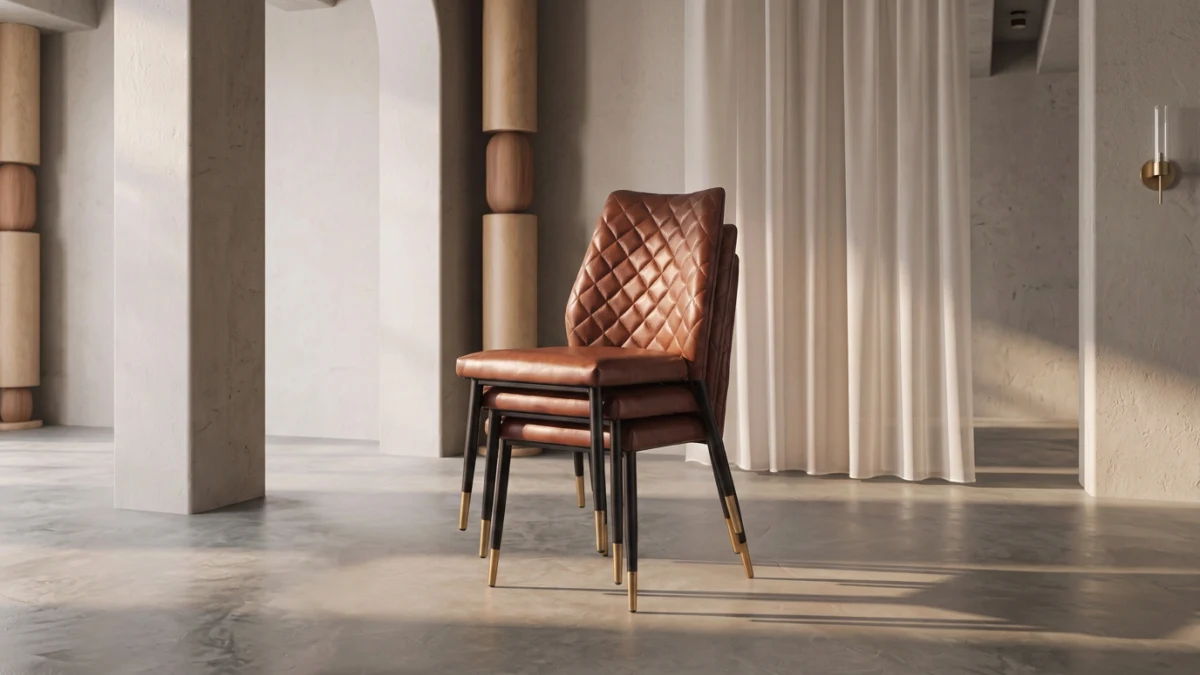
The Ultimate Guide to Sourcing High-End Custom Furniture: From Chinese Factories to Global Buyers
Sourcing high-end custom furniture from Chinese factories requires establishing clear technical specifications, conducting transparent factory evaluations, enforcing structured quality control, and choosing durable materials tailored to European standards. Professional buyers who combine modular knock-down engineering with reliable OEM and ODM manufacturing partnerships can effectively reduce lead times, minimize product damage during ocean transit, and achieve long-term commercial consistency across diverse dining and contract furniture collections.
For furniture wholesalers, retail chains, purchasing managers, and contract buyers across Germany, the Netherlands, the UK, Poland, Switzerland, and Ireland, sourcing furniture from China is a strategic decision that directly influences supply chain security, brand reputation, and operating margins. Navigating international supply chains successfully requires moving beyond basic aesthetic selection to focus on manufacturing transparency, mechanical durability, packaging optimisation, and strict European market compliance.
What Defines High-End Custom Furniture Manufacturing in Chinese Factories?
High-end custom furniture OEM ODM manufacturing in China is defined by precise engineering capabilities, disciplined raw material selection, and rigorous manufacturing controls rather than mass-market, low-cost assembly. Leading manufacturers combine advanced production technology with extensive hand-craftsmanship in upholstery to deliver high-specification dining chairs, dining tables, bar chairs, lounge chairs, dining benches, coffee tables, and office desks.
When evaluating high-end manufacturing operations, professional buyers should look for distinct production capabilities:
- Precision Metal Fabrication and Finishing: High-quality dining chairs and table frames depend on accurate steel cutting, secure robotic or precision manual welding, and uniform powder coating. A stable powder-coated finish provides essential scratch resistance, corrosion protection, and colour uniformity across production runs.
- Advanced Ergonomic Engineering: High-end seating incorporates structural pocket spring seating modules, high-resilience foam layers, and ergonomically contoured shells that maintain supportive comfort over extended daily use.
- Functional Mechanisms: Modern contract and residential spaces increasingly demand functional seating, including smooth 360-degree swivel bases and auto-return swivel mechanisms that reset chair alignment automatically when the user stands up.
- Premium Surface Materials: Upscale dining tables and coffee tables utilize precision-cut sintered stone surfaces that resist heat, scratches, and stains, as well as carefully balanced natural oak veneer layups over stable engineered substrates to prevent warping.
- Customization and Private-Label Flexibility: Established factories provide comprehensive OEM and ODM support, adapting dimensions, upholstery fabrics, frame colours, internal padding, branding, and packaging configurations to meet specific buyer requirements.
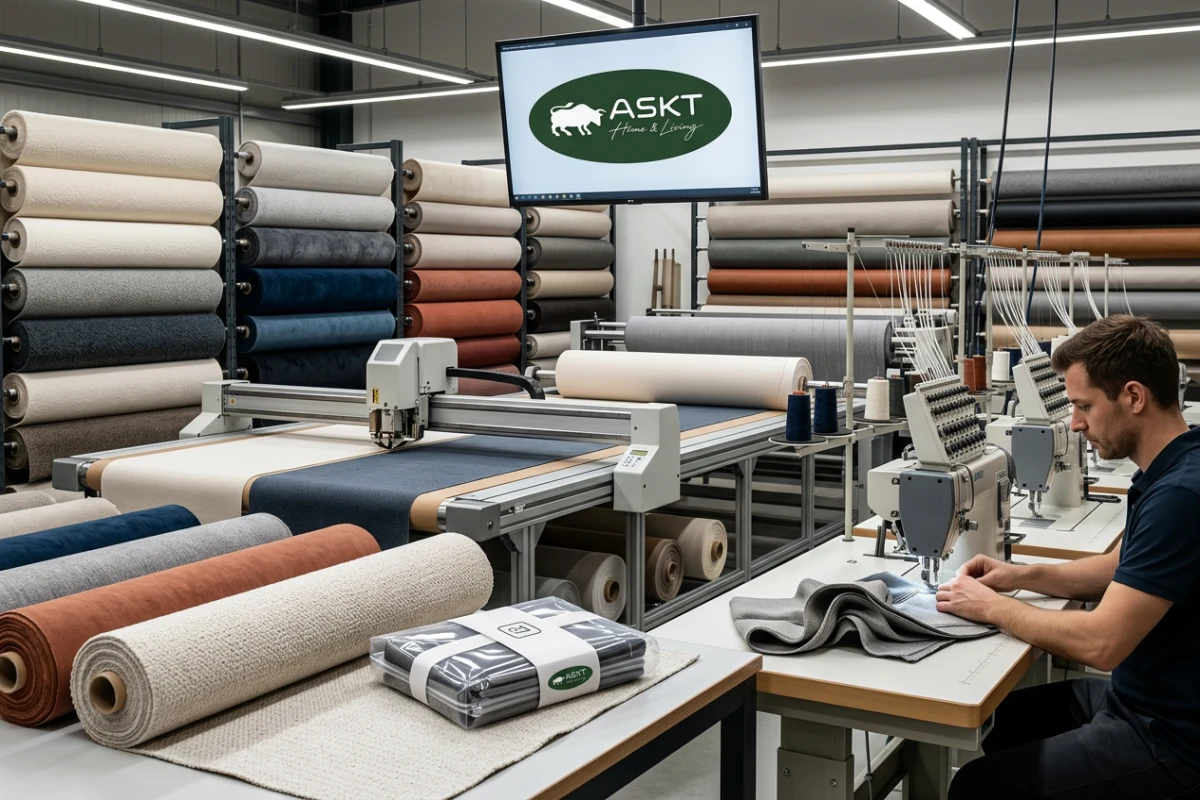
How Should Professional Buyers Evaluate Custom Furniture Manufacturers in China?
Evaluating a factory for sourcing high-end custom furniture from Chinese factories requires a structured assessment of operational transparency, technical competency, and European market experience. Price per unit alone is rarely an accurate indicator of the total landed cost or ongoing commercial risk.
To conduct an effective supplier evaluation, purchasing managers should review candidates across key operational criteria:
| Evaluation Criterion | Basic Low-Tier Workshop | High-End B2B Manufacturing Partner |
|---|---|---|
| Manufacturing Experience | Generalist workshop with shifting product categories | 20+ years of specialized focus on dining and indoor furniture |
| Market Understanding | Generic regional designs with untracked dimensions | Deep understanding of European market preferences, ergonomics, and standards |
| Quality Assurance | Final visual glance before packing | Multi-stage quality control from raw materials to pre-shipment inspections |
| Metal Finishing | Basic spray paint with inconsistent adhesion | Durable electrostatic powder coating with uniform coverage and adhesion |
| Seating Construction | Low-density foam over basic plywood | High-resilience foam and integrated pocket spring seating for long-term comfort |
| Mechanism Integration | Basic fixed bases or unverified swivel hardware | Smooth 360-degree and tested auto-return swivel mechanisms |
| Packaging Design | Standard thin cartons with loose plastic wrapping | Drop-tested packaging, optimized knock-down engineering, and reduced plastic |
| Customization Support | Rigid catalog models with high MOQ requirements | Flexible OEM and ODM capabilities across fabrics, finishes, and private labelling |
Selecting a manufacturer with dedicated focus on dining furniture and proven export capability to European markets reduces the risk of developmental delays, structural defects, and costly product returns.
How Do You Navigate OEM and ODM Product Development and Prototyping?
Successful custom furniture OEM ODM manufacturing follows a structured, milestone-driven product development process. Clear communication at each developmental stage prevents misunderstandings, eliminates dimensional errors, and accelerates time-to-market for new furniture collections.
- Design Brief and Technical Specification Alignment: Sourcing teams provide 2D CAD drawings, 3D models, or aesthetic references outlining overall dimensions, seat height, backrest pitch, armrest clearances, and intended load requirements. The manufacturer reviews these parameters from a production engineering perspective to ensure structural stability and efficient knock-down assembly.
- Material and Hardware Selection: The buyer and factory determine specific structural materials, including steel tube gauge, powder coat colours, wood finishes, oak veneer grain patterns, and sintered stone slab patterns. Upholstery materials are selected based on required colourways, textures, and performance specifications.
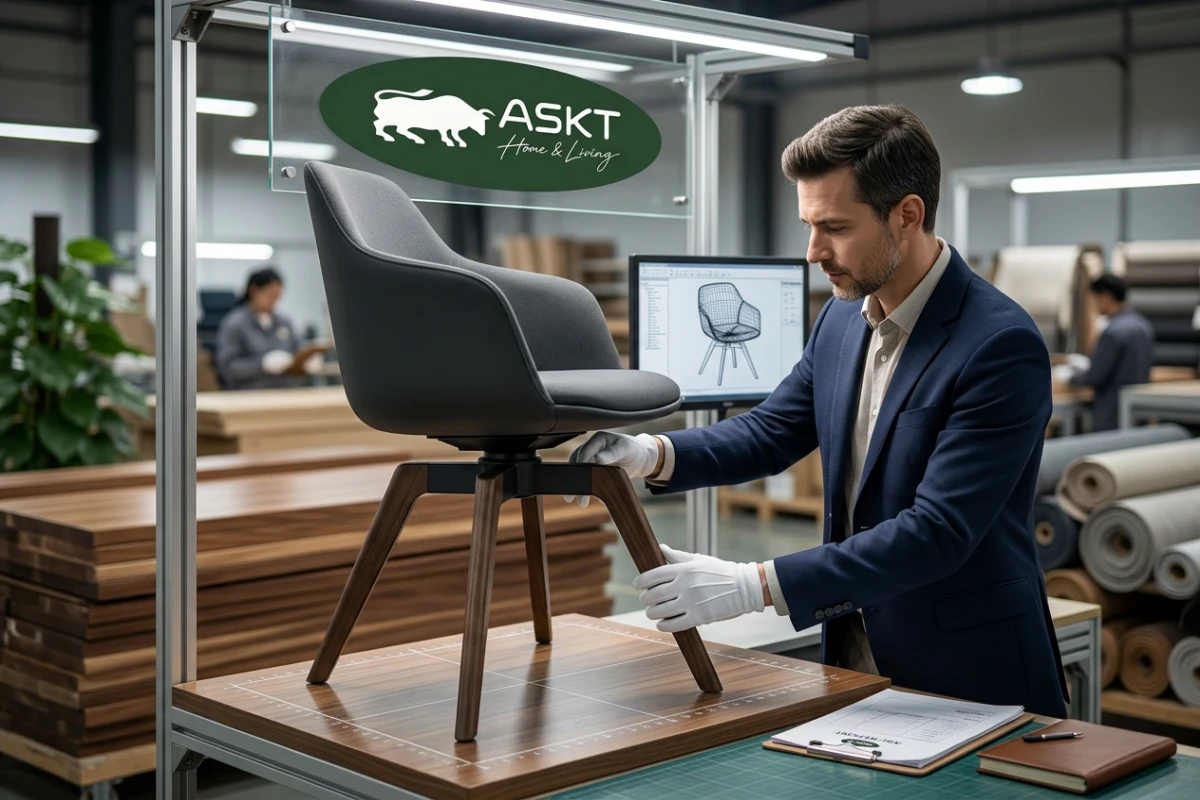
- Prototype Fabrication (Golden Sample): The factory produces a physical golden sample. This prototype allows the purchasing team to evaluate visual proportions, seam stitching tension, upholstery alignment, foam firmness, ergonomic lumbar support, and base stability.
- Structural Evaluation and Adjustment: The sample is assembled and tested to verify knock-down screw alignments, weld integrity, and mechanical smoothness for swivel and auto-return mechanisms. Any required modifications are documented and applied to technical production drawings.
- Packaging Prototype and Drop Testing: Before entering mass manufacturing, the factory creates customized export packaging to verify carton dimensions, edge protection, internal padding, and hardware blister packs.
- Pre-Production Sign-Off: The finalized golden sample serves as the approved physical benchmark against which all subsequent mass production batches are inspected.
What Material and Compliance Standards Apply to European Furniture Imports?
Ensuring B2B European furniture compliance is essential for protecting commercial importers, retail chains, and wholesalers from regulatory penalties, customer complaints, and liability claims. European buyers require furniture that meets defined safety, structural, and chemical standards.
Structural Strength and Durability Standards
Indoor furniture imported into European markets must comply with European Norms (EN) governing mechanical strength, stability, and durability:
- EN Safety and Durability Testing: Dining chairs, bar chairs, and lounge seating must undergo cyclic static load testing, backrest fatigue tests, and base stability assessments to ensure they withstand long-term domestic and contract use without structural failure.
- Table Structural Performance: Dining tables, extension tables, and coffee tables must demonstrate horizontal and vertical load stability, deflection resistance, and robust extension mechanism reliability under repeated cycles.
Upholstery and Textile Performance Testing
Upholstered furniture requires rigorous fabric evaluation to ensure long-term wear resistance and aesthetic appeal in residential and commercial settings:
- Abrasion Resistance: Fabrics must demonstrate high rub count durability under standardized friction testing to prevent thread breakdown, premature thinning, and pile loss.
- Colour Fastness: Upholstery materials must maintain colour integrity when exposed to ambient light, friction, and mild cleaning agents, preventing unsightly fading and dye transfer.
- Performance and Easy-Clean Properties: Modern collections benefit significantly from functional fabrics that feature water-repellent, stain-resistant, easy-clean, and pet-friendly properties. These materials prevent liquid penetration and withstand snagging while maintaining breathability and a pleasant tactile feel.
Surface Durability and Material Quality
- Sintered Stone Slabs: High-end dining and coffee table tops utilize sintered stone, which provides high heat resistance, liquid impermeability, and scratch protection compared to standard natural marble or MDF surfaces.
- Oak Veneer Layups: Real oak veneer surfaces must be properly bonded and sealed over stable core substrates to deliver the natural beauty of real wood grain while preventing cracking or peeling caused by indoor humidity variations.
How Can Buyers Manage MOQs, Batch Consistency, and Sourcing Risk?
Managing minimum order quantities (MOQs) while maintaining strict batch-to-batch consistency is one of the greatest operational challenges in commercial dining furniture procurement. Establishing structured sourcing strategies allows buyers to expand their product variety without overextending inventory capital.
Modular Component Engineering
Adopting a modular engineering approach helps furniture brands balance product diversity with manageable order quantities:
- Shared Frame and Base Systems: By standardizing metal leg frames and swivel mechanisms across several upholstered chair shell shapes, factories can produce frame batches in volume while allowing buyers to vary seat styles and colours.
- Standardized Fastener Patterns: Maintaining uniform mounting hole dimensions across multiple seat shells and table bases simplifies replacement part inventory and speeds up factory assembly.
- Container Optimization: Combining multiple modular models that utilize shared components allows buyers to consolidate full container load (FCL) shipments efficiently across diverse SKUs.
Enforcing Multi-Stage Quality Control
To ensure consistent quality across repeat production runs, buyers should partner with manufacturers that enforce systematic Chinese furniture factory quality control protocols:
- Incoming Quality Control (IQC): Incoming steel tubing, hardware mechanisms, foam blocks, wood panels, oak veneer sheets, sintered stone slabs, and fabric rolls are verified against approved technical specifications before being released to production.
- In-Process Quality Control (IPQC): Quality inspectors verify frame welding dimensions, powder coating thickness, automated fabric cutting accuracy, seam stitching tension, and pocket spring assembly during active manufacturing.
- Final Quality Control (FQC): Fully assembled units are checked for visual symmetry, leg levelness, upholstery alignment, swivel auto-return responsiveness, and surface finish perfection.
- Outgoing Quality Control (OQC): Random packaged units are opened to verify carton labeling, hardware pack completeness, assembly instruction clarity, and inner protective padding before container loading.
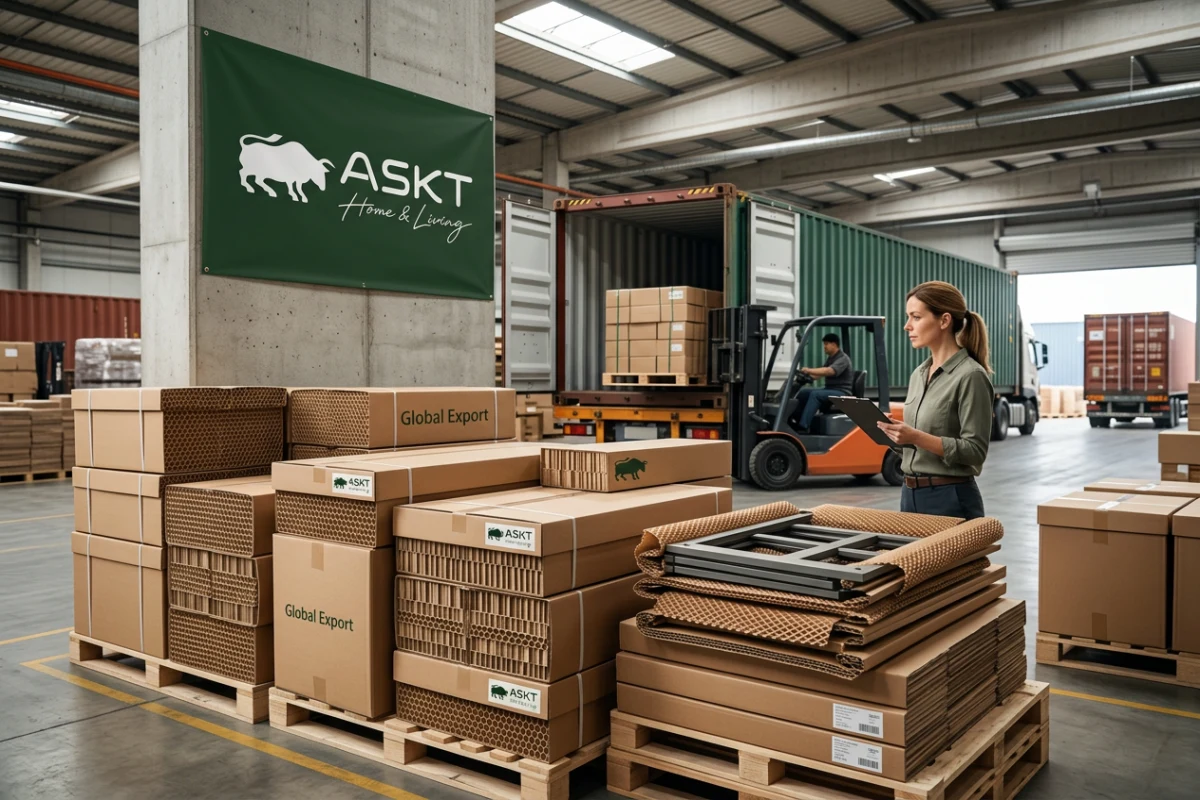
How Should Importers Optimize Export Logistics and Packaging Protection?
International sea freight and domestic distribution represent a substantial portion of the landed cost for imported furniture. Optimizing knock-down (KD) structures and protective packaging engineering directly protects profit margins and minimizes shipping damages.
Key Transit Protection and Logistics Priorities
- Knock-Down (KD) Structural Engineering: Designing dining chairs, lounge chairs, and dining tables with intelligent KD structures significantly reduces overall cubic meter (CBM) volume per unit, allowing more pieces to fit into each 40ft High Cube container.
- Sustainable Protective Packaging: European retailers and consumers increasingly demand environmentally conscious packaging solutions. High-end manufacturers utilize protective packaging with reduced single-use plastic, opting for recyclable honeycomb cardboard, molded paper edge protectors, and corrugated cushioning.
- Corner and Edge Reinforcement: Sintered stone table tops, oak veneer surfaces, and heavy metal components require heavy-duty reinforced carton corner guards to absorb direct impacts during ocean transport and warehouse handling.
- Transit and Drop Testing: Finished packaged cartons should undergo simulated transit and drop testing to confirm that internal cushioning prevents abrasion, bending, or surface chipping during multi-stage handling.
- Container Load Planning: Advanced container loading calculations ensure balanced weight distribution and tight space utilization, preventing freight shifting and top-load carton crushing during ocean transit.
What Are the Key Considerations for Commercial Dining Furniture Procurement?
Procuring furniture for commercial dining environments, hospitality venues, and restaurant projects involves different operational demands than residential furniture sourcing. High-traffic environments require enhanced durability, effortless maintenance, and rapid assembly.
When managing commercial dining furniture procurement projects, buyers should focus on the following key operational factors:
- Heavy-Duty Structural Integrity: Commercial seating requires reinforced metal joints, heavier gauge steel frames, and durable fastening inserts designed to endure continuous daily usage.
- Auto-Return Swivel Functionality: In commercial dining spaces and conference environments, 360-degree swivel mechanisms equipped with auto-return functions ensure that seating automatically aligns neatly when guests leave the table, maintaining an orderly visual appearance across large dining halls.
- High-Resilience and Long-Lasting Cushioning: Commercial seating must utilize high-resilience foam paired with integrated pocket springs to maintain shape retention and comfort throughout years of high-frequency commercial turnover.
- Stain-Resistant and Easy-Clean Upholstery: Restaurant and hotel dining spaces require performance fabrics that repel liquids, resist greasy food stains, and clean easily with mild soap and water without degrading the fabric texture.
- Floor Surface Protection: Heavy-use contract dining chairs must be equipped with durable, non-marking foot glides suited for wood, tile, or polished concrete flooring to eliminate floor scratching and reduce ambient scraping noise.
- Reliable Lead Times and Container Consolidation: Commercial projects operate on strict handover deadlines. Sourcing partners must maintain predictable production timelines and support consolidated container shipments to coordinate with project fit-out schedules.
Frequently Asked Questions About Sourcing Furniture from China
What are the standard lead times for custom OEM and ODM furniture production in China?
Typical lead times for custom furniture OEM and ODM mass production range from 30 to 45 days following final golden sample approval and technical sign-off. Initial prototype development generally requires 14 to 25 days depending on tooling complexity, custom metal frame finishes, and fabric availability.
How do high-end Chinese furniture manufacturers prevent transit damage during sea shipment?
High-end manufacturers prevent transit damage by implementing robust knock-down (KD) engineering, using heavy-duty multi-layer corrugated cartons, reinforcing package corners with heavy edge guards, isolating hardware components in blister packs, and utilizing sustainable protective cushioning such as recyclable honeycomb board.
What upholstery fabric features should commercial furniture buyers prioritize?
Commercial furniture buyers should prioritize fabrics with high abrasion resistance (measured by rub counts), strong colour fastness against light and friction, liquid water repellency, stain resistance, and easy-clean maintenance properties. In environments with pets or high contract use, scratch-resistant and snag-resistant weaves are also critical.
How does pocket spring seating improve dining chair durability compared to standard foam?
Pocket spring seating integrates individually wrapped steel wire coils within high-density foam cushioning. This construction distributes body weight evenly, prevents permanent foam sagging and flattening over time, and delivers superior long-term ergonomic comfort and shape recovery compared to pure foam cushions.
For European furniture wholesalers, retail chains, and commercial buyers seeking a dependable manufacturing partner, ASKT provides transparent quality control, expert OEM and ODM customization, and reliable dining furniture production engineered for long-term commercial success.