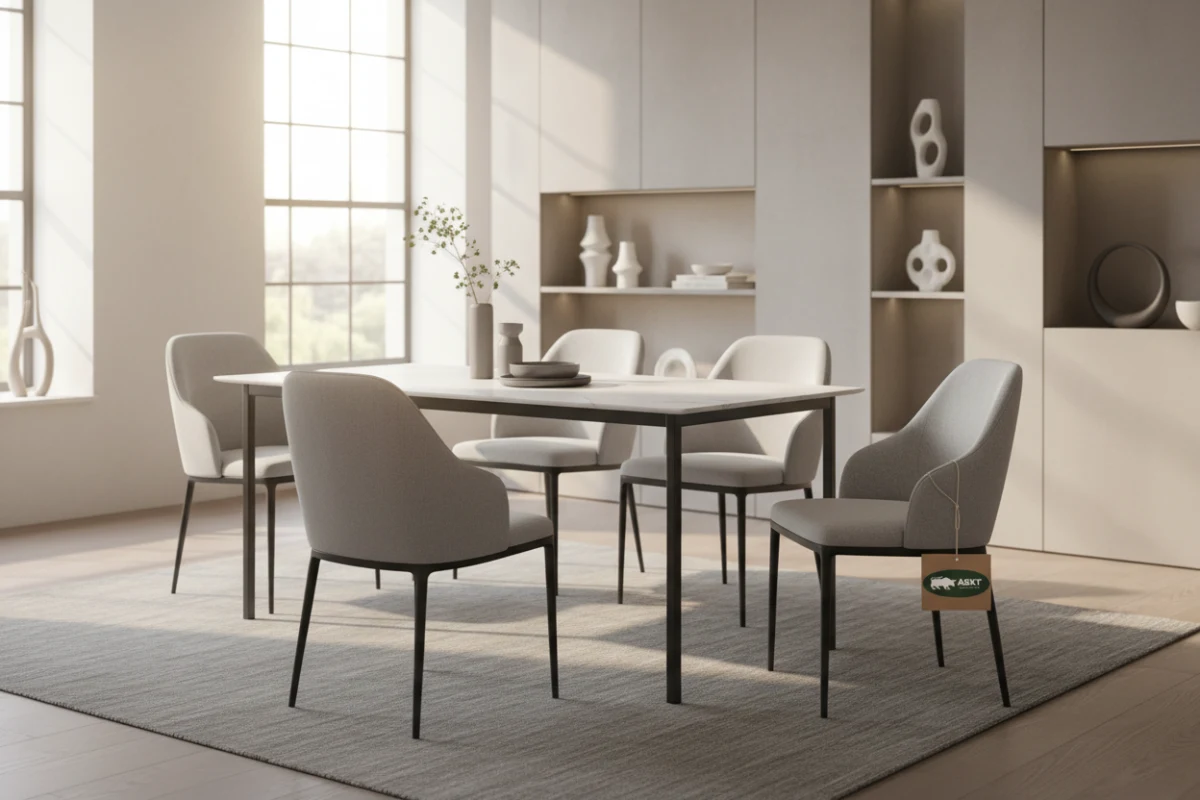
Sourcing Minimalist Designs for a Cohesive Home Aesthetic: A B2B Manufacturing Perspective
For European B2B buyers curating cohesive home aesthetics, the key lies in sourcing from specialized minimalist furniture brands that offer unified material, finish, and structural programs. Selecting a dedicated minimalist dining chair manufacturer that provides modular dining chair systems, matching wood or metal frames, and coordinated fabric options allows importers and retail chains to build cohesive dining furniture collections while optimizing inventory efficiency and reducing transnational supply chain risks.
What makes a minimalist dining chair manufacturer the ideal partner for European retail chains?
Minimalism is one of the most challenging design languages to execute successfully in volume manufacturing. In more ornate, traditional furniture styles, intricate carvings or busy patterns can easily mask minor structural imperfections, slight alignment deviations, or small weld seams. In contrast, minimalist design relies entirely on clean lines, exposed silhouettes, and absolute simplicity. There is literally nowhere to hide a flaw. Every single weld, stitch, and joint is on display, meaning that any minor error becomes a highly visible defect that can ruin the premium aesthetic and lead to costly customer returns.
For large-scale European retail chains operating in competitive markets like Germany, the Netherlands, and the United Kingdom, product consistency is the cornerstone of brand reputation. A retail chain cannot afford to have variations in seat height, frame alignment, or upholstery tension across the same product line. This is why partnering with a specialized minimalist dining chair manufacturer is a critical strategic decision. A dedicated manufacturer understands that achieving this level of perfection requires moving away from manual, artisan-style production processes toward high-precision industrial manufacturing.
By utilizing advanced manufacturing technology—such as computer-controlled cutting systems for upholstery fabric and automated welding systems for metal frames—a professional factory can guarantee that the 10,000th dining chair off the production line is identical to the first. Precision engineering ensures that the metal joints are flawless, the powder coating is perfectly even, and the structural integrity is uncompromised. Furthermore, an experienced manufacturer designs these chairs with a deep understanding of human anatomy. Ergonomic comfort must never be sacrificed for visual simplicity. A properly engineered minimalist chair features precise seat curves and backrest angles that support the body naturally, ensuring that end-consumers enjoy both the visual beauty and the physical comfort of the furniture. This level of manufacturing discipline is what separates standard suppliers from true long-term partners who help buyers scale their businesses with confidence.
How do cohesive dining furniture collections solve the structural and aesthetic challenges of open-plan living?
Modern residential architecture across Europe increasingly favors open-plan layouts. Homes in the UK, Poland, Ireland, and Switzerland frequently feature integrated spaces where the kitchen, dining room, and living area flow into one another without physical barriers. While this creates a bright and spacious living environment, it also presents a significant challenge for interior designers and retail consumers: achieving visual harmony across different functional zones. If a homeowner purchases dining chairs from one source, a dining table from another, and bar stools from a third, the result is often a mismatched space that feels fragmented rather than cohesive.
Even when different suppliers claim to offer "black metal" or "natural oak" finishes, the reality is that finishes vary wildly between factories. One supplier's powder-coated black metal frame might have a subtle glossy sheen, while another's has a completely matte texture. Similarly, the oak veneer used on a dining table top might have a warm, reddish undertone, while the oak veneer on a matching bench has a cool, greyish cast. Under the bright, natural light of an open-plan home, these discrepancies are immediately noticeable.
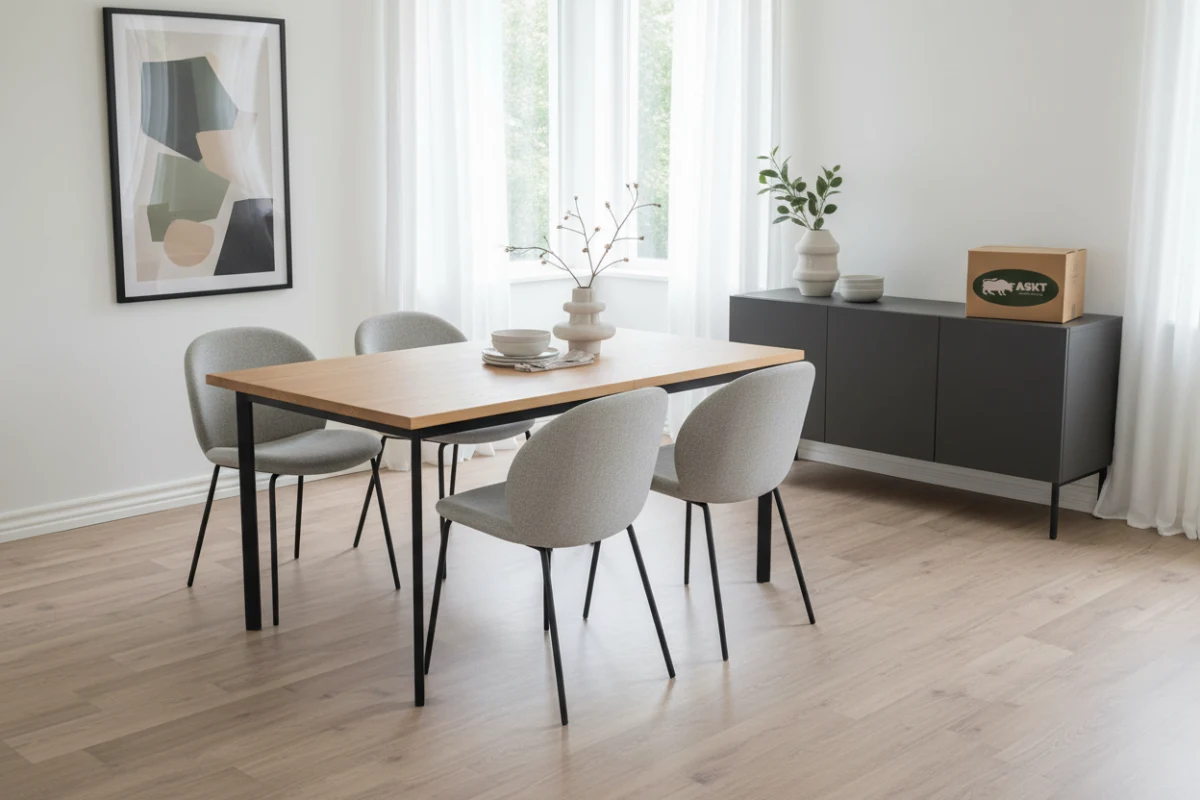
Sourcing cohesive dining furniture collections from a single, integrated manufacturer completely eliminates these aesthetic inconsistencies. A single-source approach ensures that the exact same powder-coating formula, wood veneer treatment, and fabric dye lots are applied across all product categories. For example, a buyer can source an entire collection comprising upholstered dining chairs, matching dining benches, bar chairs, and dining tables under one unified design system. The metal legs of the bar chairs will match the dining table base perfectly, and the upholstery fabric on the dining chairs can be mirrored on the lounge seating. This consistency creates a seamless transition from the kitchen counter to the formal dining area, fulfilling the consumer's desire for a truly harmonious home. For B2B importers and wholesalers, offering these comprehensive, pre-coordinated collections makes the purchasing process incredibly simple for retail clients, ultimately driving higher average order values and stronger customer loyalty.
Can modular dining chair systems optimize inventory management and reduce warehousing costs for B2B importers?
One of the most persistent operational challenges in B2B furniture sourcing Europe is the conflict between consumer demand for product variety and the financial constraints of inventory management. Today’s consumers expect a high degree of personalization; they want to choose from different fabric colors, upholstery textures, and structural base options to suit their personal tastes. However, for a furniture importer or e-commerce retailer, stocking every single possible combination of seat shell, fabric type, and leg design is an inventory nightmare. It leads to massive capital tie-ups, inflated warehousing costs, and a high risk of dead stock if certain configurations do not sell as expected.
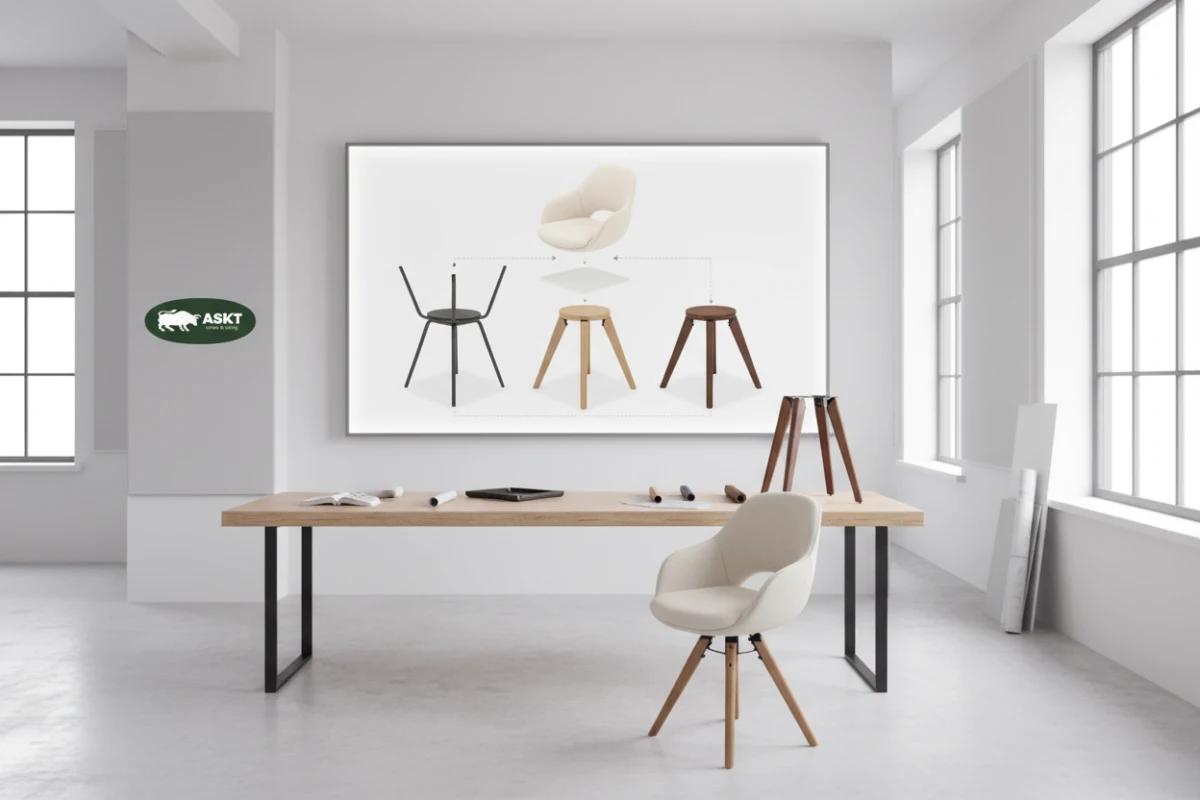
Implementing modular dining chair systems is a powerful way to solve this inventory dilemma. The core philosophy of a modular system is the separation of the seat shell from the supporting base. By designing a standardized mounting interface, a manufacturer can create a highly versatile product matrix where a single seat shell design can be paired with several completely different leg bases. For instance, a basic upholstered seat shell can be quickly attached to a classic four-legged metal frame, a sleek sled base, a wooden leg structure, or a specialized swivel base with an auto-return mechanism.
This modular approach completely transforms logistics and warehousing efficiency for European distributors. Instead of storing 20 completely separate finished chair models, a warehouse can stock a streamlined inventory of core components: a selection of seat shells in the most popular fabric colors and a variety of interchangeable metal and wooden bases. The final assembly can be completed on-demand when a customer order is placed, or the components can be shipped flat-packed directly to the retailer for quick assembly at the point of sale. This significantly reduces the total number of stock-keeping units (SKUs) that need to be managed, dramatically lowers warehouse footprint requirements, and frees up valuable working capital. Furthermore, shipping chairs as separate, flat-packed components allows for much tighter packaging optimization, allowing more units to fit into a single container and reducing transcontinental transport costs per unit.
What material standards and testing protocols protect long-term commercial value in B2B furniture sourcing Europe?
In the European market, durability, safety, and performance are not optional; they are the baseline requirements for commercial success. When sourcing contemporary furniture, professional buyers must look beyond initial visual appeal and conduct a thorough technical evaluation of the materials and structural designs. A high-quality minimalist chair must be built to withstand the physical demands of daily use over many years without losing its structural integrity or aesthetic appeal.
The first critical technical benchmark to verify is compliance with European EN testing standards for strength, durability, and safety. These tests subject the furniture to rigorous mechanical stress cycles that simulate years of intense domestic or commercial contract use. A reliable manufacturer will subject their designs to these tests, proving that the joint connections, frame structures, and backrests can handle heavy loads without bending, cracking, or loosening.
Upholstery selection is another area where technical specifications directly impact commercial value. The fabrics used in minimalist seating must offer exceptional performance characteristics. This includes high abrasion resistance to prevent the fabric from wearing thin or pilling, as well as excellent colour fastness to ensure the upholstery does not fade under direct sunlight. For modern families and hospitality environments, specifying waterproof and easy-clean fabrics, as well as pet-friendly materials that resist scratching and staining, is a major selling point. Additionally, the internal comfort structure is just as important as the external fabric. While standard foam cushioning can lose its shape and sag over time—ruining the crisp silhouette of a minimalist chair—integrating pocket spring seating into the design ensures long-lasting ergonomic support and shape retention. By demanding these high material standards, B2B buyers can significantly reduce customer complaints, minimize warranty claims, and build a reputation for delivering premium, long-lasting products.
How does packaging optimization and container loading efficiency directly affect B2B furniture sourcing Europe?
For European furniture importers, the ultimate success of a sourcing strategy is heavily dependent on landed cost calculations, where international shipping fees and transport logistics play a decisive role. Because furniture is inherently bulky, shipping empty air inside a container can quickly erode profit margins. Therefore, packaging optimization and container loading efficiency are critical areas of focus for any experienced furniture supply chain partner.
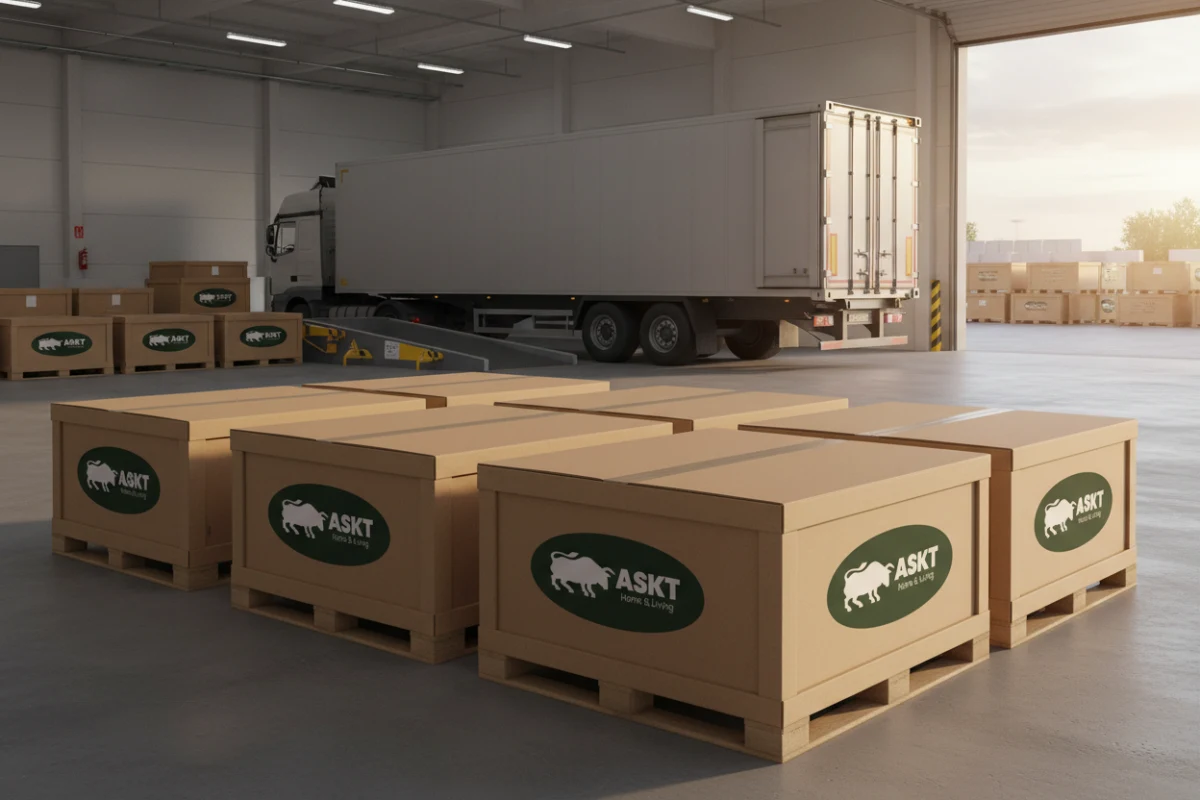
The adoption of Knock-Down (KD) structures is one of the most effective ways to optimize transport logistics. By designing minimalist chairs and tables that can be shipped partially or fully disassembled, manufacturers can dramatically reduce the physical volume of the packaging. A flat-packed KD chair takes up a fraction of the space of a fully assembled unit, allowing buyers to fit significantly more units into a standard shipping container. This directly lowers the ocean freight cost per unit, making the product far more competitive when it arrives in European warehouses. However, engineering a high-quality KD structure is a delicate balance: the connections must be designed so that the end-consumer can easily assemble the furniture with basic tools, yet the assembled piece must remain perfectly rigid and stable over time, without any of the wobbles often associated with cheap flat-pack items.
Beyond volume reduction, the physical protection of the product during its long transit is paramount. Contemporary minimalist pieces often incorporate delicate materials like oak veneer or sintered stone table tops, which are highly vulnerable to chipping or cracking if handled roughly. A professional manufacturer uses advanced packaging designs, utilizing high-density protective edge guards, heavy-duty outer cartons, and strategic internal cushioning to absorb impacts. At the same time, European retailers and consumers are increasingly demanding environmentally responsible business practices. This means suppliers must reduce their reliance on single-use plastics and expanded polystyrene (styrofoam), replacing them with sustainable, recyclable alternatives such as engineered paper honeycomb padding. Optimizing packaging in this way protects the product from costly shipping damage while simultaneously appealing to the growing market of eco-conscious consumers.
What are the best practices for managing OEM and ODM customization in high-end minimalist design?
For B2B buyers looking to establish a unique position in the European market, generic off-the-shelf furniture is rarely sufficient. Developing custom collections through OEM (Original Equipment Manufacturer) and ODM (Original Design Manufacturer) channels is essential for creating a distinct brand identity. However, managing custom product development across borders requires structured processes and clear communication to ensure that the final mass-produced items align perfectly with the buyer's original vision.
The first step in a successful customization project is the creation of an exceptionally detailed product brief. This brief must go beyond simple sketches and specify exact dimensions, frame materials, powder-coating finishes, upholstery fabric parameters, and targeted cost thresholds. A professional manufacturer will use this brief to initiate the sample development phase, utilizing digital modeling and rapid prototyping to bring the design to life. During this phase, it is vital to have a highly transparent feedback loop where product managers can review physical samples, test the ergonomics, and make necessary adjustments before committing to mass production.
Quality control protocols must be clearly defined and agreed upon before the factory begins cutting material for the main order. This includes establishing clear tolerances for color variation in fabrics, wood veneer grains, and metal finishes, as well as conducting initial product testing on the first batch of units. A reliable manufacturing partner will maintain complete transparency throughout the production cycle, providing regular progress updates and conducting rigorous inspections before the container is sealed and shipped. By choosing a manufacturer with extensive experience in OEM and ODM services, B2B buyers can navigate the complexities of custom design development with minimal risk, ensuring a smooth, predictable path from initial concept to retail floor.
If you are evaluating dining chair or dining table suppliers for the European market, ASKT can support you with product development, customization, quality testing, and stable export experience. To begin collaborating on your next minimalist furniture collection, we invite you to Submit Product Brief.