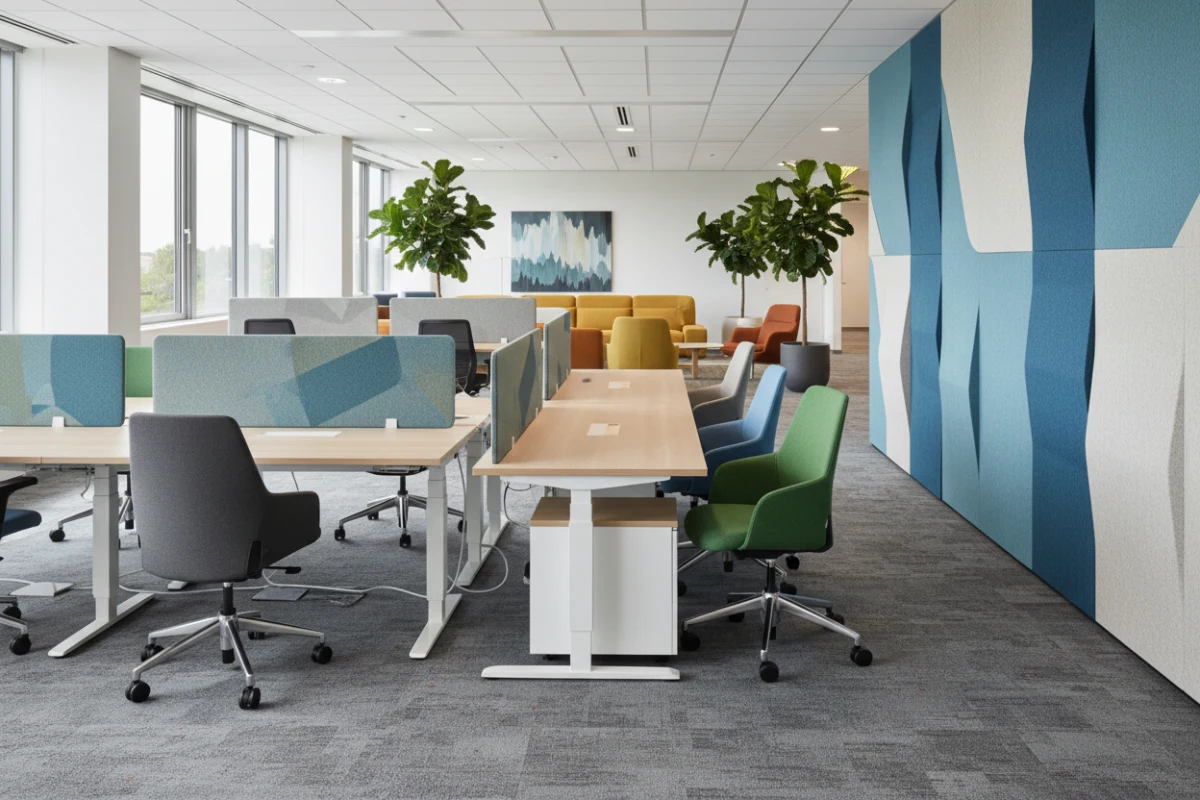
What Project Buyers Must Check When Sourcing Office Furniture from China
When sourcing office and workspace furniture from China, project buyers must systematically verify manufacturer credentials, material compliance (such as BIFMA standards), customization capabilities, and rigorous quality control protocols. A successful procurement process requires evaluating factory audits, validating physical mock-ups, and establishing strict checklists for production, shipping, and on-site installation to mitigate risks and ensure commercial-grade durability.
What should be included in your initial workspace furniture manufacturer China evaluation?
Before signing any contract, buyers must perform due diligence to separate trading companies from actual factories and ensure the manufacturer can handle the volume and complexity of a commercial workspace project.
When evaluating a potential workspace furniture manufacturer China, prioritize the following structural and operational capabilities:
- Manufacturing Capability: Confirm if the factory specializes in office furniture (seating, desks, panel systems) or residential furniture. Commercial-grade production requires different machinery, durability testing, and engineering skills.
- Export and Project Experience: Verify if the supplier has a proven track record of exporting to your target market. Experienced manufacturers understand regional compliance laws, commercial logistics, and customs documentation.
- Customization and R&D Support: Ensure the factory has an in-house design and engineering team capable of translating your design briefs, CAD drawings, and material specifications into production-ready shop drawings.
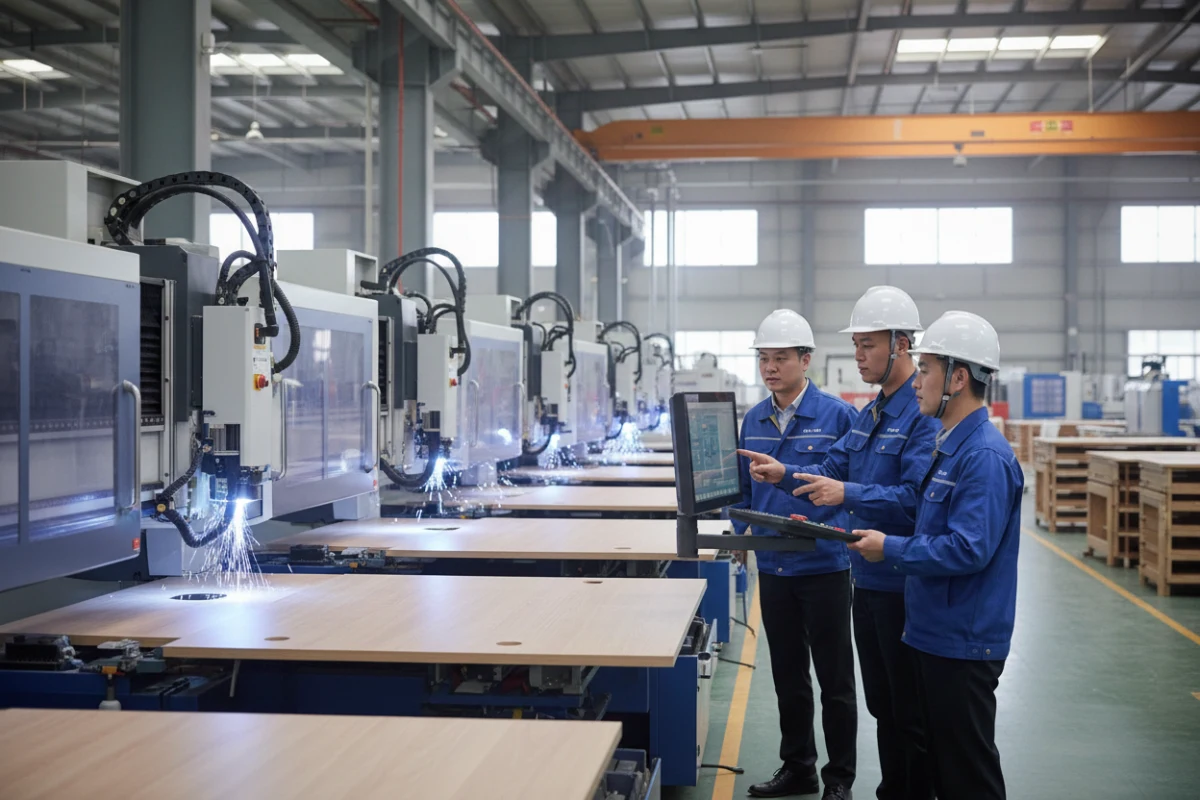 Evaluating a factory's automated machinery is key during a contract furniture factory audit to ensure consistent tolerances.
Which material compliance and safety certifications are non-negotiable?
Commercial environments demand higher safety, ergonomic, and environmental standards than residential spaces. Using non-compliant furniture in a commercial project can lead to legal liabilities, failed building inspections, and premature product failure.
Ensure your sourcing contract specifies compliance with internationally recognized testing standards. Below is a reference table for key certifications when sourcing office furniture from China:
| Certification / Standard | Focus Area | What It Measures | Target Product Categories |
|---|---|---|---|
| BIFMA (ANSI/BIFMA) | Durability, Safety, Structural Integrity | Impact resistance, stability, cycling tests, load capacity | Task chairs, height-adjustable desks, file cabinets |
| EN 1335 / EN 527 | European Standards | Ergonomic dimensions, safety, and structural requirements | Office work chairs, work tables, and desks |
| CARB Phase II / EPA TSCA Title VI | Indoor Air Quality | Formaldehyde gas emissions from composite wood | MDF panels, particleboard desks, veneers |
| OEKO-TEX / CAL 133 | Textile & Fire Safety | Flame retardancy, chemical safety in fabrics and foams | Upholstered lounge seating, acoustic panels |
Specifying BIFMA compliant office furniture in your initial Request for Quotation (RFQ) forces suppliers to quote based on reinforced structures and certified hardware, preventing low-ball bids using substandard components.
How does a contract furniture factory audit prevent costly procurement mistakes?
Relying solely on digital catalogs and online showrooms is a significant risk. Conducting a physical contract furniture factory audit—either in-person or via a trusted third-party inspection agency—is vital to ensuring long-term project success.
A professional factory audit should focus on three critical dimensions:
- Quality Management System (QMS): Verify if the factory is ISO 9001 certified. Inspect their incoming raw material testing area, in-line assembly QC checkpoints, and final pre-shipment random sampling processes.
- Production Machinery and Tooling: Examine the factory floor. CNC cutting machines, automated edge-banding machines (such as German Homag lines), and automated powder-coating lines are indicators of consistent craftsmanship and precise tolerances.
- Social and Ethical Compliance: Ensure the factory meets local environmental and labor standards (e.g., BSCI or Sedex audits). This is increasingly required by corporate clients focused on ESG (Environmental, Social, and Governance) compliance.
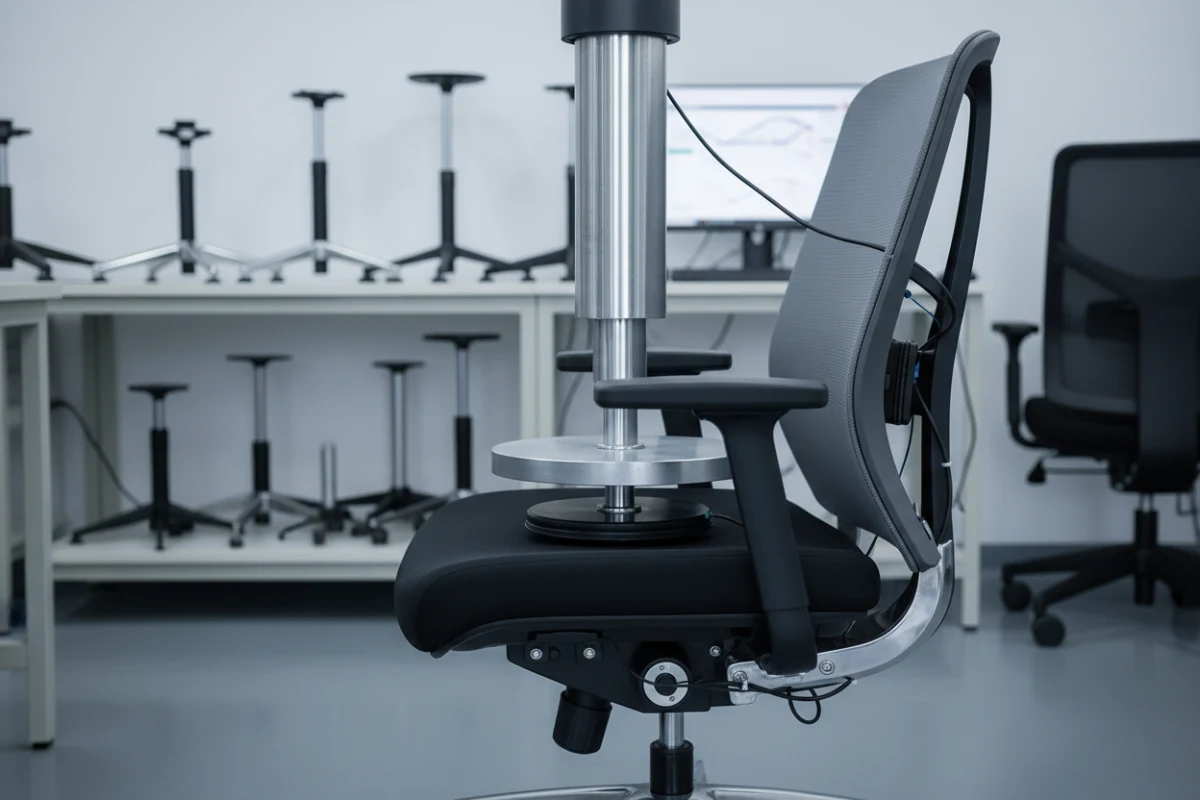 Rigorous laboratory testing ensures that the sourced furniture is BIFMA compliant, offering lasting durability in high-traffic office environments.
Why is the mock-up and sample approval process a critical milestone?
Never proceed to mass production without a physical mock-up approval. The mock-up phase acts as a bridge between CAD concepts and physical reality, allowing you to test assembly, ergonomics, and material finishes.
- Golden Sample Sign-Off: Once the factory produces a flawless sample that meets all specifications, this sample becomes the "Golden Sample." It is signed, sealed, and kept as the benchmark against which the final mass production batch is inspected.
- Color and Finish Matching: Verify veneer grain continuity, powder-coating paint texture, and fabric color consistency under different lighting conditions. Chinese factories should provide physical color chips and swatch cards for sign-off.
- Acoustic and Power Integration Testing: For modern workstations, test the fit of integrated cable trays, pop-up power modules, and the noise-dampening efficacy of acoustic desk dividers.
What is the ultimate office furniture procurement checklist for shipping and installation?
Managing logistics and installation is just as critical as managing production. Damaged goods or missing hardware can derail a commercial fit-out project timeline.
Incorporate this comprehensive office furniture procurement checklist into your shipping and delivery plan:
- Drop-Test Verified Packaging: Ensure all items—especially heavy desktops and fragile glass panels—are packed in multi-layer corrugated cartons with reinforced corner protectors and high-density foam inserts (ISTA-certified packaging is highly recommended).
- Detailed Assembly Instructions & Hardware Allocation: Demand clear, English-language step-by-step assembly manuals. Hardware kits should be organized in labeled, separate blister packs with extra spare parts (screws, dowels, cams) included in every box.
- Knock-Down (KD) vs. Pre-Assembled Planning: Calculate the trade-offs between shipping volume and on-site assembly costs. KD furniture saves container space (reducing shipping costs) but increases on-site labor time, whereas pre-assembled units allow rapid installation but cost more to transport.
- On-site Acceptance Inspection: Create an inspection protocol for the arrival of goods. Check for structural alignment, smooth operation of gas lifts and drawer slides, and complete lack of cosmetic blemishes under final architectural lighting.
 Proper drop-test verified packaging and organized container loading are critical steps on the office furniture procurement checklist to prevent transit damage.
Ready to elevate your commercial interior project with reliable, certified furniture? Submit Workspace Furniture Brief to connect with our procurement experts and secure the highest quality manufacturing solutions for your project.