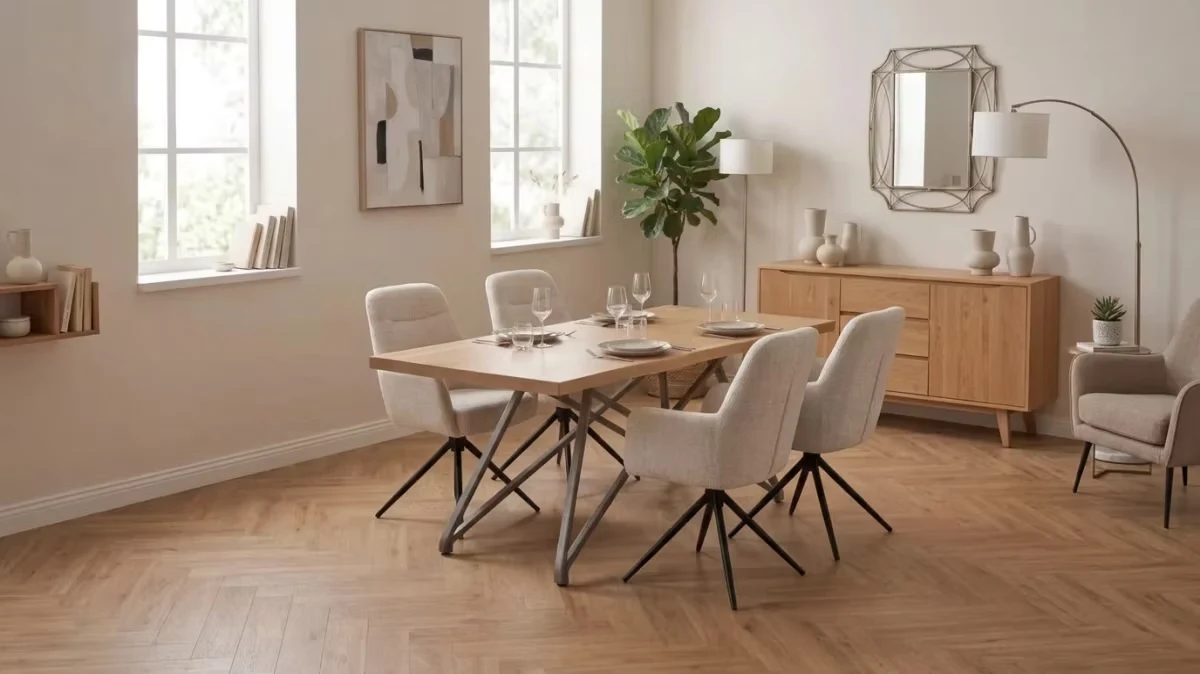
Standard Dining Chair Dimensions: A Practical Guide for European Furniture Buyers
For any furniture buyer building a dining collection, few details matter more than standard dining chair dimensions. Get them right, and the chairs sit comfortably under every table, fit neatly into room sets, ship efficiently and sell with fewer returns. Get them wrong, and what looks good on a product page can quietly erode margins through complaints, awkward table pairings, wasted container space and slow stock turnover.
As someone who has worked with European furniture buyers for many years, I have seen this many times. A chair that looks perfectly proportioned in a showroom may fail in the market because its seat height is off by a couple of centimetres, its armrests do not fit under a standard table, or its overall size makes it impossible to load economically in a 40-foot container. Sizing is not a minor detail. It is a commercial decision that touches ergonomics, design, logistics and customer satisfaction.
This guide breaks down the most important standard dining chair dimensions for the European market, explains how each measurement affects buyer outcomes, and shows what to look for when selecting or customizing a dining chair range. We will also look at how sizing decisions interact with packaging, container loading and OEM/ODM production, so you can make more confident sourcing decisions.
Why Correct Dining Chair Dimensions Matter for Professional Buyers
Before we look at individual measurements, it is worth understanding why sizing decisions carry so much weight in B2B furniture sourcing. For a wholesaler, retail chain or contract buyer, a dining chair is not just a seat. It is a product that must work across many different customer contexts, fit into existing assortments, and hold its value through shipping, storage and daily use.
First, dimensions determine table compatibility. A chair that is too high will not slide under a standard dining table, and one that is too low will feel uncomfortable for anyone of average height. This is one of the most common sources of customer complaints and return requests, especially in e-commerce where buyers cannot test the chair in person.
Second, sizing affects perceived comfort and quality. Two chairs can use the same foam, the same fabric and the same frame, but if the seat depth or backrest angle is slightly off, one will feel supportive and the other will feel tiring after a short time. Comfort is hard to communicate in a catalogue, but it is one of the strongest drivers of repeat business and word-of-mouth referrals.
Third, dimensions shape logistics cost. Wider, taller or bulkier chairs take up more space in a container, which increases the landed cost per unit. Knock-down structures help, but only if the overall proportions are planned with packaging efficiency in mind. For high-volume orders, even a small reduction in box size can translate into meaningful savings across a full container.
Fourth, sizing influences merchandising and sales. Chairs that follow widely understood European standard proportions are easier to place in room sets, easier to describe in product information, and easier for customers to imagine in their own homes. Deviations can work if they are intentional and clearly communicated, but random or poorly explained sizing tends to confuse buyers and slow sales.
For all these reasons, professional buyers should treat chair dimensions as a core quality parameter, not a last-minute specification. The earlier sizing is discussed with a manufacturer, the easier it is to adjust tooling, frame design and packaging before production begins.
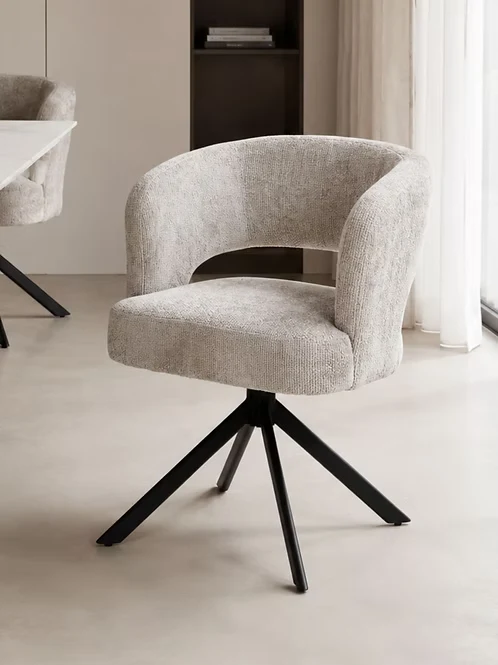
Standard Dining Chair Dimensions at a Glance
While exact sizes vary by style, material and target market, most dining chairs sold in Europe follow a relatively narrow range of proportions. These are not legal requirements, but practical standards that have evolved around average adult body sizes, common table heights and typical dining room layouts.
Below is a simplified dining chair dimensions table for quick reference. These values represent common ranges for standard upholstered and metal-frame dining chairs intended for residential and light contract use.
| Measurement | Typical Range | Notes |
|---|---|---|
| Seat height | 45 – 50 cm | Measured from floor to top of seat cushion |
| Seat width | 40 – 50 cm | Measured at the widest point of the seat |
| Seat depth | 40 – 48 cm | Measured from front edge to back of seat |
| Backrest height | 40 – 55 cm | Measured from seat top to top of backrest |
| Total height | 80 – 105 cm | Measured from floor to top of backrest |
| Armrest height | 60 – 70 cm | Measured from floor to top of armrest |
| Leg spread / base width | 42 – 52 cm | Measured at the floor, outside edge to edge |
These ranges are a starting point, not a rulebook. The right size for your collection depends on who is buying the chair, where it will be used, and what tables it will be paired with. In the following sections we will break down each dimension in more detail and explain the trade-offs behind different sizing choices.
Seat Height: The Key Dimension for Comfort and Table Fit
When buyers ask about standard dining chair seat height, they are usually asking the most commercially important question of all. Seat height is the single most critical dimension because it determines whether the chair works with a standard dining table, and whether it feels natural to sit in for an extended meal.
Most European dining tables have a top height of 72 to 76 cm. For comfortable leg clearance, the seat top should sit roughly 28 to 32 cm below the table underside. That is why the standard dining chair seat height typically falls between 45 and 50 cm, with 46 to 48 cm being the most common sweet spot for residential use.
Seat height may sound like a simple measurement, but there are several factors that professional buyers need to keep in mind.
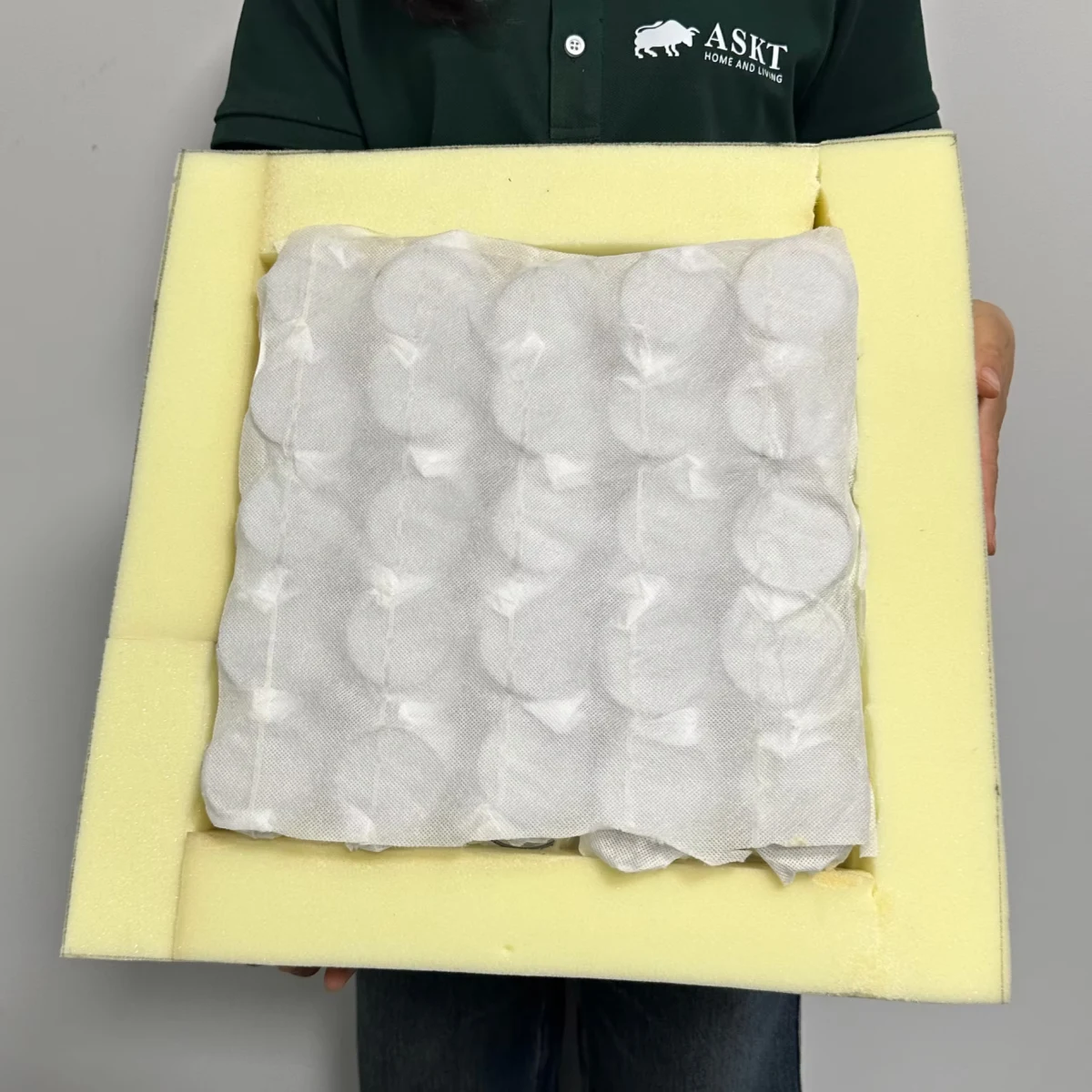
First, seat height is not fixed once the frame is built. It changes with cushion thickness and foam compression. A chair with a thick, soft cushion may measure 48 cm when new but settle lower after regular use. If the foam compresses too much, the chair can feel too low and put extra strain on the knees of taller users. That is why it is important to specify both the unloaded seat height and the expected loaded height under a standard weight, rather than relying on a single number.
Second, seat height must be matched to the target customer. In markets with taller average heights, slightly higher seat heights are often preferred. In contract settings such as cafés, a slightly firmer, higher seat can make it easier for people to get in and out quickly, which supports faster table turnover.
Third, armrest height is directly related to seat height. If you plan to offer an armchair version of the same dining model, the top of the armrest should be low enough to slide under a standard table apron. Chairs with higher armrests may look impressive, but they severely limit the range of tables they can be sold with.
For buyers evaluating samples, one useful check is to measure seat height at the front edge and again at the back. A slight downward tilt toward the front is normal and generally comfortable, but a chair that slopes too much can make people feel like they are sliding forward. Consistent measurement across samples is also a basic indicator of manufacturing quality control.
Dining Chair Width and Depth: Comfort, Space and Seating Capacity
While seat height gets most of the attention, dining chair width and depth are what determine how comfortable a chair feels over a long dinner, and how many chairs you can realistically fit around a table.
Seat width usually ranges from 40 to 50 cm. Narrower chairs, around 40 to 43 cm wide, are space-efficient and allow more place settings around a table. They are a popular choice for compact dining sets, apartment ranges and contract environments where floor space is at a premium. Wider chairs, 45 cm and above, feel more generous and are often preferred for premium residential collections, larger dining rooms and slower-paced dining experiences.
There is an important trade-off here. A wider seat sells well in photography because it looks luxurious and comfortable. But in real homes, every extra centimetre of chair width reduces the number of chairs that fit around a standard 160 cm or 180 cm table. If your collection is positioned as space-saving or family-focused, a slightly narrower seat can actually be a stronger selling point than a wider one, as long as the cushion and backrest provide enough support.
Seat depth is equally important. A seat that is too short will leave thighs unsupported and make taller users feel perched. A seat that is too deep will push shorter users forward and remove the benefit of the backrest, leading to slouching and back strain.
For general-purpose dining chairs sold across Europe, seat depths of 42 to 46 cm are the most common and the most commercially versatile. Deeper seats, 47 cm and above, work well in lounge-influenced dining designs or collections aimed at taller users, but they tend to be less successful in markets with a wider mix of body sizes.
From a manufacturing perspective, seat width and depth are also relatively easy to adjust during OEM or ODM development. Changing the seat shell or frame width slightly can help a chair match a specific table collection or a specific national market preference, without requiring a completely new design.
Backrest Height and Angle: Ergonomics, Style and Use Case
Backrest height dining chair decisions are usually driven by a mix of ergonomics, style and intended use. Unlike seat height, where there is a clear functional optimum, backrest proportions vary much more widely between design styles.
Low backrests, roughly 40 to 45 cm above the seat, tend to feel modern and unobtrusive. They support the lower back but leave the shoulder blades free, which works well in minimalist interiors and open-plan living spaces where visual lightness is important. These are common in contemporary dining collections and café furniture.
Medium backrests, around 45 to 52 cm, provide more upper-back support and are generally the most comfortable for longer meals. They are the safest choice for general residential use and for buyers who want a chair that works across a broad range of customers.
High backrests, above 55 cm, offer full back and shoulder support and can create a strong visual presence. They are often used in premium dining rooms, formal settings and high-end contract projects. The trade-off is that they take up more visual space, can make a small dining room feel crowded, and generally cost more to upholster and ship.
Backrest angle is just as important as height, but it is harder to judge from a dimension sheet alone. Most dining chairs have a slight backward tilt. Too little tilt and the chair feels rigid and tiring. Too much tilt and people have to lean forward to reach the table, which defeats the purpose of a dining chair.
For buyers, evaluating backrest ergonomics is one of the strongest reasons to order physical samples rather than choosing from drawings. Two chairs with identical stated backrest heights can feel completely different depending on the curve of the back, the position of the lumbar support and the way the upholstery distributes pressure.
Armrest Dimensions: Benefits and Limitations by Use Case
Armrests are a popular add-on for dining collections, but they introduce a new set of dimensional considerations that can make or break a chair’s commercial versatility.
The most important rule is simple: armrest height must be compatible with standard table heights. If the armrest is too high, the chair cannot be pushed under the table, which wastes space and makes the dining area feel cluttered. It is also one of the most common reasons for customer returns in online retail, because the incompatibility is often not obvious from a product photo.
For most European dining tables, armrests should sit no higher than 66 to 68 cm from the floor. Anything above 70 cm will only work with unusually tall tables or with tables that have no apron under the top. If your collection includes both dining tables and dining chairs, armrest height is something that should be coordinated across the range, not decided independently for each product.
Armrest width also matters. Thick, generously padded armrests look comfortable, but they add to the overall width of the chair and reduce the number of chairs that can fit around a table. For contract buyers, slimmer armrests are often preferable because they maximise seating capacity without sacrificing too much comfort.
From a sourcing perspective, armchair versions of a standard side chair are a smart way to extend a collection without investing in a completely new design. Many manufacturers offer the same seat and back frame with and without armrests, which simplifies production planning and keeps costs consistent across the range.
How Chair Dimensions Affect Packaging and Container Loading
Dimensions do not only influence comfort and sales. They also have a direct impact on logistics cost, and therefore on your margin per chair.
The basic principle is straightforward: the smaller the packaged chair, the more units you can fit in a container, and the lower the transport cost per piece. But reducing packaging size is not just about making the chair smaller overall. It is about designing the chair and its packaging so that components nest together efficiently, use the least amount of protective material, and arrive without damage.
Knock-down structures are the most common way to optimise dining chair packaging. A chair that ships with detached legs and a separate backrest can be packed in a much flatter box than an assembled chair. The flatter the box, the better it stacks on a pallet and the more efficiently it fills a 20-foot or 40-foot container.
But knock-down design only delivers its full benefit when dimensions are planned from the start with packaging in mind. A seat that is a few centimetres wider may not seem like much on its own, but if it pushes the box width past a certain threshold, it can reduce the number of boxes per pallet layer and cut the total container count by a noticeable margin. Over a full season of orders, that difference adds up.
Protective packaging also takes up space. Honeycomb paper, corner protectors and foam inserts all add to the outer box dimensions. A good manufacturer will design these layers as part of the product, not as an afterthought, so that protection is adequate without wasting space or plastic.
For buyers, it is worth asking for the carton dimensions and the estimated container load quantity early in the sampling process. Do not wait until the order is confirmed to find out how many chairs fit in a container. A small adjustment to seat width, backrest height or leg angle during development can sometimes improve container fill significantly, with barely any visible effect on the finished chair.

Custom Sizing in OEM and ODM Production
One of the advantages of working with an experienced B2B furniture manufacturer is that standard dimensions are a starting point, not a fixed set of rules. With OEM and ODM development, you can adjust sizing to match your brand, your target market and your existing product range.
Common sizing adjustments include modifying seat height to match a specific table collection, widening or narrowing the seat to fit a particular price point or customer profile, and adjusting backrest height to align with a design concept. Armrests, cushion thickness and leg angle can also be tuned to create a distinct product without starting from a blank sheet.
Custom sizing works best when it is based on real customer insight rather than guesswork. For example, if your sales data shows that customers in a particular market consistently comment about chairs being too low, a small increase in seat height can be a very effective product update. Similarly, if your e-commerce returns show a pattern of “too big for my dining room,” a slightly narrower seat may resolve the issue better than any new marketing campaign.
It is also important to remember that every dimensional change has side effects. Making a chair taller may improve comfort for some users, but it can also change the visual proportions, increase material usage and affect packaging size. A reliable manufacturing partner will walk you through these trade-offs before you commit to a change, so you can make a decision based on full information rather than just a sketch.
Practical Checklist for Selecting the Right Dining Chair Dimensions
If you are currently evaluating a dining chair collection or comparing manufacturer offers, here is a quick checklist to help you assess sizing from a commercial buyer’s perspective.
- Check seat height against standard dining table heights in your target market, and verify both loaded and unloaded measurements.
- Confirm that armrest versions slide under a typical table apron, or clearly position them as statement chairs for taller tables.
- Match seat width and depth to your customer profile, considering both comfort and how many chairs fit around common table sizes.
- Evaluate backrest height in relation to the intended use case, whether that is everyday residential dining, formal dining or contract use.
- Ask for carton dimensions and estimated container load quantity before finalising any design.
- Order physical samples and test the chairs with a range of body sizes, not just one or two people.
- Compare sizing across your full dining range so that chairs and tables feel like a coordinated collection.
- Discuss any desired dimensional adjustments early with the manufacturer, ideally before tooling or sampling begins.
Sizing is one of those areas where small, careful decisions compound into real commercial value. A chair with well-judged proportions sells faster, comes back less often, ships more efficiently and builds stronger customer trust over time.
FAQs about Standard Dining Chair Dimensions
What are the most standard dining chair dimensions for the European market?
Most standard dining chairs for the European market have a seat height of 45 to 50 cm, a seat width of 40 to 50 cm, a seat depth of 40 to 48 cm and a total height of 80 to 105 cm. Exact proportions vary by style, target audience and intended use.
What is the standard dining chair seat height?
The standard dining chair seat height is generally between 45 and 50 cm, with 46 to 48 cm being the most common range for residential dining. This height provides comfortable leg clearance under a typical 72 to 76 cm dining table.
How wide and deep should a dining chair seat be?
A general-purpose dining chair seat is usually 40 to 50 cm wide and 40 to 48 cm deep. Narrower seats are more space-efficient, while wider and deeper seats feel more generous and are better suited to premium or larger-sized collections.
What backrest height is best for a dining chair?
Backrest height depends on the style and use case. Low backrests of 40 to 45 cm create a modern, light look. Medium backrests of 45 to 52 cm offer good support for most users. High backrests above 55 cm provide full back support and are often used in formal or premium settings.
Can dining chair dimensions be customised in OEM production?
Yes, experienced B2B furniture manufacturers can adjust seat height, seat width and depth, backrest height, armrest proportions and other dimensions as part of OEM or ODM development. Custom sizing should always be discussed early in the product development process to ensure consistency, cost efficiency and packaging compatibility.
Conclusion
Standard dining chair dimensions are one of those fundamentals that quietly determine the success of a dining collection. They affect how the chair feels, how it looks, how it pairs with tables, how efficiently it ships and how many customers decide to keep it rather than return it.
For professional buyers, the key is not to chase a single “perfect” size. It is to understand the trade-offs behind each measurement, match sizing to your specific market and customer, and work with a manufacturer that can translate those decisions into consistent, well-built products.
If you are currently developing or updating a dining chair collection for the European market and would like to discuss dimensional options, OEM customization, packaging optimization or sample development, feel free to request a dimension drawing and product specification for your collection. At ASKT, we work closely with furniture wholesalers, retailers, importers and contract buyers to build dining ranges that balance comfort, design, durability and efficient logistics.