Choosing Between Free-Spin, Auto-Return, and Fixed Dining Chairs: A B2B Sourcing Guide
Professional furniture buyers should choose between free-spin, auto-return, and fixed dining chairs by matching the mechanism's durability, unit cost, and structural complexity with their specific sales channels and project demands. Fixed chairs provide the highest structural stability and lowest cost. Free-spin swivels offer flexible, casual movement. Auto-return swivels ensure automatic alignment and premium positioning, making them highly desirable for high-end residential retail and contract hospitality environments.
What are the fundamental differences between swivel vs auto return vs fixed dining chairs?
To make strategic sourcing decisions, category managers and purchasing heads must understand how the choice of under-seat hardware affects user experience, showroom appeal, and retail profitability. The physical differences go far beyond mere aesthetics—they dictate how a dining room functions, how the chairs align with the table, and the long-term maintenance overhead of the furniture.
When evaluating swivel vs auto return vs fixed dining chairs, professional buyers face distinct structural designs:
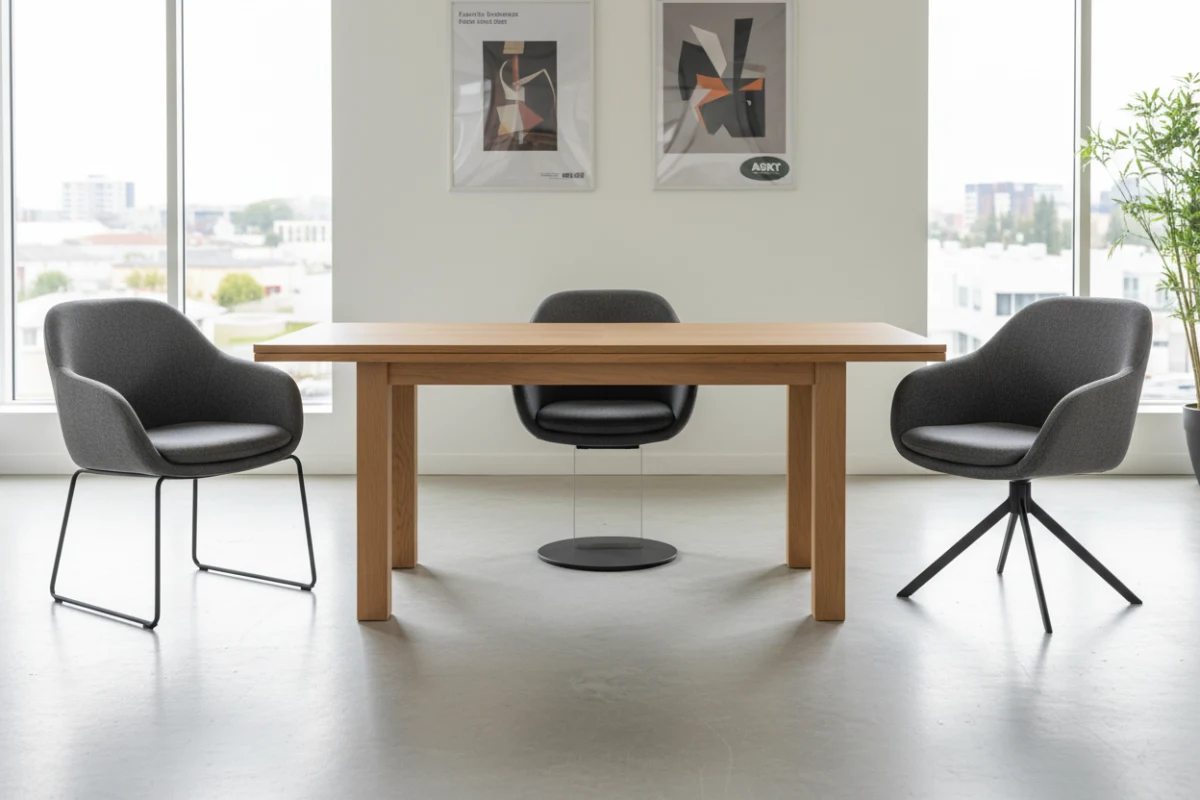
- Fixed Dining Chairs: These feature a static base frame where the seat shell is bolted directly to the legs. They have zero moving parts under the seat. Their simplicity translates to absolute structural integrity, predictable longevity, and easy assembly.
- Free-Spin Swivel Dining Chairs: Equipped with a 360-degree ball-bearing swivel plate, these chairs allow users to rotate continuously in any direction. They offer high flexibility for open-plan living spaces but can leave a dining room looking disorganized when chairs are left rotated at random angles after use.
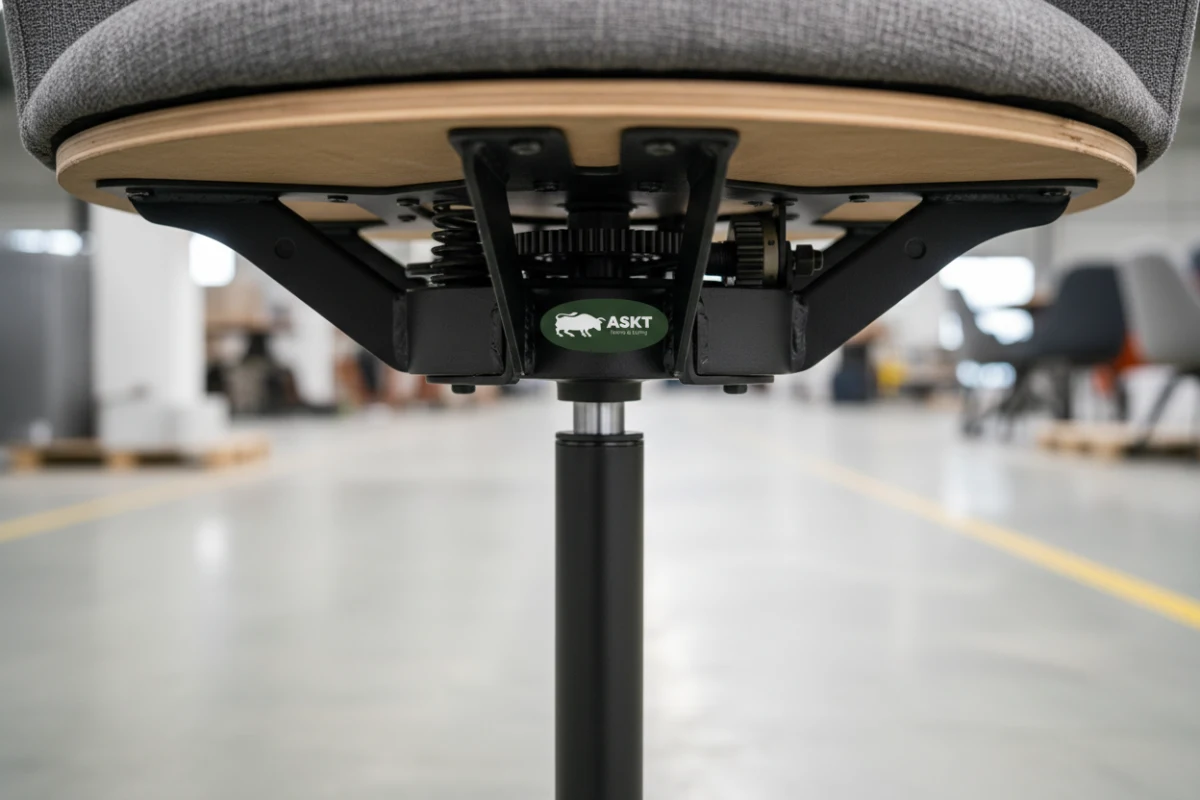
- Auto-Return Swivel Dining Chairs: These incorporate a specialized spring-loaded or gas-lift memory cylinder within the central column. When a guest stands up, the mechanism automatically rotates the seat shell back to its original center-facing position. This keeps the dining table looking perfectly uniform and neat at all times.
For a retailer or contract project buyer, choosing between these options is a strategic calculation of material quality, showroom presentation, and warranty protection. A messy, unaligned dining set of free-swivel chairs looks unprofessional in a premium showroom, whereas auto-return models immediately present a tidy, structured setting that commands attention and premium retail pricing.
Core Comparison Matrix
| Operational Feature | Fixed Dining Chairs | Free-Spin Swivel Chairs | Auto-Return Swivel Chairs |
|---|---|---|---|
| Mechanical Complexity | None (Static bolts) | Low-Medium (Ball-bearing plate) | High (Torsion spring / Gas cylinder) |
| Aesthetic Neatness | Manual placement required | High risk of disorganized look | Automatic, perfect alignment |
| Average B2B Sourcing Cost | Baseline (1.0x) | 1.25x – 1.4x of baseline | 1.5x – 1.8x of baseline |
| Primary Fail Point | Joint welds / Leg splay | Bearing wear / Grind noise | Spring fatigue / Cylinder leaks |
| European Market Demands | Budget to Mid-Market | Mid-Market Residential | Premium Retail & Contract Projects |
How do manufacturing costs, engineering tolerances, and raw materials affect B2B pricing?
From a manufacturing perspective, integrating moving parts into an upholstered dining chair completely alters the structural engineering of the metal frame and base. A premium mechanical chair requires reinforced mounting plates, heavier-gauge steel tubing, and advanced welding to handle the dynamic loads exerted by rotating users.
When we transition from a fixed structure to a dynamic one, the thickness of the mounting steel must increase from a standard 1.2mm to at least 2.0mm. This extra thickness prevents the plate from warping under the leverage of an seated guest leaning back. Furthermore, the finish—such as matte black powder coating—must be applied with flawless consistency to prevent friction wear and rust between the moving sleeve and the leg assembly. These engineering requirements explain why auto-return models command a B2B price premium over static designs.
To ensure silent, smooth rotation, manufacturers must invest in high-grade commercial dining chair mechanisms. Cheap, low-quality swivels often save on material costs by using thinner steel plates and unsealed ball bearings. Within months of household or commercial use, these cheap components develop structural play, start to wobble, and produce annoying grinding noises. To protect your brand's reputation and reduce return rates, you must source from suppliers who use completely enclosed, self-lubricating bearing sleeves that prevent dust, pet hair, and food crumbs from entering and degrading the internal return spring.
How should category managers match these dining chair mechanisms to their specific sales channels?
Selecting the right seating mechanism is highly dependent on your distribution channel, target pricing tier, and business model. What works for a high-volume container importer may cause severe logistical pain for a drop-shipping e-commerce brand.
1. Traditional Wholesalers and Importers
For volume-driven buyers supplying physical retail stores across Germany, the Netherlands, or the UK, offering a balanced mix of base types is vital. High-volume buyers often prioritize auto return swivel dining chairs wholesale because these models act as excellent crowd-pullers on retail gallery floors. The tactile, premium feel of an auto-return chair invites store visitors to sit, rotate, and experience the smooth return mechanism. This interactive experience justifies a higher retail markup, allowing both the importer and the retailer to enjoy healthier profit margins.
2. E-Commerce Brands and Mail-Order Retailers
In the e-commerce sector, the primary drivers of profitability are packaging optimization, parcel shipping compliance, and the minimization of product return rates. Fixed chairs are highly popular here because they can be designed with highly compact, knock-down (KD) structures. This allows multiple chairs to fit into a single flat-pack carton, significantly lowering domestic parcel shipping costs. If an e-commerce brand wants to offer swivel options, they must choose high-grade components; cheap, low-durability swivel plates frequently fail during domestic transit or rapid household use, resulting in expensive returns and negative online reviews.
3. Contract and Hospitality Project Buyers
In commercial spaces like hotels, restaurants, and corporate boardrooms, space management and durability are paramount. Auto-return chairs are the undisputed industry standard for contract projects. They ensure that after a busy dinner service or a long conference, the room instantly looks organized without staff having to manually realign dozens of chairs. Additionally, the ease of egress in tight dining spaces makes auto-return swivels highly appreciated by restaurant guests, as they do not have to scrape chair legs across the floor to get up.
Procurement Checklist for Base Selection
- Define the primary sales channel: Is the product meant for high-volume offline retail, direct-to-consumer e-commerce, or commercial contract projects?
- Analyze floor space constraints: Do target end-users have tight dining areas that would benefit from the easy exit of swivel mechanisms?
- Compare packaging volumes: Can the chosen mechanical base be packed in a space-saving knock-down (KD) format to protect your shipping margins?
- Assess warranty expectations: Does the manufacturer provide testing documentation that matches your market’s liability and performance standards?
What quality standards and durability tests are required for commercial dining chair mechanisms in Europe?
To safely sell dining chairs in European markets like Germany (DACH region), the UK, and France, products must comply with strict safety and performance standards. This is particularly critical when dealing with active bases that undergo thousands of rotational cycles under heavy loads.
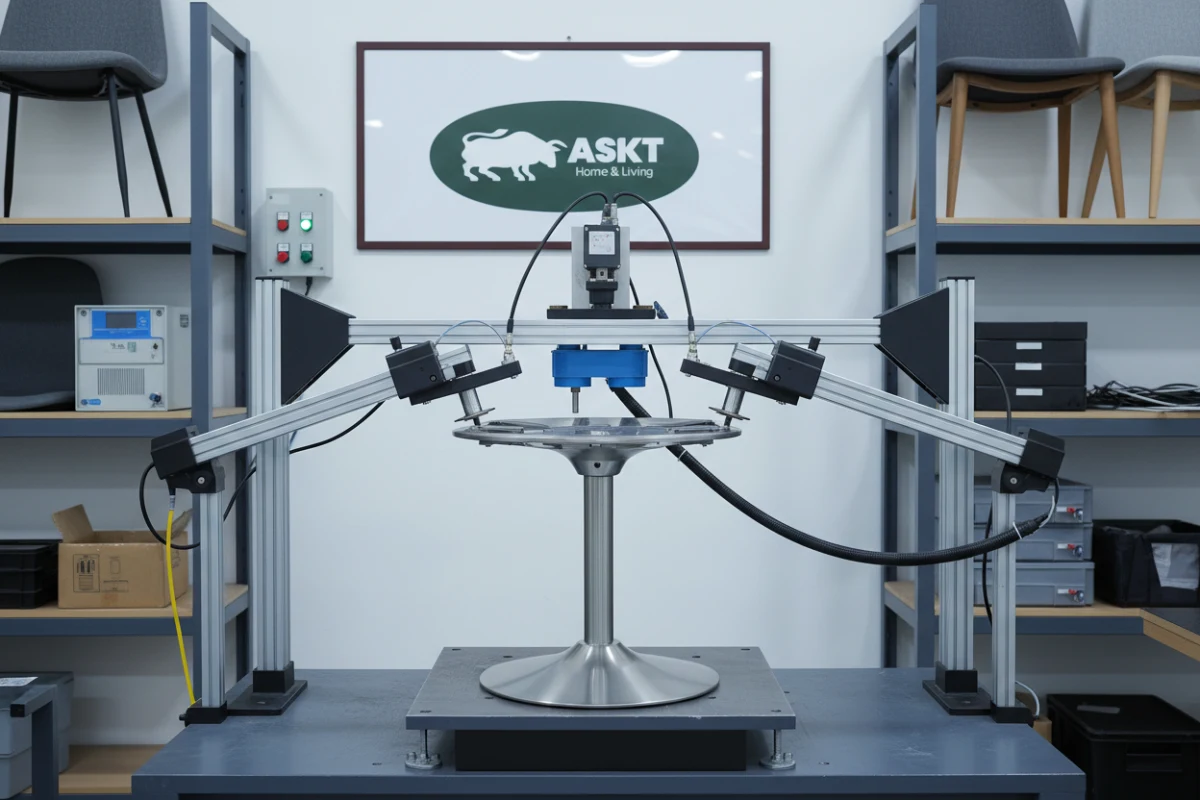
Before placing any high-volume order, procurement managers should verify that the manufacturer conducts rigorous contract furniture durability testing in accordance with European standards:
- EN 12520 (Strength, Durability, and Safety): This standard specifies the minimum requirements for the safety, strength, and durability of all types of domestic seating for adults. The testing protocol involves static load tests on the seat and back, seat front edge durability, and repetitive drop tests.
- Rotational Fatigue Testing (for Swivels): Swivel mechanisms must undergo specialized testing where a weight of 100 kg to 120 kg is placed on the seat shell, and the chair is mechanically rotated back and forth for 50,000 to 100,000 cycles. Any play in the central axle, squeaking, or metal fatigue constitutes a failure.
- Auto-Return Spring Fatigue: The memory return spring or gas-lift mechanism must consistently return the chair precisely to its 0-degree starting point even after 100,000 compressions, without losing tension or dropping in height.
Beyond mechanical testing, material safety is crucial for European compliance. Leading manufacturers ensure that their dynamic upholstered models feature fabrics that have passed strict abrasion resistance and color fastness tests. Our textiles are certified formaldehyde-free and carry the OEKO-TEX® STANDARD 100 label, giving European buyers complete peace of mind regarding safety and regulatory compliance. Our factories operate under BSCI-certified guidelines, proving our commitment to ethical labor practices and manufacturing quality.
How can buyers minimize logistical costs and assembly risks when sourcing dining chairs from China?
When sourcing dining chairs from China, professional buyers must look past the initial FOB price and evaluate the total landed cost, packaging efficiency, and assembly complexity. Sourcing mechanical furniture introduces unique logistics and assembly risks that static furniture simply does not share.
To mitigate these risks, European buyers should look for manufacturers who implement smart engineering solutions. At ASKT, we developed the KINEXA modular system to directly solve these B2B purchasing pain points:
- Standardized Shell-to-Base Interfaces: The KINEXA system allows buyers to pair a single upholstered seat shell with multiple base options (including fixed metal legs, 360-degree free swivels, or premium auto-return bases). This modular design drastically reduces minimum order quantity (MOQ) constraints and lowers inventory carrying risks.
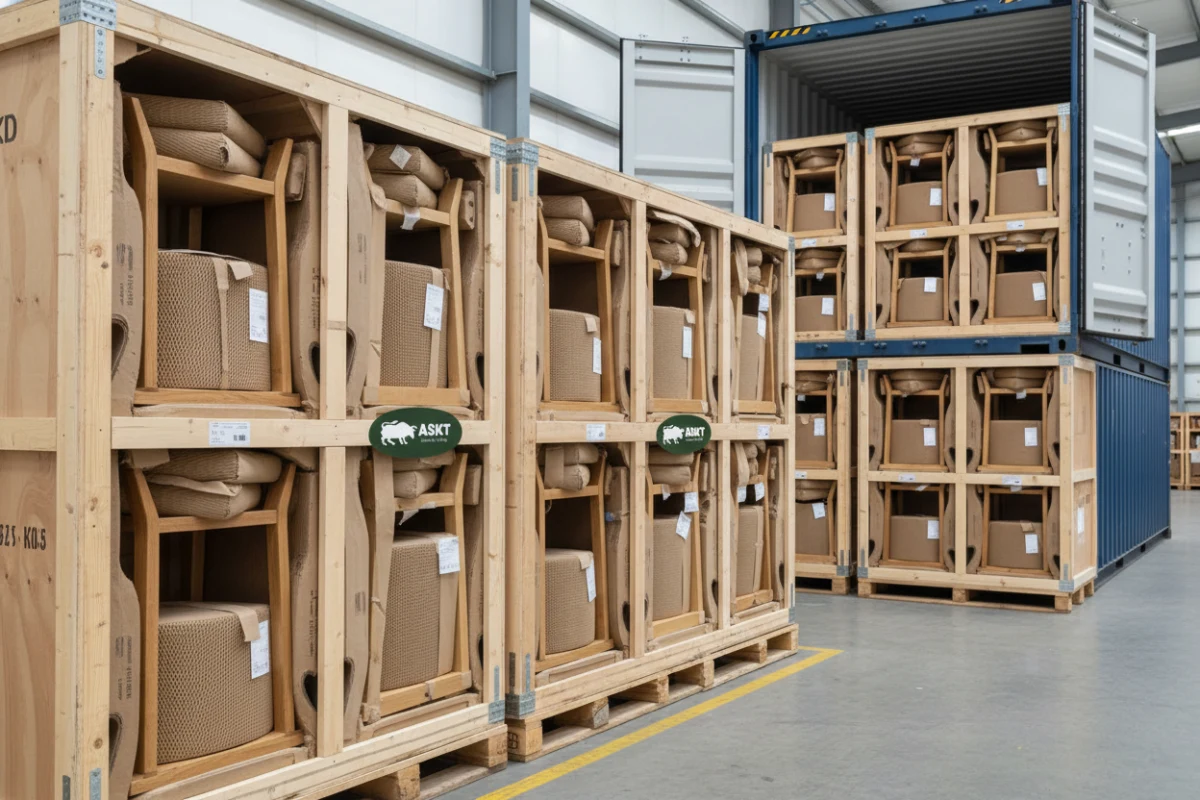
- Optimized Packaging and Container Loading: Mechanical swivel columns are notoriously bulky and can lead to inefficient container loading if shipped fully assembled. By utilizing precision-engineered KD (knock-down) structures, we pack seat shells nested together and stack bases separately in optimized, plastic-reduced cartons using eco-friendly honeycomb paper protective packaging. This significantly improves container loading efficiency, allowing you to fit more units per 40ft HQ container and reduce your ocean freight cost per chair.
- Error-Free Assembly for End Consumers: Dynamic mechanisms must be easy to assemble. The KINEXA base components are pre-assembled and tested at our factory before shipping under our strict "Test first, ship second" quality policy. The end customer only needs to tighten four heavy-duty bolts to connect the base to the seat shell, eliminating the risk of incorrect assembly.
By choosing a partner that combines deep engineering expertise with compliant, certified manufacturing, you can turn a potentially risky sourcing venture into a highly reliable and profitable product line. Our fabrics are even pet-friendly and easy-clean, designed to satisfy the rigorous quality and aesthetic demands of modern European households.
To assist your procurement team in choosing the absolute best configurations for your upcoming product lines, we have compiled a detailed technical resource comparing weight limits, clearance dimensions, and hardware longevity.
If you want to review our structural specifications, packaging volume metrics, and mechanism lifetime warranties, please Request Mechanism Decision Matrix to connect with our technical sourcing team.