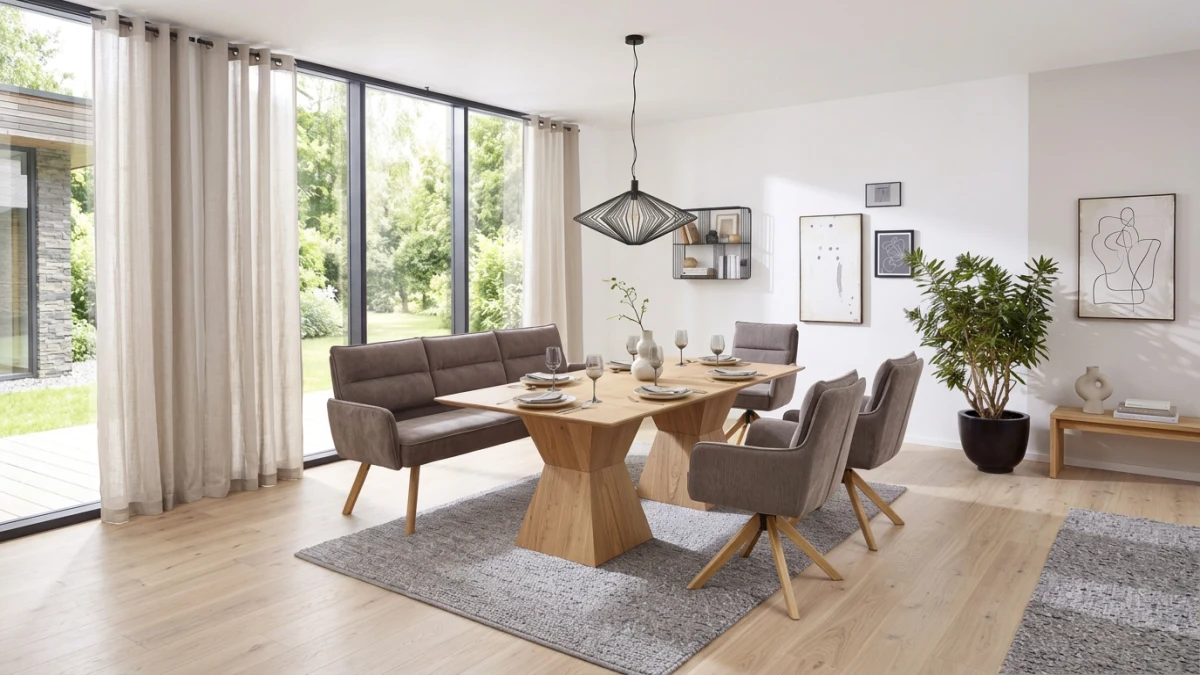
Tabletop Adhesives Bonding Durability: Sourcing and Manufacturing Guide for European Furniture Buyers
Tabletop adhesives bonding durability directly dictates the structural lifespan, surface flatness, and warranty performance of composite and veneered dining tables. In commercial and residential furniture manufacturing, durable bonding prevents edge lifting, veneer cracking, and moisture-induced failure across changing indoor climates and international maritime transit. High-performance adhesive selection, combined with rigorous moisture management and balanced surface pressing, forms the core of stable composite tabletop production.
Why Is Tabletop Adhesives Bonding Durability Critical for European B2B Furniture Sourcing?
For commercial furniture buyers, retail chains, wholesalers, and contract procurement specialists across European markets such as Germany, the Netherlands, and the UK, structural quality claims on dining tables create substantial financial loss. A failed tabletop cannot easily be repaired in the field or resolved with replacement hardware. Surface bubbling, split veneer lines, or detached edge profiles typically require a full product replacement, resulting in steep reverse logistics costs and brand reputation damage.
When evaluating composite dining tables, dining table veneer collections, and laminated surfaces, tabletop adhesives bonding durability serves as the primary barrier against environmental wear and daily mechanical stress. Sourcing teams prioritize bonding performance for several decisive commercial reasons:
- Protection Against International Shipping Risks: Furniture shipped in export containers experiences significant temperature swings and fluctuating relative humidity during ocean transit. Weak or inadequately cured adhesive bonds degrade before cargo reaches European distribution centres, leading to instant failure upon container unloading.
- Long-Term Performance in Heated and Air-Conditioned Interiors: European residential and commercial buildings often maintain dry indoor heating in winter and humid ambient conditions in summer. Balanced bonding ensures that composite substrates and surface veneers expand and contract in harmony without splitting.
- Durability Under Hospitality and Contract Use: In dining rooms, cafes, and commercial spaces, tables face constant wipe-downs with damp cloths, hot beverage placements, and localized surface friction. Superior bonding prevents moisture from seeping into core boards.
- Lower Defect and Warranty Return Rates: Maintaining consistent adhesive application across high-volume production batches eliminates costly product recalls and preserves gross margins for importers and retail chains.
Investing in proper manufacturing verification for tabletop adhesives bonding durability protects your supply chain from unpredictable post-delivery failures.
What Factors Increase Composite Tabletop Delamination Risk in Dining Tables?
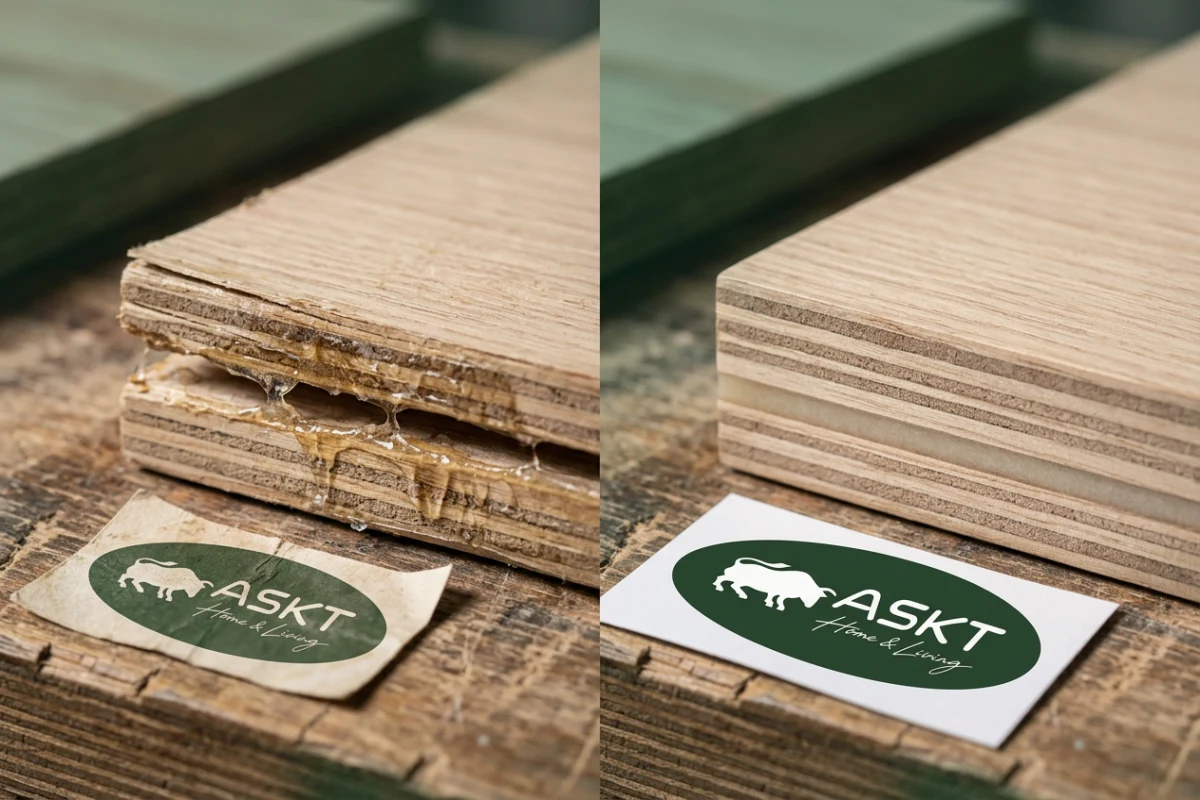
Understanding composite tabletop delamination risk requires examining the physical, environmental, and chemical stresses acting upon multi-layer panel structures. Composite tabletops—typically constructed with engineered core boards paired with natural oak veneer, decorative laminates, or backing layers—are subject to continuous internal shear stress.
When manufacturers fail to manage these stresses during production, delamination occurs through distinct failure mechanisms:
- Moisture Imbalance Between Core and Surface: Natural wood veneers and composite cores absorb and release moisture at different rates. If a veneer sheet is pressed onto a core with unmatched moisture levels, the differential expansion creates intense internal tension that pulls the adhesive bond apart.
- Inadequate Edge Sealing and Liquid Intrusion: Tabletop perimeters are the most vulnerable entry points for humidity and liquid spills. If the edge bonding or perimeter seal is uneven, water penetrates the core board, causing localized swelling and edge separation.
- Unbalanced Panel Construction (Absence of Balancing Backer): A composite panel with a decorative face on top must always have a balancing layer of equivalent tension applied to the bottom face. Omitting or downgrading the bottom backing causes structural bowing and concentrated bond failure.
- Improper Adhesive Spread Rate: Applying insufficient adhesive leads to dry joints and hollow air pockets between the core and the surface layer. Conversely, applying excessive adhesive causes glue bleed-through and brittle film layers that fracture under mechanical loading.
- Incomplete Press Time or Inaccurate Pressure: If hydraulic presses do not apply uniform clamping pressure or if panels are released before the adhesive cross-links fully, the internal bond strength remains structurally deficient.
By identifying these specific root causes, purchasing managers can work closely with manufacturing partners to eliminate composite tabletop delamination risk through disciplined process engineering.
How Does a Controlled Dining Table Veneer Bonding Process Ensure Bond Integrity?
Natural oak veneer remains a popular decorative choice for modern European dining collections, yet it presents unique manufacturing complexities compared to synthetic finishes. Natural wood is porous, grain-directional, and environmentally reactive. Achieving a seamless, long-lasting surface requires a strictly controlled dining table veneer bonding process throughout every production phase.
Step 1: Substrate Preparation and Surface Calibration
Before any adhesive is metered onto the core board, the substrate must undergo wide-belt calibration sanding. This ensures absolute thickness uniformity across the entire panel surface. Minute height variations as small as a fraction of a millimetre can prevent the press platen from exerting equal contact pressure across the panel, creating localized unbonded zones.
Step 2: Moisture Conditioning and Environmental Acclimatization
Both the composite core board and the sliced oak veneer sheets must be acclimatized within the factory workshop prior to assembly. Matching the moisture levels of the two materials prevents moisture migration during and after pressing, ensuring dimensional stability.
Step 3: Precise Mechanical Adhesive Application
Automated roller coating machines apply an even, measured film of adhesive across the panel. Modern production lines monitor the spread volume continuously to achieve consistent coverage without surface pooling. Operators carefully monitor open assembly time—the critical window between glue application and press closure—to prevent the adhesive from skinning over prematurely in warm factory conditions.
Step 4: Calibrated Hydraulic Pressing
Panels are loaded into hydraulic presses where controlled pressure and balanced platen temperatures are maintained for a predetermined curing cycle. Uniform pressure across the entire surface ensures that the adhesive penetrates into the wood fibres of both the veneer and the composite substrate, forming a deep mechanical and chemical lock.
Step 5: Post-Press Panel Conditioning
Freshly bonded composite tabletops retain heat and moisture from the pressing process. High-standard factories place pressed panels in climate-stable curing areas with uniform stacking spacers. Allowing panels to rest for an appropriate stabilization period ensures that internal stresses dissipate fully before edge profiling, sanding, and surface finishing begin.
| Process Stage | Key Production Control Point | Sourcing Risk if Ignored |
|---|---|---|
| Core Calibration | Precision surface sanding for uniform thickness | Uneven pressure distribution, creating dry unbonded pockets |
| Moisture Balancing | Matching core and veneer moisture content | Differential shrinkage, surface warping, and split seams |
| Glue Application | Mechanical roller metering and open-time control | Glue strike-through, starved joints, or premature drying |
| Hydraulic Pressing | Continuous uniform pressure and platen stability | Incomplete bonding, edge lifting, and poor surface adhesion |
| Post-Press Resting | Flat stacking and controlled panel acclimatization | Trapped internal stress leading to post-packaging warping |
What Quality Control Protocols Govern Furniture Adhesive Quality Control on the Factory Floor?
To ensure repeatable results across ongoing production runs and full container shipments, professional dining furniture manufacturers institute structured furniture adhesive quality control systems across incoming goods, assembly lines, and finished goods inspection.
1. Raw Material Verification
Quality control begins with verifying the adhesive batches supplied to the factory. Technicians check adhesive formulation consistency, shelf life, and storage conditions. High-performance adhesives must be stored in climate-managed storage areas to prevent premature thickening or component separation caused by temperature extremes.
2. In-Process Ambient Monitoring
Adhesive performance is closely tied to factory ambient conditions. Ambient temperature and relative humidity directly impact adhesive viscosity, tackiness, and required pressing durations. A systematic factory quality system monitors workshop climates and adjusts press timing according to seasonal weather shifts, ensuring uniform bond formation year-round.
3. Equipment Calibration and Maintenance Schedules
Glue spreader rollers and hydraulic press platens require regular cleaning and maintenance. Build-up of cured adhesive on roller grooves causes uneven spread lines, while contaminated press platens introduce localized pressure drops. Standardized operating procedures require daily roller washing and routine platen flatness checks.
4. Finished Tabletop Physical Inspection
Before packaging, quality inspectors examine finished tabletop panels under directional inspection lighting. Inspectors check for surface irregularities, edge seam tightness, corner alignment, and surface smoothness. This multi-layered furniture adhesive quality control process ensures that defective panels are caught and corrected before export packing.
Which Testing Protocols Are Used for Laminated Tabletop Durability Testing?
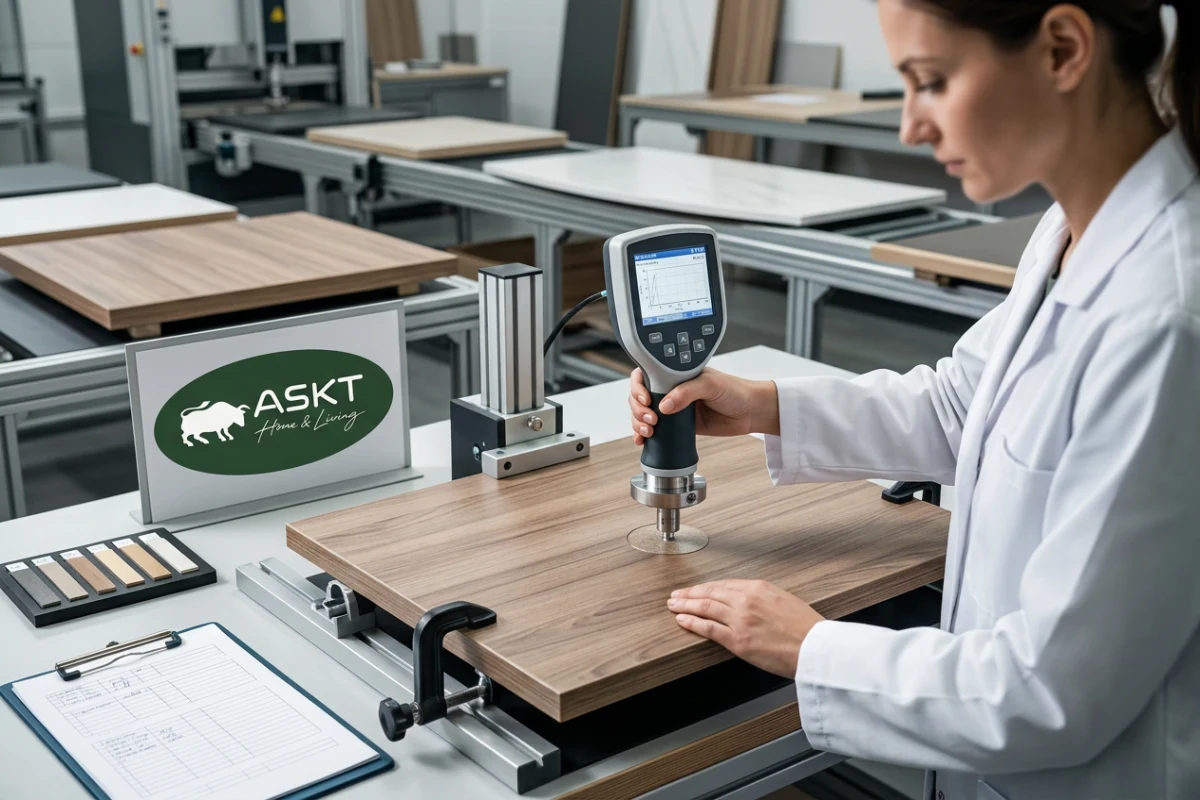
European buyers require verifiable evidence that tabletop constructions withstand years of real-world use. Implementing structured laminated tabletop durability testing provides quantitative proof of adhesive integrity and substrate resilience.
Mechanical Bond Strength Verification
Mechanical testing evaluates the adhesive joint's resistance to physical separation forces. Technicians conduct cross-cut adhesion checks and surface pull tests on production sample pieces. During a tensile pull test, force is applied perpendicularly to the bonded surface until separation occurs. An optimal adhesive bond demonstrates that the failure occurs within the wood fibres of the substrate rather than at the glue line, proving that the adhesive layer is structurally stronger than the core material itself.
Environmental and Climate Cycling Tests
To simulate long-term seasonal transitions and container transport stresses, tabletop test samples undergo cyclic environmental conditioning. These tests subject panels to alternating cycles of dry heat, elevated humidity, and room temperature recovery. Inspectors examine the test pieces for:
- Edge delamination or microscopic seam separation along perimeter borders.
- Surface veneer checking, blistering, or longitudinal micro-cracks.
- Panel warping, diagonal twisting, or cupping across the tabletop surface.
Surface Heat and Moisture Resistance Checks
Dining tables must endure hot plates, warm beverage cups, and liquid spills. Finished sample tops are subjected to localized surface moisture exposure and elevated contact temperatures. Passing these tests ensures that normal domestic and commercial dining use will not soften the adhesive layer or cause veneer blistering.
How Can European Sourcing Teams Evaluate Tabletop Bonding Quality in Manufacturing Partners?
Selecting the right OEM or ODM furniture manufacturer in China is the most effective way to eliminate tabletop durability risks. Sourcing managers and product development teams should evaluate prospective suppliers through detailed manufacturing audits and technical inquiries.
Use this practical evaluation framework during supplier reviews:
- Production Line Automation and Machinery: Does the factory utilize automated roller spreaders, calibrated wide-belt sanders, and hydraulic multi-platen presses with digital monitoring? Manual hand-brushing of glue or makeshift mechanical screw clamps cannot deliver consistent B2B export quality.
- Balancing Layer Engineering: Does the supplier demonstrate clear expertise in panel symmetry by applying matched balancing backers to the underside of every composite and veneer tabletop?
- Edge Sealing Technology: What perimeter sealing methods does the factory employ to prevent moisture ingress into the composite core? High-quality edge-banding and bottom-edge lacquer sealing provide essential waterproofing.
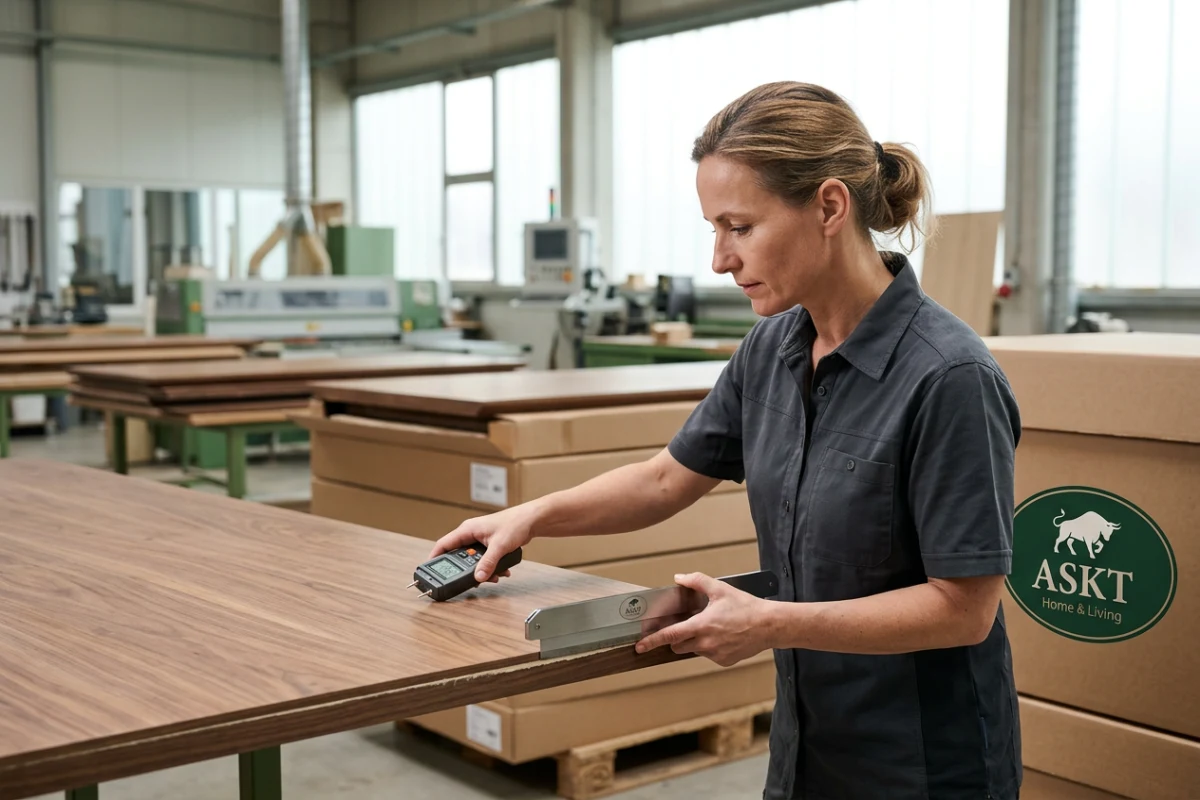
- Internal Laboratory and Quality Records: Does the manufacturer maintain dedicated quality inspection stations with moisture meters, sample testing records, and systematic batch tracking?
- Export Packaging and Moisture Protection: Does the supplier use moisture-resistant inner packaging, edge protectors, and container desiccant systems to safeguard tabletops against maritime humidity during export shipping?
- Customization and Material Flexibility: Can the manufacturer engineer specialized composite constructions, such as combining metal under-frames, sintered stone layers, or natural oak veneers, while adjusting bonding formulas to match European market requirements?
By evaluating suppliers on engineering discipline and process transparency rather than initial purchase price alone, European furniture importers secure stable, long-term commercial success.
If you are looking to develop stable, market-ready composite dining tables for your retail or contract portfolio, our engineering team is here to support you. Ask us about our composite tabletop solutions to discover how structured manufacturing control and transparent quality management ensure long-term reliability for your furniture collections.
Frequently Asked Questions About Tabletop Adhesives and Bonding Durability
What is the main cause of veneer bubbling on dining tables after delivery to European warehouses?
Veneer bubbling is primarily caused by trapped moisture or uneven adhesive application during hot pressing, combined with rapid humidity changes during transit. If panels are not properly conditioned before packaging, trapped internal moisture vaporizes or shifts as the container heats up, resulting in localized adhesive release and visible surface blisters upon unpacking in dry European storage facilities.
Why is a balancing backer layer necessary on the underside of a composite tabletop?
Composite substrates naturally absorb and release ambient moisture. When a decorative wood veneer or laminate is applied to the top face, it exerts surface tension as it expands or contracts. If the bottom face is left raw or finished with an incompatible material, the uneven tension causes the table to bow or warp. A matching balancing backer on the underside neutralizes these forces, maintaining long-term panel flatness.
How does container shipping humidity affect composite tabletop glue lines?
During ocean transport, shipping containers experience dramatic temperature fluctuations known as container rain, where internal relative humidity reaches near-saturation levels. If adhesive bonds are weak, hydrophilic, or inadequately cured, high ambient humidity softens the glue line and swells composite edges, causing delamination before the product ever reaches the retail showroom.