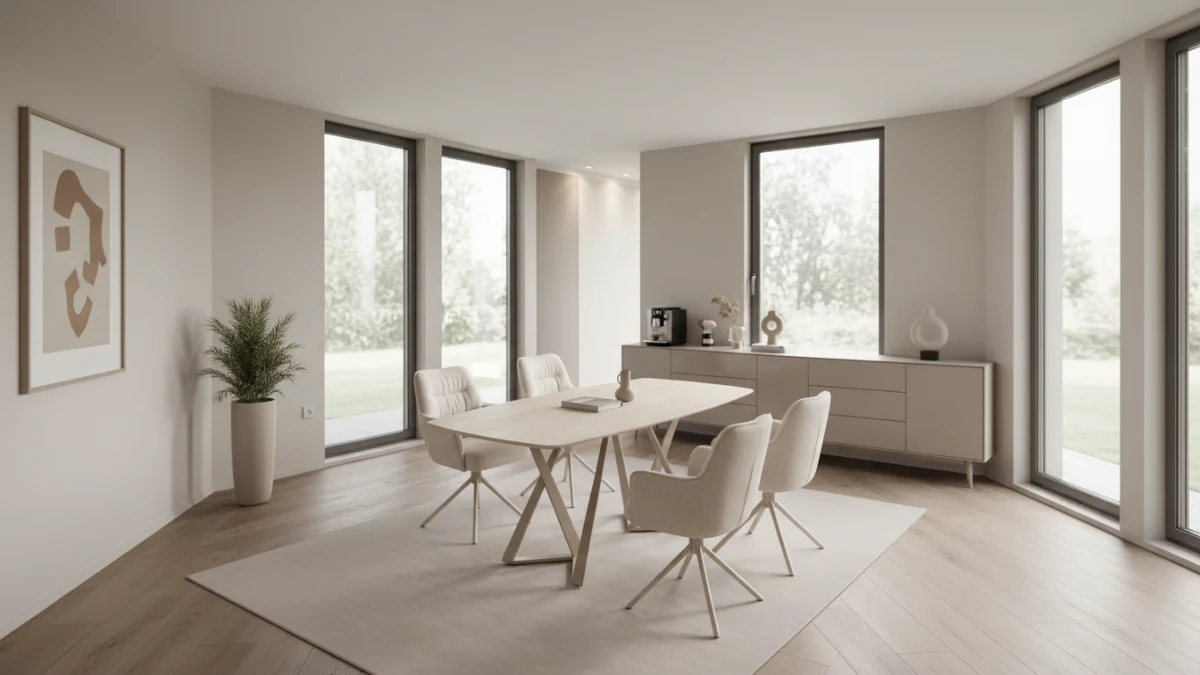
What European Furniture Buyers Should Check Before Ordering Ceramic Dining Tables
Before ordering ceramic dining tables, European B2B buyers must thoroughly inspect tabletop flatness, sintered stone edge profiles, metal frame and joint stability, KD structure precision, and transit packaging protection. Verifying these core physical attributes during a B2B dining table manufacturer evaluation mitigates retail quality risks, reduces high-cost last-mile returns, and ensures compliance with European market expectations.
What Tabletop Material and Flatness Tolerances Should You Verify Before Sourcing?
When developing a high-end contemporary indoor furniture collection, understanding the exact material composition and physical limits of your table surface is the first line of defence against customer complaints. In the commercial import sector, buyers often navigate two distinct categories: standard ceramic and premium sintered stone. Understanding this distinction is vital when establishing a sintered stone dining table wholesale program. While standard ceramic is typically laminated to a tempered glass backing for added strength, premium sintered stone is manufactured under extreme pressure and high-temperature firing, resulting in an exceptionally dense, non-porous, and heat-resistant slab.
To satisfy strict consumer expectations in DACH and Benelux markets, professional importers must evaluate tabletop flatness. Sintered stone and ceramic slabs undergo intense thermal processing, which naturally introduces a risk of minor warping or deflection. Wholesalers must verify that the flatness tolerance of the finished tabletop meets the strict parameters required for premium retail. If a tabletop has an excessive flatness deviation across its length, it will not rest flush on the metal frame. This misalignment creates continuous physical stress on the tabletop, eventually leading to structural tension, micro-cracking, and uneven surfaces that end-consumers will immediately reject as defective.
Furthermore, when sourcing composite tabletops (where a ceramic layer is permanently bonded to a glass backing), the quality of the laminating adhesive is paramount. If the manufacturer uses substandard bonding agents, the temperature fluctuations common in Northern and Central European climates—such as damp, cold winters followed by warm, dry summers—will cause the adhesive to fail, leading to progressive delamination. Importers should explicitly request temperature-cycling and humidity resistance test reports from their manufacturing partners to ensure the physical bond remains stable over years of domestic use.
How Do You Assess Sintered Stone Edge Profiles and Lamination Quality?
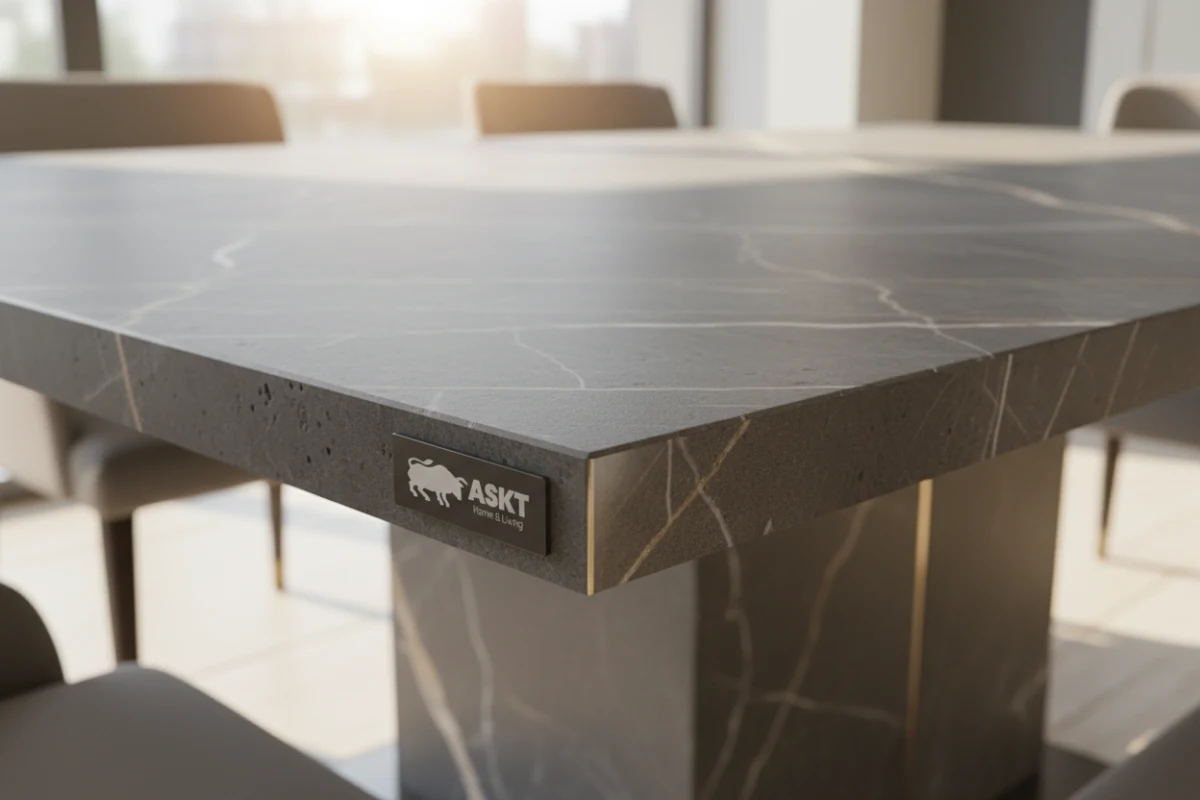
While ceramic and sintered stone materials are virtually impervious to scratches and stains on their flat surfaces, their edges remain highly vulnerable to impact damage. Unfinished, sharp edges represent a massive quality risk during handling, assembly, and daily residential or commercial use. Therefore, edge-profile inspection is a non-negotiable step in your ceramic dining table quality control protocol.
During your factory evaluation, inspect the edge finish of the table samples. Raw, straight-cut edges are highly prone to micro-chipping even under light impacts. Professional B2B dining table manufacturers apply a smooth, micro-bevelled, chamfered, or rounded profile to the edges. This chamfering process removes the sharp, brittle corners and redistributes potential impact forces, dramatically improving chip resistance and ensuring user safety. The edge must be polished evenly to match the overall sheen of the tabletop, leaving no rough textures or cutting marks.
Additionally, check the lamination alignment of the glass and ceramic layers on composite tables. The edges of both the ceramic top sheet and the underlying glass backing must align perfectly without any offset. Any offset or visible glue residue along the edge indicates inconsistent manufacturing processes and poor attention to detail. Discerning European buyers expect clean, contemporary lines, meaning any visible alignment issues or rough adhesive application along the edge profile will lead to immediate product rejection.
Why Is Metal Frame and Underframe Structural Integrity Essential for Heavy Sintered Stone Tables?
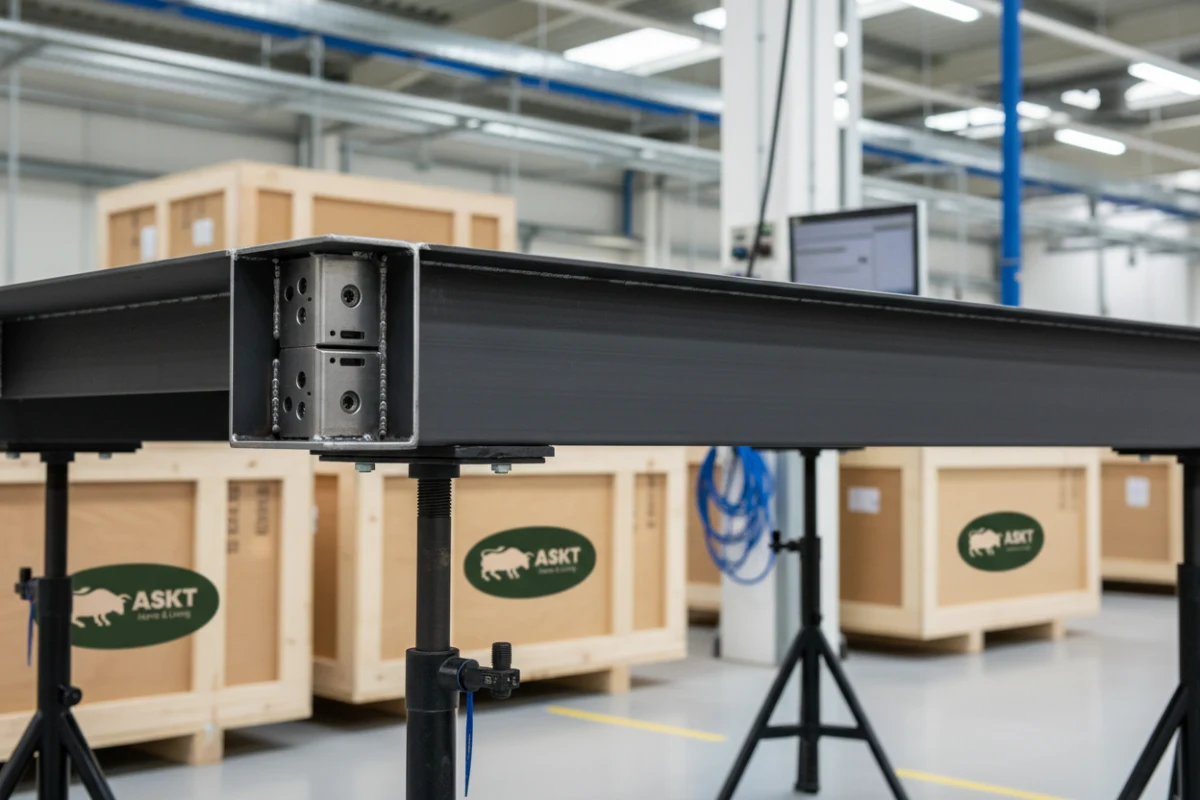
Ceramic and sintered stone slabs are exceptionally heavy materials, often weighing significantly more than traditional wood or veneer alternatives. Because of this high mass, the metal frame and underframe of the dining table cannot be viewed merely as an aesthetic element; they form the critical structural backbone that prevents the table from bowing, twisting, or wobbling.
If the metal support structure is poorly engineered or lacks sufficient wall thickness, the heavy tabletop will cause the frame to deflect or flex under load. Over time, even minor structural flexing exerts constant shear stress on the laminated joints of the tabletop, leading to catastrophic failure. To prevent this, professional B2B manufacturers construct integrated structural metal grids or support rings that sit directly beneath the tabletop. This frame ring absorbs and distributes the heavy load evenly down through the legs, preventing the stone or glass from bearing concentrated stress.
When evaluating a manufacturer, buyers should verify the gauge and wall thickness of the carbon steel or structural aluminium used in the underframe. Ensure that the underframe undergoes rigorous deflection testing under vertical load. When a heavy load is applied to the center of the table, the structural frame must show minimal deflection and recover instantly to its original position once the load is removed. This ensures the table remains completely rigid, safe, and stable when families gather or commercial patrons lean on the table edge.
What Quality Control Checks Prevent Welding and Coating Defects on Metal Underframes?
For European furniture wholesalers, the commercial lifespan of a contemporary dining table depends directly on the craftsmanship of its joints and the durability of its metal surface treatment. These are two of the most frequent areas where substandard suppliers cut corners, resulting in high return rates and brand damage.
First, inspect the quality of the welding joints. Manual welding is highly inconsistent, often leaving behind weld slag, uneven beads, and weak joint penetration that can fail over time under the heavy weight of a ceramic top. High-quality manufacturers utilize advanced automated robotic welding systems. Robotic welding provides incredibly consistent, deep penetration welds that distribute mechanical stress evenly across the leg joints, ensuring long-term structural integrity without requiring excessive post-weld grinding that could thin and weaken the metal tubing walls.
Second, thoroughly evaluate the powder coating process. European buyers demand finishes that resist scratching, household cleaning chemicals, and corrosion. The metal frames must undergo a thorough multi-stage pretreatment process (including degreasing and rust-removal phosphating) before the powder coating is electrostatically applied and cured in a high-temperature oven. Without proper pretreatment, the powder coat will fail to adhere correctly, leading to progressive chipping, blistering, or peeling when exposed to humidity. Buyers should demand cross-hatch adhesion and environmental corrosion testing data from their suppliers to guarantee finish longevity.
How Does KD (Knock-Down) Structure Precision Impact Last-Mile Assembly and Return Rates?
To maximize maritime shipping space and minimize transport costs to European distribution hubs, the vast majority of ceramic dining tables are shipped as Knock-Down (KD) furniture. While KD engineering dramatically improves logistics efficiency, it introduces a major point of failure if the connecting hardware and joint tolerances are not meticulously controlled.
During your B2B dining table manufacturer evaluation, pay close attention to the KD connection interfaces where the structural legs bolt to the main underframe. Direct metal-on-metal connections utilizing simple self-tapping screws will quickly loosen, strip, and fail. Reliable B2B manufacturers utilize heavy-duty metal-to-metal insert nuts or structural steel mounting plates welded directly to the frame or leg components. The hardware used must be high-tensile carbon steel bolts combined with locking washers that maintain constant tension, preventing the joints from loosening over time.
Crucially, verify the precision of the thread alignment. Even a minor deviation in thread angle will cause cross-threading during assembly. If the retail customer, delivery team, or contract installer encounters cross-threaded bolts that jam or strip, the entire table becomes useless, leading to immediate product returns, costly service calls, and negative consumer reviews. Buyers should conduct random assembly testing during their pre-shipment inspections to verify that all hardware aligns perfectly and can be tightened smoothly by hand using standard tools.
What Sustainable Transit Packaging Solutions Reduce both Damage and Plastic Waste?
Ceramic dining tables are uniquely vulnerable to transit damage. While the flat surface is highly scratch-resistant, the edges and corners are highly sensitive to impact. If the packaging design is insufficient, buyers will face high transit damage rates during maritime transport and last-mile domestic handling in European logistics networks.
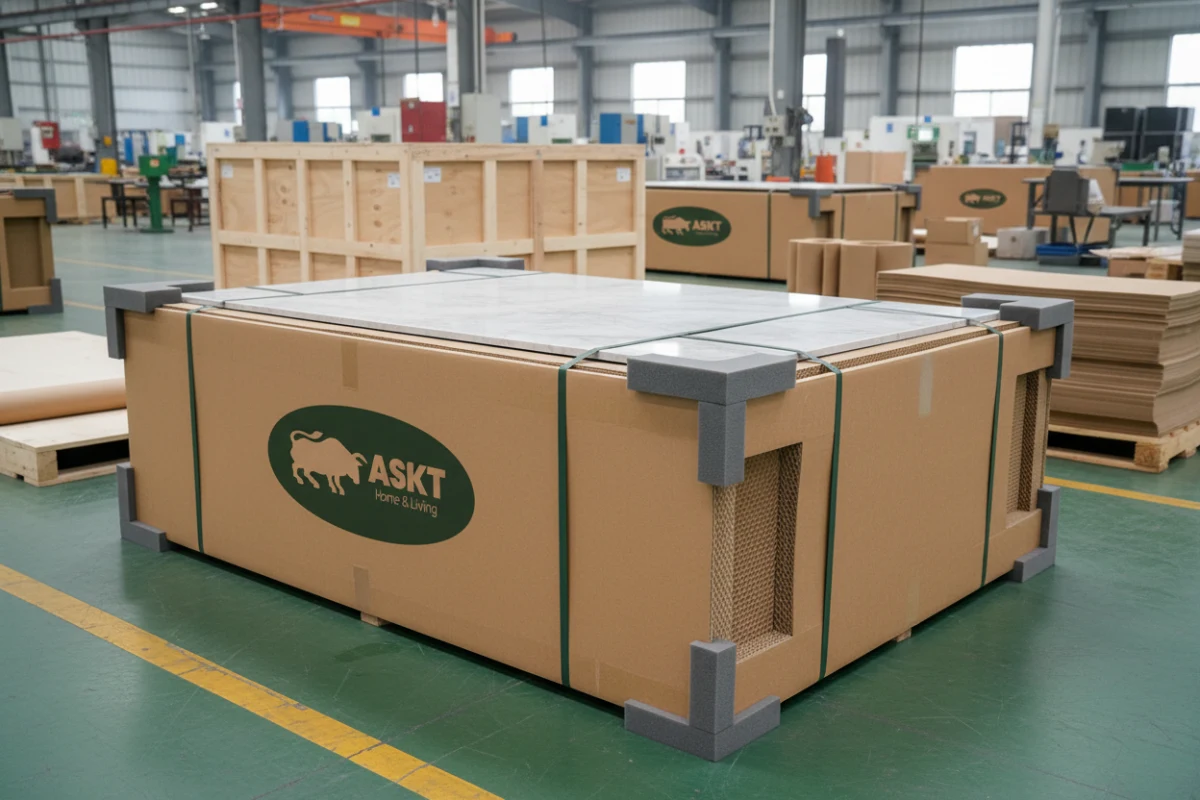
At the same time, European importers are facing increasingly strict environmental regulations, local waste disposal taxes, and corporate ESG mandates that penalize excessive plastic and polyfoam packaging. Therefore, your furniture sourcing checklist China must prioritize sustainable packaging with reduced plastic use. Progressive manufacturers are actively transitioning away from traditional expanded polystyrene (EPS) foam toward highly recyclable, paper-based protective solutions.
When reviewing packaging specifications, check for the following protective elements:
- High-Density Honeycomb Paper Board: Heavy-duty structural honeycomb cardboard sheets should replace traditional plastic foams, providing exceptional shock absorption and compression resistance without generating plastic waste.
- Compressed Paper Pulp Corner Protectors: Dense, custom-molded L-shaped corner guards made from compressed paper pulp must be positioned to cushion the vulnerable corners and edges of the ceramic slab.
- Multi-Layer Reinforced Outer Cartons: The table should be packed in five-layer or seven-layer double-wall corrugated cartons designed to withstand high stacking pressure inside sea containers and delivery vans.
- Drop-Test Verification: The packaged table should undergo and pass standardized drop-testing protocols, simulating drops from multiple angles onto its corners, edges, and flat faces to guarantee product safety during transport.
How Can Container Stacking and Logistics Be Optimized for European Weight and Volume Limits?
Maritime freight rates to European ports, such as Rotterdam, Hamburg, or Felixstowe, represent a substantial portion of your overall landed cost. Achieving maximum container loading density is therefore a critical component of a successful B2B sourcing strategy.
Because ceramic and sintered stone dining tables are exceptionally heavy, containers will often reach their maximum legal road weight limit in European countries before their physical volume is completely filled. A professional manufacturer understands this balance and will work closely with your logistics team to optimize the load. This involves calculating both the exact physical volume of the cartons and the gross weight of the cargo to prevent over-weight penalties at European ports.
To solve this weight-versus-volume challenge, professional suppliers design mixed container loading plans. By combining heavy items like ceramic dining tables with lighter, volume-consuming products such as upholstered dining chairs, bar stools, or dining benches, you can fully utilize both the weight and volume capacities of a standard container. Furthermore, the manufacturer should design the outer carton dimensions so they stack with minimal dead space, preventing shifting during maritime transport and reducing freight costs per unit.
What Should Be Included in Your Furniture Sourcing Checklist for China Sourced Tables?
To ensure consistent quality and streamline your procurement process, we have compiled a structured inspection checklist. This verification matrix outlines the critical parameters, inspection methods, and acceptable standards that your quality assurance team or third-party inspection agency should check at the factory before container sealing.
| Inspection Component | Key Quality Parameter | Sourcing Verification Method | Acceptable Quality Standard |
|---|---|---|---|
| Tabletop Material | Flatness Tolerance | Measure diagonally and lengthwise using a level ruler | Deflection must remain within the strict contracted limit; zero noticeable warping |
| Lamination Bonding | Visual edge inspection and temperature-cycling test | No adhesive squeeze-out, bubbles, or peeling along the lamination seam | |
| Edge Finishing | Visual and tactile inspection of all edges | Smooth, micro-bevelled, or chamfered edges with no sharp spots or micro-chips | |
| Underframe Stability | Structural Deflection | Apply vertical load to the center of the frame assembly | Minimal deflection under load with immediate recovery; no structural creaking |
| Welding Consistency | Visual inspection of joints and load-bearing welds | Clean, continuous robotic welds with no surface voids, slag, or excessive grinding | |
| Coating Adhesion | Cross-hatch adhesion test and corrosion test check | Smooth, even powder coating with no peeling, bubbling, or visible metal exposure | |
| KD Structure Precision | Thread Alignment | Manual assembly test with standard bolts and insert nuts | 100% thread alignment; bolts screw in smoothly without binding or cross-threading |
| Hardware Strength | Verification of metal grade and material certificate | High-tensile structural steel bolts and washers that prevent joint loosening | |
| Packaging & Logistics | Damage Protection | Package drop test and outer carton inspection | Zero damage to tabletop corners; use of sustainable, plastic-reduced materials |
| Container Stacking | Dimension checking and loading plan simulation | Cartons sized to fit standard container dimensions with minimal dead space |
By systematically verifying each of these performance indicators, European wholesalers, retail buyers, and e-commerce brands can significantly reduce post-purchase claims, keep transit-related damage to a minimum, and build a highly profitable contemporary dining table portfolio.
As a professional B2B dining furniture manufacturer and sourcing partner, ASKT supports European wholesalers, retailers, and contract buyers with reliable contemporary indoor furniture. Our production facility combines advanced manufacturing technologies, including automated cutting and automatic robotic welding, with strict quality standards, transparent QC workflows, and sustainable packaging solutions to minimize sourcing risks. If you are evaluating dining chair or dining table suppliers for the European market, ASKT can support you with product development, material customization, quality testing, and stable export experience. Contact us today to discuss your next container order or custom OEM project at https://www.asktfurniture.com/.