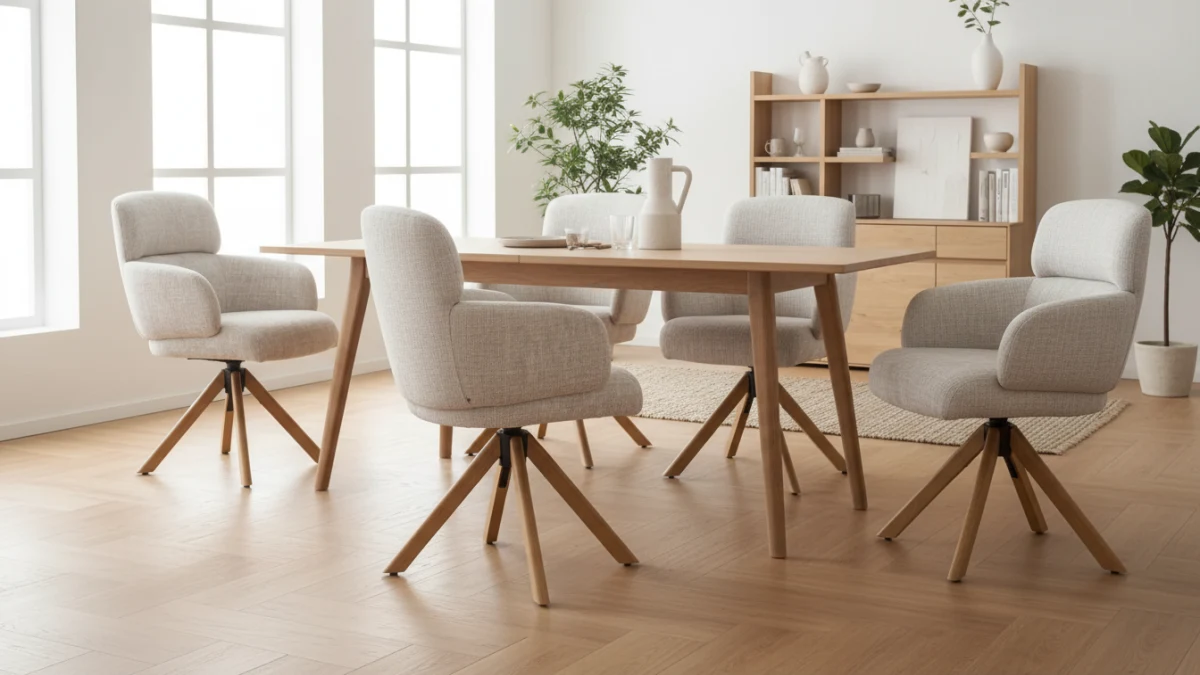
What Is C.O.M. in Furniture Sourcing? A Guide to Customer’s Own Material for Custom Dining Chairs
C.O.M. (Customer’s Own Material) is a specialized procurement model where B2B buyers supply their own fabrics or upholstery textiles directly to the manufacturer, enabling precise customization of dining chairs and lounge furniture while utilizing the factory's structural production expertise. This approach allows purchasing managers to bypass standard factory textile catalogs, achieving exact brand alignment and technical compliance for custom fabric dining chairs B2B without compromising on manufacturing stability.
What Is C.O.M. in Furniture Sourcing and How Does It Compare to Standard Sourcing?
In standard B2B furniture manufacturing, factories provide a "graded-in" textile collection. These are pre-approved fabrics that the manufacturer has already tested, stocked, and integrated into their automated cutting systems. However, for contract projects, high-end hospitality designs, and specialized retail portfolios, standard collections often fall short of specific aesthetic or technical demands.
This is where C.O.M. in Furniture Sourcing becomes essential. Under the COM model, the buyer takes full responsibility for selecting, purchasing, and transporting the upholstery material to the furniture factory. The manufacturer’s role is strictly limited to structural engineering, frames, foaming, cutting, sewing, and upholstery assembly.
There is also a closely related model known as C.O.L. (Customer’s Own Leather). While COM deals with woven, knitted, or synthetic textiles, COL focuses on natural hides, which require different nesting, cutting, and yield calculations due to the irregular shapes and natural markings of leather.
| Feature | Standard Graded-In Fabric Sourcing | Customer’s Own Material (C.O.M.) |
|---|---|---|
| Material Procurement | Managed entirely by the furniture factory | Managed and funded entirely by the B2B buyer |
| Lead Time Control | Highly predictable; fabric is stocked or locally sourced | Dependent on external textile mill lead times and shipping |
| Compliance Liability | Factory guarantees fire-retardant and environmental testing | Buyer must verify and supply certified compliant fabric |
| Minimum Order Quantity | Lower, as standard fabrics are processed in high volumes | Higher risk of fabric waste; shipping must meet factory yield |
| Yield & Waste Liability | Factory absorbs minor cutting mistakes and material defects | Buyer absorbs fabric flaws, directional repeat waste, and transit damage |
For commercial buyers, choosing between standard graded-in collections and COM upholstered furniture is a strategic decision. It balances the desire for total design freedom against the operational complexities of managing an extended, split-responsibility supply chain.
Why Do European Furniture Buyers Leverage C.O.M. for Custom Dining Chairs?
European furniture wholesalers, retail chains, and contract hospitality buyers operate in highly regulated and design-conscious environments. They frequently specify Customer’s Own Material dining chairs for several distinct commercial reasons:
1. Achieving Design Continuity Across Diverse Spaces
In commercial interior design—such as hotels, premium restaurants, and co-working spaces—designers aim for perfect harmony. They might want the upholstery of the dining chairs in the restaurant to match the wall panels, drapery, or lounge seating exactly. By utilizing COM, a purchasing manager can buy a single high-performance fabric from a European textile editor and split the batch among different specialized manufacturers: one for curtains, one for wall panels, and one for dining chairs.
2. Strict Compliance with Regional Fire Safety Standards
Fire retardancy regulations vary significantly across Europe. For example, the United Kingdom enforces the strict BS 5852 (Crib 5) standard for commercial upholstery, while Germany and other continental markets rely on DIN 4102 B1 or the broader EN 1021-1/2 certifications. Sourcing locally certified fabric and shipping it to the OEM factory guarantees compliance, reducing legal and commercial risks for importers.
3. Design Exclusivity and Competitive Differentiation
For major retail chains in the DACH region (Germany, Austria, Switzerland), market saturation is a constant challenge. To avoid price wars on generic designs, buyers secure design exclusivity by combining a proprietary seat shell with a unique, branded fabric. Our market research, which evaluated over 1,000 German households to analyze real-world dining scenarios (including table matching, room layouts, and floor wood types), shows that modern consumers prioritize custom, tactile experiences over mass-produced furniture. COM allows retailers to offer a bespoke product line that competitors cannot easily copy.
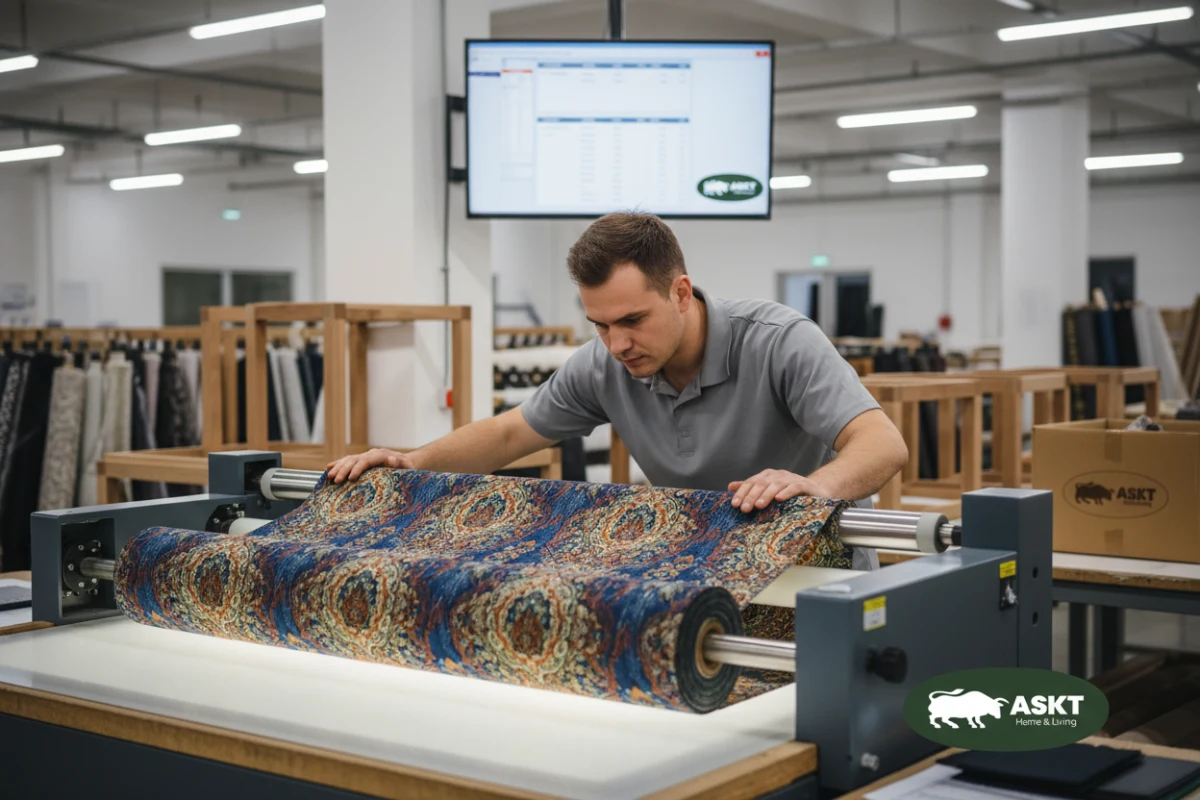
How Does the B2B Furniture OEM COM Process Work Step-by-Step?
Executing a successful furniture OEM COM process requires rigorous coordination. Because the supply chain is split between the fabric mill, the buyer, the logistics partner, and the furniture manufacturer, any communication gap can lead to expensive production delays. The standard operational workflow follows these critical phases:
- Step 1: Fabric Specification: The buyer submits the chosen fabric's Technical Data Sheet (TDS) to the factory. This document must state the fabric's composition, weight (g/m²), Martindale rub count, pile direction, stretch recovery percentage, and vertical/horizontal pattern repeats.
- Step 2: Consumption and Yield Calculation: The factory’s engineering team calculates the required yardage per chair. This must account for fabric width (usually 140 cm), pattern repeats (large floral, geometric, or striped patterns increase fabric waste), and directional pile (like velvet or chenille, which must be cut in a single direction to prevent shading differences).
- Step 3: Fabric Sample Submission and Pre-Approval: Before shipping rolls of fabric to China, the buyer sends a 1x1 metre fabric sample. The factory uses this to test sewability, seam strength, and compatibility with the internal foam structure.
- Step 4: Purchasing and Export/Import Logistics: Once approved, the buyer purchases the bulk fabric and arranges shipping to the factory. Because the factory is based in China, the fabric must undergo formal customs clearance. The shipment must be labeled with the correct tariff codes, commercial invoices, and a clear "COM Import for Re-export" declaration to avoid unnecessary import duties in China.
- Step 5: Incoming Quality Control (IQC) at the Factory: When the fabric arrives at the factory, our QC team inspects every roll. We check for color shade consistency across dye lots, weaving defects, and physical damage sustained during transit. Any defects are documented and reported to the buyer immediately, before cutting begins.
- Step 6: Automated Production and Assembly: The approved fabric is loaded into automated cutting machines for batch cutting. This computerized cutting maximizes yield and minimizes waste. The cut panels are then stitched and assembled onto the dining chairs by trained craftsmen.
What Technical Assessments Must Manufacturers Perform on COM Upholstered Furniture?
An experienced manufacturer will never accept a COM fabric without a thorough technical evaluation. Upholstering a dining chair requires the fabric to bend, stretch, and hold seams under high tension and frequent use. If a fabric is too thick, too thin, or lacks stretch, the final product will fail.
At ASKT, we perform four essential technical tests on all incoming COM materials to guarantee that they meet the durability requirements of the European contract and retail markets:
- Seam Slippage and Strength Testing: Under EN 12520 (the European standard for strength, durability, and safety in domestic seating), seams must withstand high loads. Some loosely woven designer fabrics suffer from "seam slippage," where the yarns pull apart under tension, exposing the inner foam. We test seam strength to determine if backing reinforcement (such as acrylic or non-woven interlining) is necessary.
- Stretch, Recovery, and Tension Mapping: Modern dining chairs with curved, ergonomic profiles require a specific level of fabric elasticity. If a fabric has zero stretch, it will wrinkle and pucker around tight corners. Conversely, if a fabric has too much stretch but poor recovery, it will sag and stretch out after a user sits on it. Our engineers evaluate the fabric's recovery profile to adjust the inner foam density and pull tension.
- High-Frequency Wear and Friction Analysis: Dining chairs are subject to constant friction, food spills, and abrasive cleaning. We review the Martindale rating (which should exceed 30,000 rubs for residential use and 50,000 rubs for contract hospitality settings). Additionally, we evaluate colour fastness to rubbing and light to ensure the fabric won't fade or transfer colour onto users' clothing.
- Manufacturing Safety and Chemical Compatibility: We place great importance on the safety of our workers and the environmental compliance of the finished goods. Our production facility is BSCI certified, meaning we enforce strict safety protocols. During the assembly of COM upholstered furniture, we provide each worker with protective overalls, metal cut-resistant gloves for those who cut fabrics, and gas masks for those who apply adhesives.
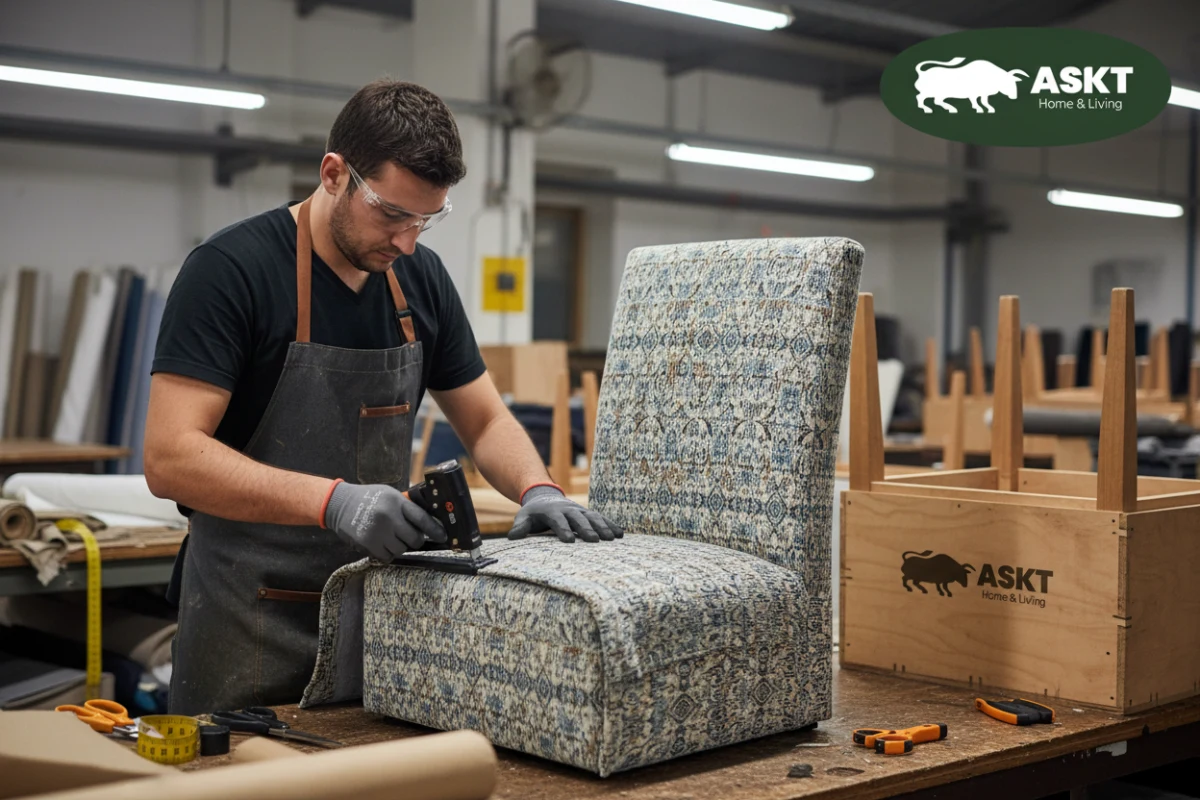
Furthermore, all glues used in our factory are eco-friendly, formaldehyde-free, and baby-friendly. If a COM fabric has been chemically treated with aftermarket stain-repellents or backing materials, we must test it to ensure it does not react negatively with our non-toxic adhesives or release harmful VOCs, preserving its OEKO-TEX Standard 100 compliance.
What Are the Sourcing Risks, Liabilities, and Logistics Challenges of C.O.M.?
While C.O.M. offers unparalleled design flexibility, it introduces unique risks that purchasing managers must manage. Understanding where liabilities lie is critical to preventing budget overruns and project delays.
1. Split Warranty and Quality Disputes
This is the most common B2B challenge with COM. If a dining chair’s seams split after six months of use in a restaurant in the Netherlands, who is responsible? The fabric mill will claim the upholstery factory used incorrect needles or pulled the fabric too tight. The furniture factory will claim the fabric suffered from poor seam slippage resistance. To avoid these disputes, buyers must establish clear Quality SLA boundaries before production. At ASKT, we run pre-production sample testing and provide a formal compatibility sign-off sheet. This clarifies whether a material is structurally fit for the selected chair design.
2. Fabric Waste and Yield Inaccuracies
Unlike standard fabrics, where a factory can simply pull another roll from their warehouse, COM fabrics are limited. If the fabric has a large pattern repeat and the buyer does not calculate the extra waste correctly, the factory may run out of fabric with only 90% of the order completed. Ordering and shipping a single roll of replacement fabric from Europe to China via air freight is incredibly expensive and will ruin your profit margins.
3. Importing Textiles into China (Customs and Tariffs)
China has strict import regulations on textiles. If your shipping documents do not match the actual roll weights, compositions, or values, Chinese customs may seize the container. This can delay your entire furniture production run by weeks. It is crucial to work with a manufacturer that has experienced import-export compliance teams to manage the customs clearance process smoothly.
How Does ASKT Mitigate Sourcing Risks: ASKT-Tex and In-House Fabric Collections?
To help our European B2B partners minimize the logistics costs, customs risks, and long lead times associated with C.O.M., we developed our own high-performance fabric collections as a hassle-free alternative.
Published in the March 2025 issue of möbelmarkt, our material engineering breakthrough, ASKT-Tex, offers a reliable alternative to external COM sourcing. Developed specifically for high-use commercial and residential dining spaces, ASKT-Tex balances performance with a premium, soft touch.
- Advanced Stain Resistance: ASKT-Tex features a molecular-level hydrophobic nano-coating that repels liquids, making it easy to clean while remaining breathable. Perfect for busy restaurants and families.
- Certified Safety: The collection is fully OEKO-TEX Standard 100 certified, completely formaldehyde-free, and baby-friendly, satisfying strict European health and safety regulations.
- Eco-Friendly and Sustainable: In line with European Green Policies and ESG goals, our sustainable textile options include fabrics woven from recycled plastic bottles, helping buyers reduce their carbon footprint.
- Pet-Friendly and Durable: Tested for high abrasion resistance and colour fastness, these fabrics are scratch-resistant and highly durable.
- Zero Supply Chain Friction: By using our in-house pre-approved fabrics, you completely bypass international textile shipping, import tariffs into China, and incoming quality risks, reducing your lead times by up to 25 days.
For buyers who still require custom designs but want to avoid the complexities of COM, our in-house catalog offers hundreds of colours, textures, and performance specifications that are pre-tested and ready for production.
Can You Optimize COM Procurement with Modular Systems Like KINEXA?
One of the biggest pain points for European furniture importers and wholesalers sourcing custom dining chairs is meeting the factory's Minimum Order Quantity (MOQ). Shipping a small batch of custom fabric for a unique product line often results in high shipping costs and fabric waste.
To solve this, ASKT introduced the KINEXA modular manufacturing system (detailed in the February 2026 issue of möbelmarkt). KINEXA redefines how custom fabric dining chairs B2B are manufactured by standardizing internal components while keeping the exterior highly customizable.
- Standardised Shells, Custom Upholstery: KINEXA uses a selection of standardized, pre-engineered inner seat shells and frames. This allows buyers to mix and match standard fabrics and COM fabrics within a single container order, lowering the effective MOQ per fabric option.
- Optimized Container Loading and KD Structures: KINEXA chairs are engineered with Knock-Down (KD) structures, allowing them to pack flat. This dramatically improves container loading efficiency, reducing logistics costs per chair for European importers.
- "Test First, Ship Second" Philosophy: By using standardised, pre-certified frames and shell structures, we guarantee compliance with commercial strength standards (like EN 12520) regardless of the upholstery option chosen. We only need to test the fabric's compatibility, not the entire chair structure, which saves weeks of development time.
- Sunbin KI Conversational Platform: To make custom sourcing fast and digital, our Sunbin KI platform utilizes structured, automated guiding questions. It assists category managers and sourcing directors in configuring modular components, calculating fabric yardage, and verifying packaging specifications, ensuring clear and efficient communication.
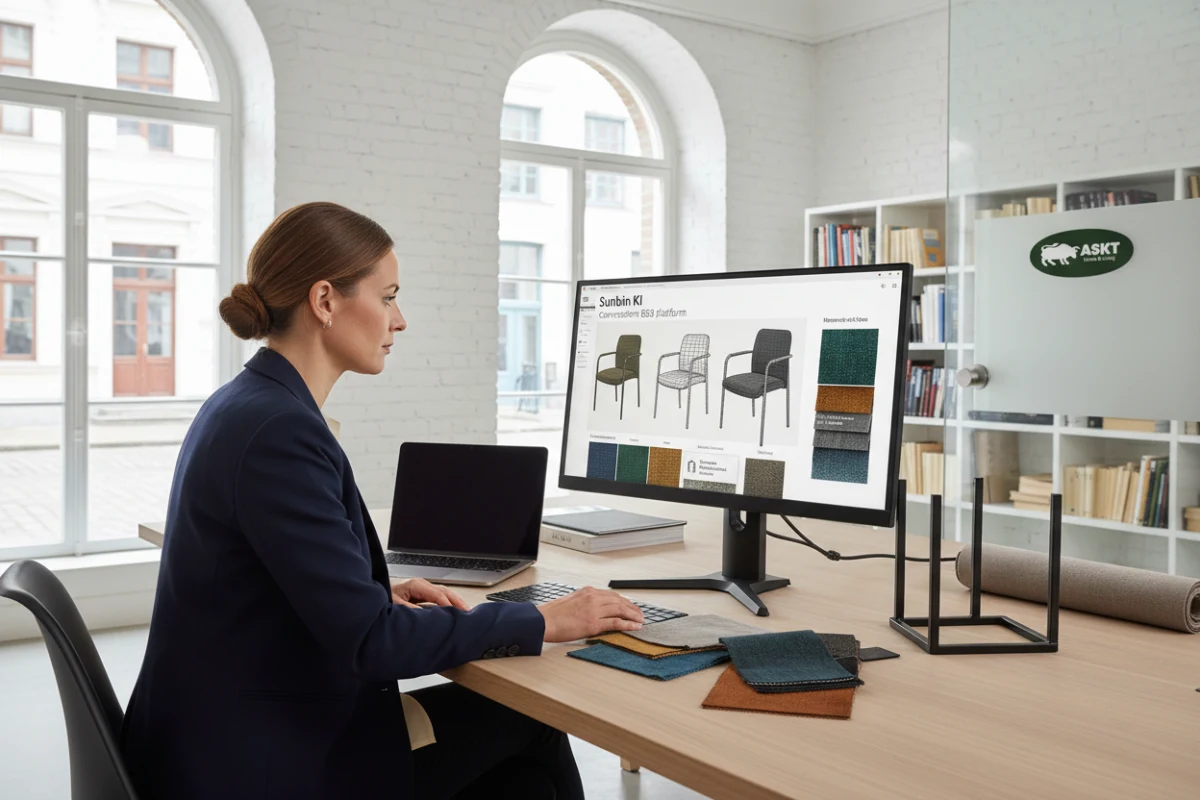
By combining modular manufacturing with our digital procurement tools, ASKT has established itself as a reliable, transparent supply chain partner. In 2024 alone, we exported over 550,000 dining chairs to the highly competitive German market, proving that B2B sourcing success is built on manufacturing consistency, supply chain reliability, and practical technical expertise.
If you are evaluating dining chair or dining table suppliers for the European market, ASKT can support you with product development, customization, quality testing and stable export experience. For European wholesalers, retailers and project buyers looking for reliable dining furniture supply from China, ASKT can help turn product ideas into commercially stable collections.