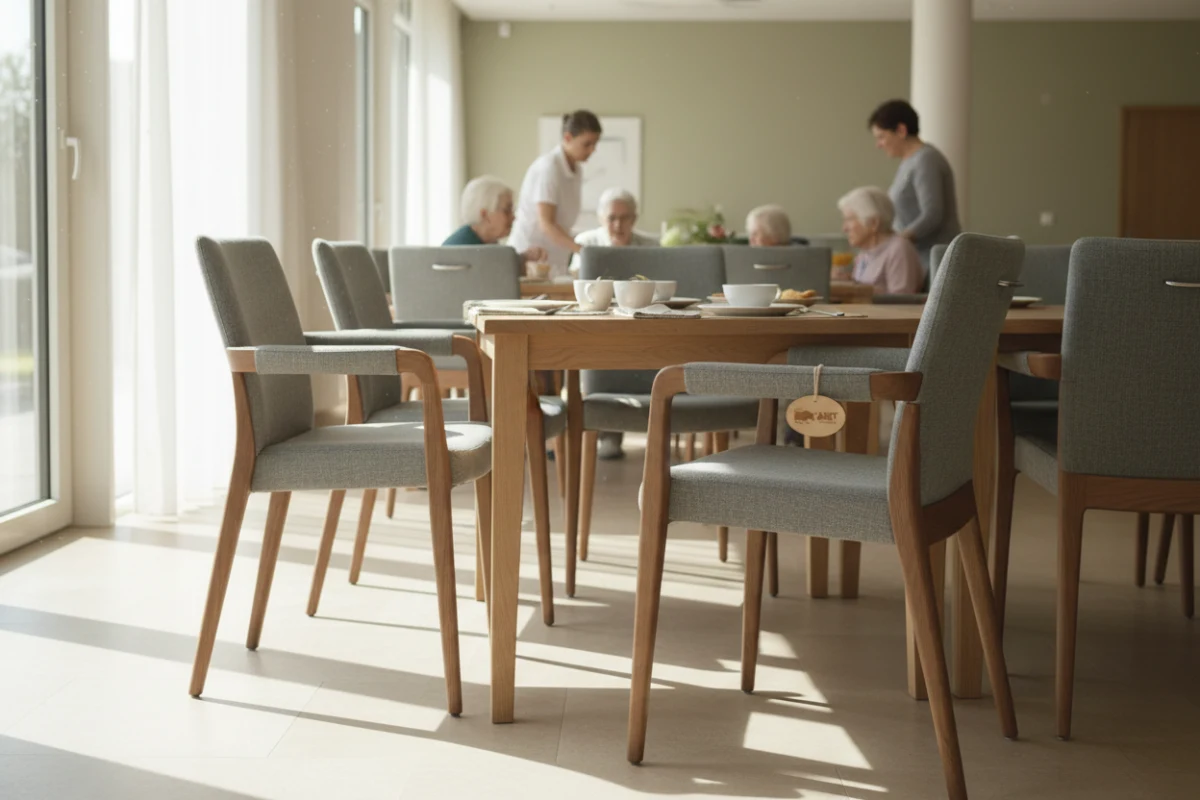
What Makes a Dining Chair Suitable for Senior Living and Care Homes?
A suitable senior living dining chair must prioritize high structural stability, precise ergonomic dimensions such as optimized seat height and stable armrests, and high-performance, easily cleanable fabrics. For professional B2B buyers, ensuring these chairs pass rigorous contract testing is essential to guarantee resident safety, occupational hygiene, and long-term commercial durability in high-frequency care environments.
Why do standard domestic dining chairs fail in professional healthcare settings?
When managing senior living projects, procurement directors and furniture wholesalers are often tempted to specify residential-style dining chairs to create a warm, residential aesthetic. However, standard domestic dining chairs are structurally and materially inadequate for the relentless demands of a professional care facility.
First, the frequency and nature of physical interaction in a care home are significantly higher than in a typical household. Residents do not merely sit in these chairs; they rely on them as vital mobility support. When transitioning from sitting to standing, an elderly resident with reduced lower-body strength will apply their entire weight to the armrests, testing the torsional strength of the joint connections. Domestic chairs, often constructed with basic joints or light-weight fasteners, quickly wobble, loosen, and fail under this repetitive off-center loading. This creates a massive safety and liability risk for the care facility.
Second, the chemical sanitization regimes in healthcare settings are intensive. To maintain proper infection control, care staff regularly wipe down surfaces with active chemical sanitizers and aggressive cleaning agents. Domestic wood lacquers and low-spec metal finishes cannot withstand this constant chemical exposure. Within months, wood varnishes soften, crack, and harbor dangerous pathogens, while low-grade coatings on metal frames begin to peel and rust.
By contrast, contract-grade seating is engineered from the ground up to endure heavy-duty usage and continuous chemical exposure. They feature reinforced frame structures, specialized internal support joints, and medical-grade finishes. For wholesalers and importers serving the European market, understanding what makes a dining chair suitable for senior living and care homes is critical to mitigating liability risks and ensuring long-term commercial success.
What are the exact ergonomic dimensions required for senior dining seating?
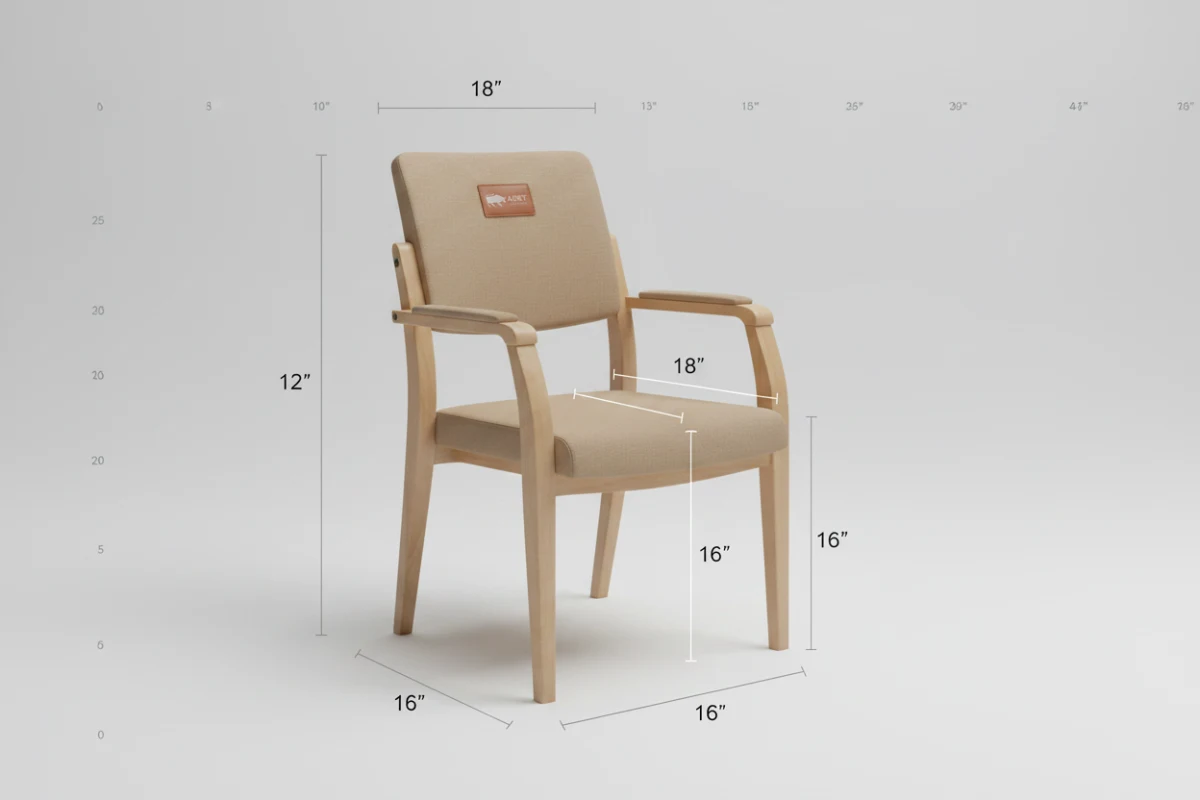
To design effective ergonomic senior dining seating, manufacturers must account for the physical changes associated with aging, such as reduced bone density, joint stiffness, and limited range of motion. Standard dining chairs are typically too deep, too low, or lack proper back support, making them highly uncomfortable and potentially dangerous for elderly users.
Seat Height: The most critical dimension is seat height. If a chair is too low, residents with weak quadriceps or arthritic knees will struggle to stand up, increasing the risk of falling back onto the chair or losing their balance. If the seat is too high, their feet will dangle, compressing the thighs, restricting blood circulation, and creating a sensation of instability. The optimal seat height for senior dining must allow the resident's feet to rest flat on the floor while maintaining a stable knee angle.
Seat Depth and Width: Excessive seat depth forces the resident to lean back to seek support, which pulls their lower back away from the lumbar support or forces them to slouch. This slouching posture compresses the diaphragm and digestive tract, making dining uncomfortable and hindering digestion. The seat width must be sufficient to accommodate varying body types and provide a sense of spacious security.
Armrest Design: Armrests are non-negotiable for senior dining chairs. They must extend to the front edge of the seat pan so that the resident can grip them securely when preparing to stand. Round, slippery, or excessively thin armrests do not provide sufficient leverage. Instead, the armrests should be flat, supportive, and positioned at a comfortable height above the seat, with a tactile drop or grip-friendly contour at the front.
Let's present a comparison of specifications in a clear B2B comparison table:
| Design Parameter | Standard Dining Chair | Contract Ergonomic Senior Dining Seating | Sourcing Value & Mechanical Impact |
|---|---|---|---|
| Seat Height | Highly variable, often too low | Optimized and elevated | Restores independence; reduces quadriceps strain during standing. |
| Seat Depth | Deep for relaxed lounging | Shallow to moderate | Maintains spinal alignment; prevents slouching during meals. |
| Armrest Design | Slanted, recessed, or absent | Flat, supportive, and extended forward | Provides critical weight-bearing leverage; prevents lateral slipping. |
| Backrest Angle | Highly reclined | Upright with supportive lumbar curve | Promotes correct posture; facilitates safe swallowing and digestion. |
How does frame architecture guarantee anti-tip stability and safe movement?
Tipping is a major safety concern in senior living dining rooms. When seniors seat themselves, they frequently approach the chair from the side or lean heavily on the backrest. If the chair's footprint is narrow or its center of gravity is too high, the frame will tip, leading to severe injury.
To prevent tipping, the legs of a high-quality care home dining chair must flare outward slightly, broadening the base of support. The rear legs, in particular, should sweep backward past the vertical plane of the backrest. This design counteracts the downward and backward force exerted when a resident sits down heavily or leans back.
Furthermore, wood frames, while traditional, are susceptible to moisture expansion, joint shrinkage, and structural cracking over time. To eliminate these risks, many modern contract buyers are shifting toward metal-framed chairs. A heavy-duty steel or aluminium frame provides consistent joint integrity that wood simply cannot match. When metal frames are treated with a multi-layer powder coating, they resist impact scratches, chemical cleaning, and physical wear, ensuring structural reliability.
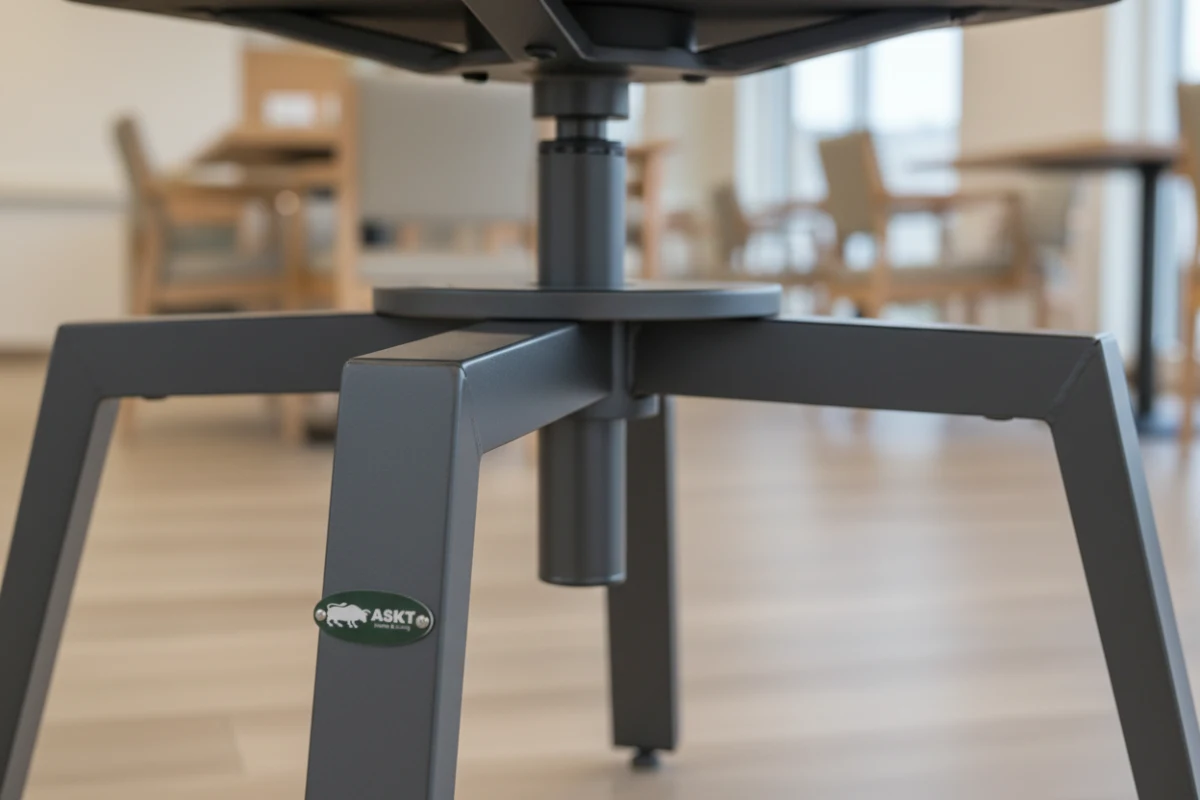
Another architectural advancement in contract healthcare dining chairs is the integration of specialized swivel mechanisms. An auto-return swivel mechanism allows the chair to turn smoothly, allowing the resident to sit down easily from the side before turning themselves toward the dining table. The auto-return function automatically realigns the chair to its starting position once the resident stands up, keeping the dining room organized and reducing tripping hazards for both residents and care staff.
Which upholstery fabrics meet both clinical hygiene and tactile comfort?
Selecting the right upholstery fabric is a critical aspect of care home dining chairs wholesale purchasing. Care home dining rooms are high-frequency environments where spills, food stains, and moisture are daily occurrences. However, using cold, institutional, vinyl-only seating can make a care facility feel like a sterile hospital, negatively impacting resident well-being.
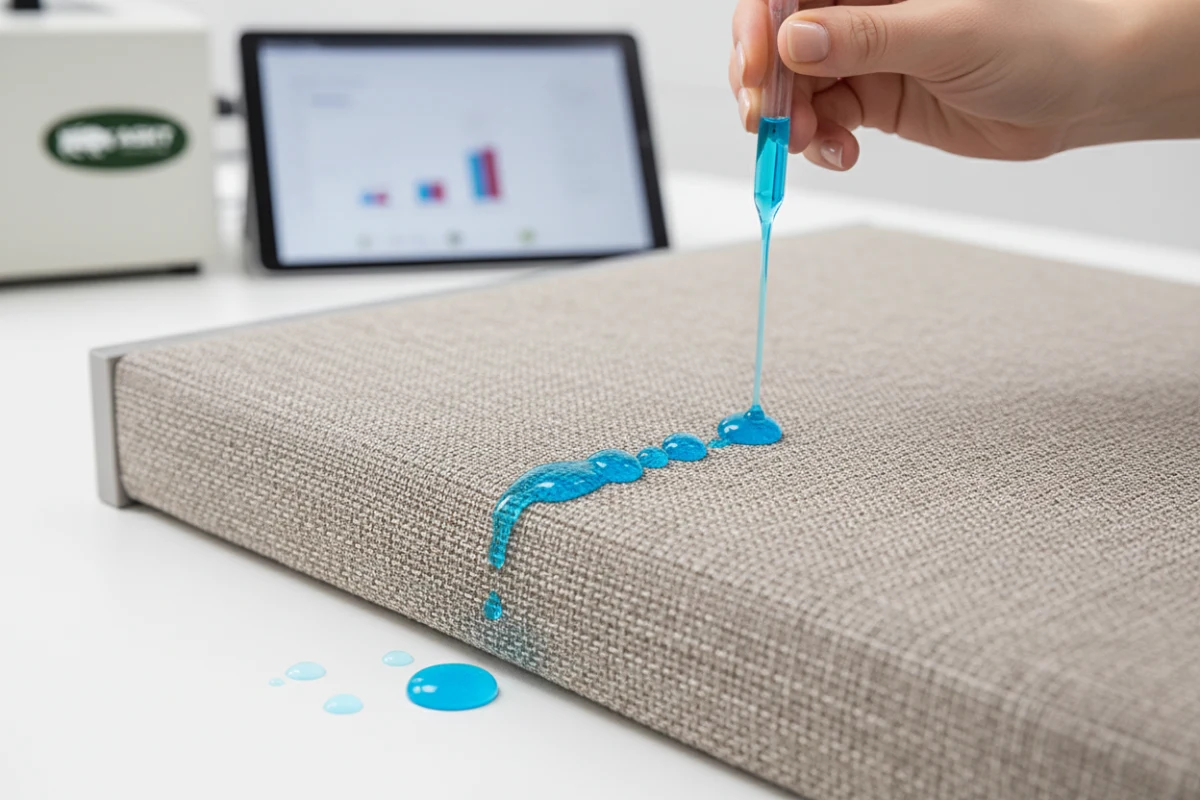
Professional B2B buyers must find materials that strike a perfect balance between clinical cleanability and a warm, residential touch. High-performance functional fabrics solve this dilemma. Modern performance fabrics achieve complete resistance to water, oil, and stains while remaining highly breathable, offering a soft, premium feel that elevates the dining experience.
When evaluating fabrics for senior dining chairs, B2B buyers should look for the following technical specifications:
- Waterproofing and Fluid Barriers: The fabric must feature an integrated, impermeable backing. This prevents liquids from penetrating into the internal foam or pocket spring seating, avoiding bacterial growth, mold, and deep-seated odors.
- Abrasion Resistance: Contract environments require fabrics with high wear resistance and strong colour fastness. Buyers should verify testing for high rub counts to guarantee multi-year durability.
- Tactile Comfort and Breathability: High-performance fabrics provide a soft textile feel, maintaining warmth and comfort for residents who sit for extended periods, without causing sweat build-up.
- Pet-Friendly Properties: The fabric weave should be resistant to snagging, ensuring durability even when the furniture comes into contact with therapy pets or mobility aids.
How can B2B buyers optimize senior living furniture sourcing and logistics?
Sourcing specialized healthcare seating can be financially risky for furniture wholesalers and retailers. On one hand, care home projects require customization—such as matching specific wood veneers, metal finishes, or project-specific fabric colours. On the other hand, traditional manufacturers often demand high Minimum Order Quantities (MOQs) per customized model, which can lead to excessive inventory costs and cash flow strain for the buyer.
To navigate this challenge, smart buyers leverage modular design and manufacturing systems. A modular furniture architecture allows buyers to mix and match standard seat shells with various base configurations (such as fixed metal legs, wooden legs, or auto-return swivel bases). This component-level standardization enables highly efficient batch productions while giving the buyer the flexibility to customize the final product. As a result, B2B buyers can achieve low MOQs per model, optimize container loading configurations, and significantly lower their inventory risk.
Additionally, buyers should implement a strict "Test First, Ship Second" protocol. Before committing to a mass production run of hundreds of chairs, the buyer should request a fully finished sample for physical evaluation. This sample must be tested to verify its structural integrity, fabric performance, and dimensional accuracy. Only after the sample passes all quality gates should the container order be finalized.
Finally, logistics efficiency must be optimized. Chairs featuring a Knocked Down (KD) structure can be flat-packed, drastically reducing the shipping volume and maximizing the number of units per container. However, for contract projects where immediate deployment is required, buyers must calculate the trade-off between the ocean freight savings of KD structures and the localized labor costs of assembling the chairs on-site. A reliable manufacturer will offer optimized packaging solutions—utilizing robust cardboard and packaging protection instead of excess plastics—to protect the finished products from damage during transit while supporting the buyer's sustainability targets.
Frequently Asked Questions About Senior Dining Chairs
What is the importance of EN testing for contract healthcare dining chairs?
EN testing certifies that a dining chair has undergone rigorous physical evaluation for strength, durability, and safety under commercial-use conditions. For senior living environments, verifying that a chair meets these European contract standards is crucial to ensure it can withstand continuous daily use and prevent structural failure or tipping accidents.
Are metal-framed dining chairs with wood-grain powder coating as warm as solid wood frames?
Yes. Advanced wood-grain powder coating technology allows metal frames to replicate the visual warmth, colour tones, and natural textures of oak or beech wood. This allows B2B buyers to maintain a welcoming, non-clinical residential aesthetic while gaining the superior structural strength, durability, and chemical resistance of a metal frame.
How do waterproof and easy-clean fabrics improve operational efficiency in care homes?
Waterproof fabrics with integrated fluid barriers prevent food spills and moisture from soaking into the underlying foam or pocket spring seating. This allows care home staff to quickly wipe the surfaces clean with standard disinfectants, ensuring high hygiene standards, preventing bacterial odors, and reducing maintenance down-time between meals.
Conclusion
Specifying the right dining seating for senior living and care home environments requires a balanced focus on structural safety, clinical hygiene, and precise ergonomic dimensions. By choosing products designed for high-frequency contract use rather than standard domestic chairs, B2B buyers can drastically reduce their liability risks, ensure regulatory compliance, and provide residents with the comfort and autonomy they deserve.
If you are a category manager, importer, or contract furniture buyer evaluating new suppliers for the European market, compiling a comprehensive purchasing checklist is your best defense against sourcing risks. Request Senior Living Chair Checklist to access our professional quality control and dimensional guide, or reach out to our team to discuss customized OEM/ODM development.