Where Can European Furniture Retailers Source Custom Dining Chairs?
European furniture retailers can source custom dining chairs from specialized B2B manufacturers in China that combine advanced industrial manufacturing with strict European compliance, flexible OEM/ODM customization, and optimized logistics. By partnering directly with an experienced Chinese manufacturer, retailers can mitigate supply chain risks, ensure consistent quality, and access tailored designs that match the unique aesthetic and durability demands of the European market.
Why is China the primary hub when considering where can European furniture retailers source custom dining chairs?
When evaluating where can European furniture retailers source custom dining chairs, the search consistently leads to specialized industrial regions in China. China's dominance in the global furniture sector is driven by deep supply chain integration. The modern manufacturing ecosystem brings together raw material suppliers, high-tensile steel tube processors, specialized hardware manufacturers, and advanced textile mills within highly concentrated industrial zones. For purchasing managers and category directors at European retail chains, this tight integration translates directly into reduced material transport times, greater raw material consistency, and highly stable production cycles.
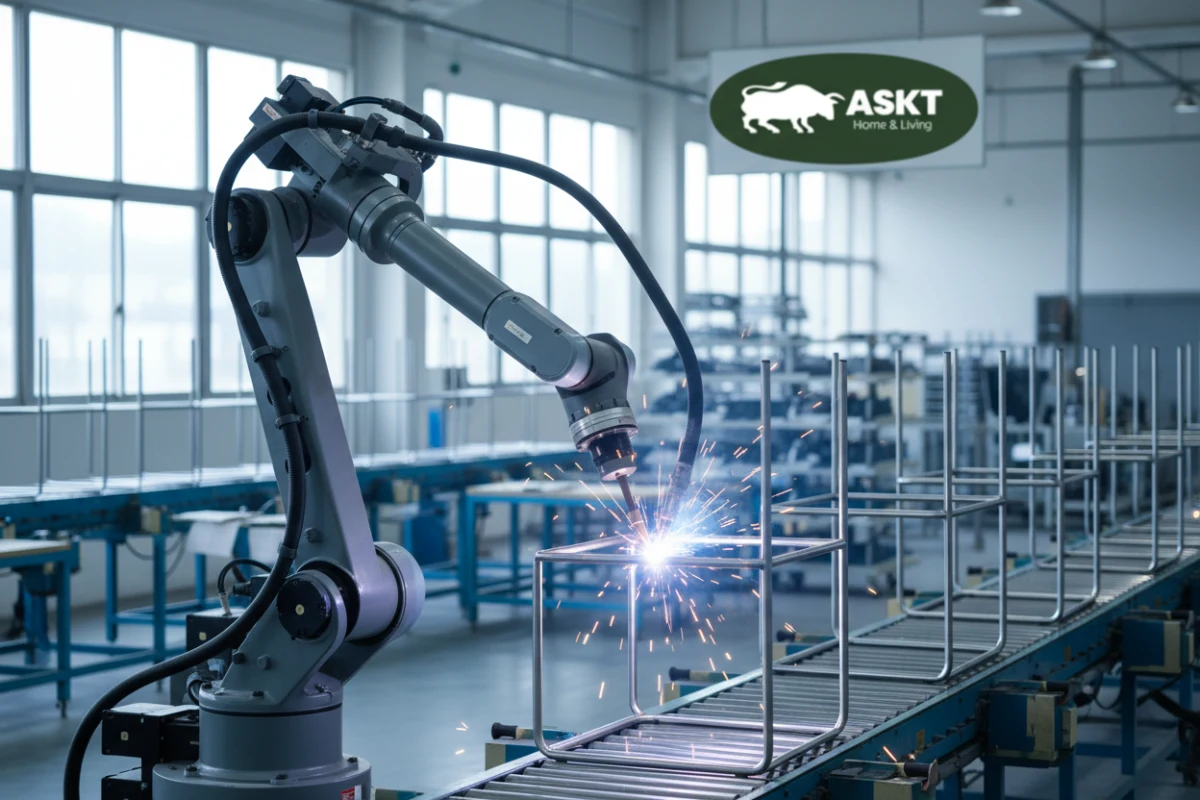
In the past, international sourcing was often plagued by the variability of manual craftsmanship. Today, leading custom dining chair manufacturers have transitioned to advanced automated production technologies. By replacing manual operations with computerized cutting and assembly systems, these factories achieve an unprecedented level of structural and aesthetic consistency. For example, computerized textile cutting machines slice through heavy upholstery fabrics with millimeter precision, minimizing waste and ensuring that fabric patterns align perfectly on every single chair. Automated metal tube bending and robotic welding systems ensure that the structural frames of dining chairs are fused with perfect accuracy, eliminating the weak points commonly associated with manual welding.
For high-volume European buyers, this technological shift is critical. In markets like Germany, the Netherlands, and the UK, retail operations require thousands of units to match exact floor samples. A reliable Chinese manufacturing partner can easily scale production to deliver hundreds of thousands of chairs annually to the European market while maintaining the exact same dimensional tolerances, stitching alignment, and finish quality across every single shipment. This level of industrial consistency is why major European buying groups and e-commerce platforms continue to rely on China as their primary manufacturing base.
How should buyers evaluate a custom dining chair manufacturer China for high-volume retail demands?
Selecting the right custom dining chair manufacturer China requires a systematic evaluation that goes far beyond reviewing product catalogs or receiving initial price quotes. European furniture retailers must partner with manufacturers that specialize exclusively in B2B supply chains and possess a deep, practical understanding of European consumer preferences, retail standards, and regulatory landscapes. A dedicated B2B manufacturer understands that professional buyers care about structural integrity, packaging efficiency, cargo safety, and long-term supply continuity.
A key differentiator for a premium supplier is their approach to OEM and ODM development. A reliable manufacturer must offer robust customization options, allowing retailers to modify fabric compositions, colors, metal finishes, base designs, and overall dimensions to match their existing product portfolios or local market trends. Furthermore, a professional supplier respects design exclusivity. In highly competitive markets like Germany, the Netherlands, and Switzerland, having unique product lines is essential for maintaining retail margins. An experienced partner will guarantee that custom-developed designs remain exclusive to the purchasing retailer within their specific geographic territory.
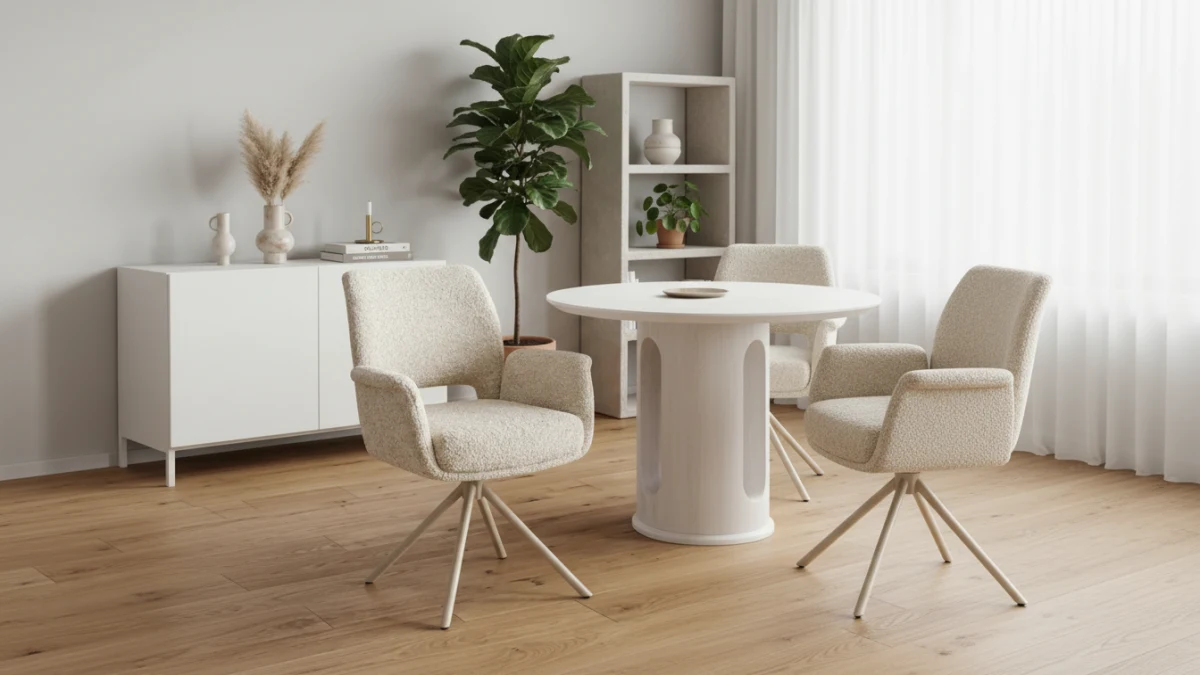
To ensure that product development translates into retail success, the supplier's design methodology should be grounded in practical market intelligence rather than abstract concepts. The best manufacturers study real-world European dining environments—analyzing typical room dimensions, walking spaces, and how different chairs coordinate with extension dining tables, sintered stone tops, or oak veneers. This meticulous, research-driven approach ensures that the developed seating collections feature the correct seat heights, backrest angles, and footprint sizes to seamlessly integrate into the homes of European consumers, thereby maximizing sell-through rates for the retailer.
What standards govern dining chair quality control and compliance for the European market?
For any European sourcing director, dining chair quality control and compliance represent the foundation of sustainable business operations. Importing furniture into the European Union involves navigating strict liability laws. Non-compliant products can lead to costly customs delays, financial penalties, and brand damage. Therefore, verifying a manufacturer's commitment to rigorous testing and international quality standards is paramount.
The primary benchmark for seating safety in Europe is EN testing, which evaluates the structural strength, stability, and durability of domestic and contract furniture. A professional manufacturer must have a comprehensive understanding of these requirements and maintain an active quality management system throughout the entire production lifecycle. This process begins with meticulous incoming material inspections, where raw steel tubes, structural plywood, foam, and upholstery fabrics are verified against performance benchmarks before entering the production line.
To guarantee consistent quality, top-tier manufacturers operate advanced in-house testing laboratories. Here, production samples undergo continuous mechanical testing to simulate years of intensive daily use. These tests include:
- Load and Fatigue Testing: Applying repetitive heavy forces to the seat and backrest to verify that the frame and joints do not bend or suffer from structural fatigue over tens of thousands of cycles.
- Fabric Abrasion and Color Fastness Testing: Measuring the rub resistance (abrasion resistance) and color stability of upholstery fabrics under friction and light exposure.
- Packaging and Drop Testing: Conducting standardized drop tests on fully packaged carton boxes to ensure the product is protected against transit impacts during ocean shipping.
In addition to structural durability, modern compliance emphasizes environmental and social responsibility (ESG). A reliable Chinese manufacturer ensures safe working conditions, fair treatment of employees, and the use of eco-friendly materials, including formaldehyde-free adhesives and certified sustainable packaging. This thorough alignment ensures that retailers receive safe, compliant, and durable products.
How does advanced material engineering address the functional demands of European consumers?
The modern European furniture consumer expects dining chairs that deliver an exceptional balance of aesthetic elegance, ergonomic support, and practical durability. Meeting these demands requires deep expertise in material engineering, particularly concerning upholstery performance and frame construction. For retailers operating in the competitive B2B custom dining chairs European market, offering superior materials is the most effective way to differentiate their brand and reduce customer return rates.
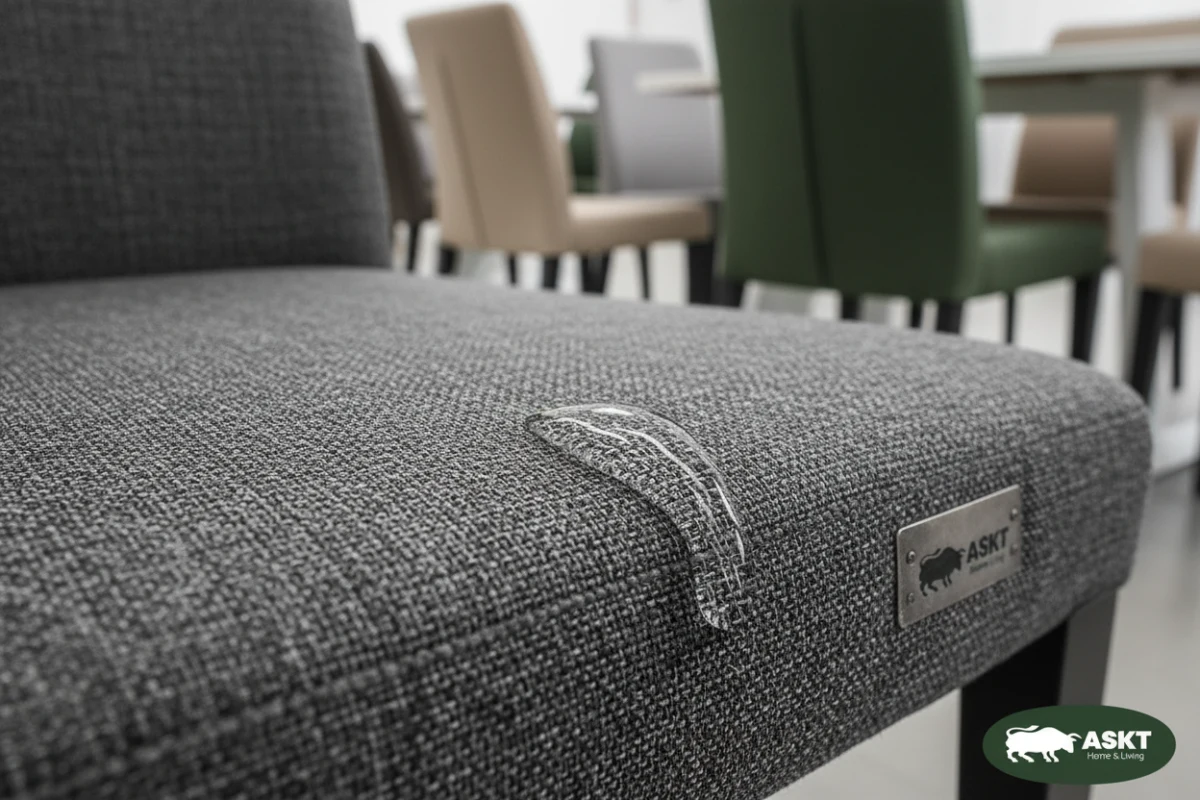
Upholstery selection is one of the most critical aspects of custom dining chair design. Traditional fabrics often require a compromise between tactile softness and functional durability. However, advanced high-performance fabrics now resolve this challenge. By incorporating molecular-level barrier technologies, these advanced textiles resist water, oil, and liquid stains without losing their soft, comfortable texture. Liquids form droplets on the fabric surface instead of soaking into the fibers, allowing end-users to easily wipe away spills. Additionally, these materials are engineered to be highly pet-friendly, featuring dense, tightly woven structures that resist snagging from pet claws and are exceptionally easy to clean.
Underneath the upholstery, the internal seating construction determines long-term comfort and structural integrity. While standard high-density foam is widely used, integrating pocket spring seating systems provides superior, long-lasting ergonomic support. Pocket springs distribute body weight evenly, prevent the seat from sagging over years of intensive use, and maintain their shape far better than foam alone.
For the structural frame, high-tensile steel tubing provides the necessary strength. To protect these metal frames, professional factories apply an electrostatic powder coating finish. This process creates a highly scratch-resistant, moisture-resistant, and impact-resistant outer shell, preventing rust and chipping over years of high-frequency use in residential and contract dining spaces.
How can retailers optimize container loading and lower inventory risks?
High ocean freight rates, rising warehousing costs, and the risk of unsold stock are persistent financial challenges for European furniture retailers. Mitigating these risks requires strategic planning in product engineering, packaging design, and container loading optimization. A primary solution lies in the implementation of Knock-Down (KD) structures.
By designing dining chairs with precise, easy-to-assemble KD joints, manufacturers can package components flat. This flat-pack approach dramatically reduces the physical volume of each unit compared to fully assembled chairs. Consequently, the number of units that can be loaded into a standard 40-foot High Cube (HQ) container is often doubled, directly cutting the per-unit ocean freight cost in half. For e-commerce retailers, KD structures also lower domestic parcel shipping costs, making last-mile delivery significantly more efficient and cost-effective.
However, flat-packed products are more vulnerable to damage during transit if the packaging is inadequate. To protect the components, professional manufacturers replace weak packaging materials with heavy-duty cardboard boxes reinforced with internal honeycomb paper panels. Honeycomb paper provides exceptional shock absorption and compression resistance, shielding fragile corners and finished metal legs from high-impact drops. Furthermore, honeycomb paper is a highly sustainable, recyclable material, allowing European retailers to drastically reduce their reliance on single-use plastic packaging and align with strict European packaging waste regulations and modern ESG initiatives.
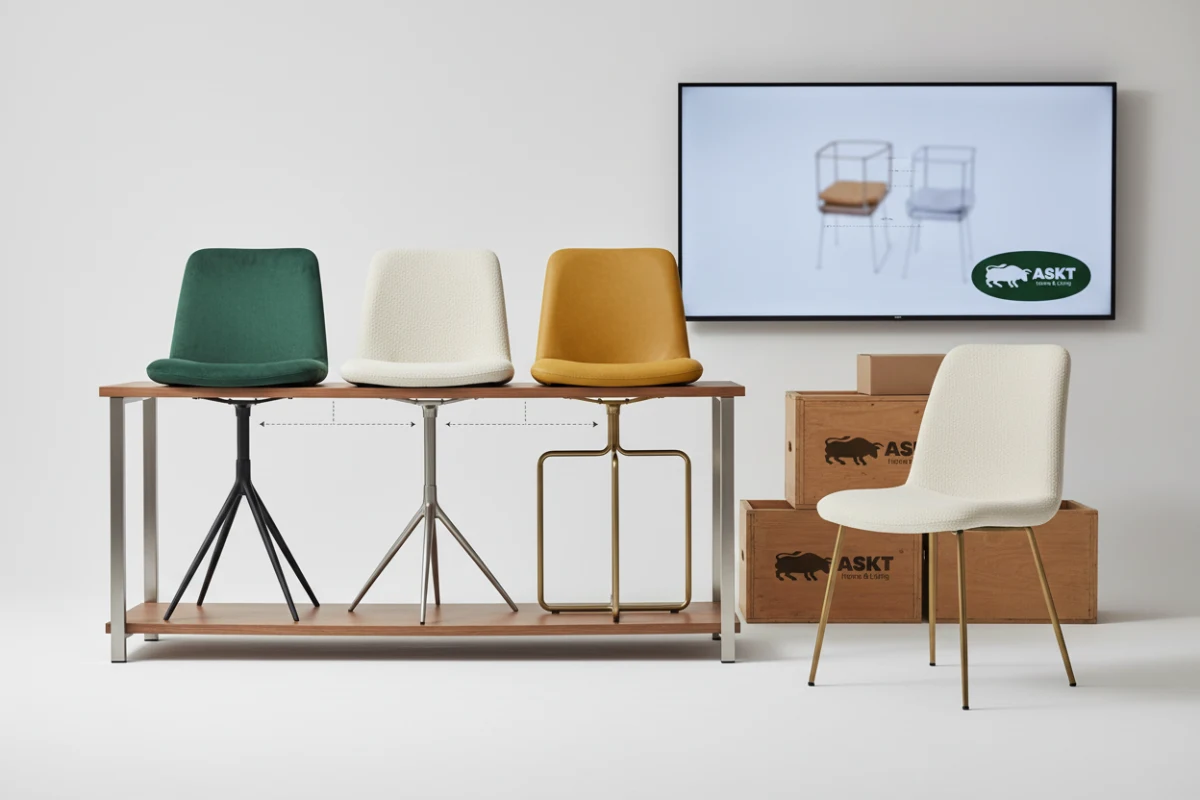
To further optimize inventory management, retailers can utilize modular product systems. Instead of stocking dozens of completely unique chair designs—each requiring its own high Minimum Order Quantity (MOQ)—a modular assembly approach allows retailers to source a standardized selection of upholstered seat shells and interchangeable metal leg bases. For instance, by importing three distinct seat designs and three different leg configurations, the retailer's warehouse team can quickly assemble nine different chair combinations based on real-time consumer orders. This modular flexibility minimizes capital tied up in slow-moving inventory and drastically reduces warehouse space requirements.
How does a professional OEM ODM dining chair supplier minimize transnational communication friction?
Transnational sourcing often suffers from communication barriers, delayed feedback loops, and misunderstandings regarding complex technical specifications. For a European retailer, these friction points can delay sample development, result in incorrect material selections, and cause missed seasonal launch windows. Partnering with a professional OEM ODM dining chair supplier that utilizes structured, digital communication methodologies is key to eliminating these operational bottlenecks.
A mature manufacturer understands that successful customization requires a highly structured onboarding and design development process. Instead of relying on vague design sketches, a professional partner guides the buyer through a comprehensive technical assessment. This systematic review addresses crucial variables before production begins:
- Target Market Regulations: Clarifying whether the product must meet specific national standards, such as fire safety requirements for the UK or general chemical safety standards for continental Europe.
- Ergonomic and Dimensional Adjustments: Fine-tuning the seat height, width, and backrest angle to ensure optimal compatibility with standard European dining table heights.
- Material and Component Specification: Confirming the exact fabric weight, abrasion resistance rating, metal tube thickness, and the inclusion of specific functional mechanisms like swivel or auto-return bases.
- Packaging and Labeling Requirements: Designing custom private-label branding, assembly instruction manuals, and optimized shipping carton layouts.
By formalizing these requirements digitally during the initial quotation stage, the manufacturer ensures that the very first physical sample produced matches the buyer's exact expectations. This structured digital supply chain integration drastically accelerates the sample development phase, reduces communication errors, and gives European purchasing teams complete transparency and confidence from initial concept to container delivery.
Frequently Asked Questions
How do European fire safety regulations affect custom dining chair sourcing?
Sourcing custom dining chairs requires strict adherence to regional fire safety and chemical compliance laws. For instance, the UK market enforces highly stringent domestic fire safety regulations, which require flame-retardant treatments for both the upholstery fabrics and the underlying polyurethane foam fillings. Conversely, continental European markets like Germany and the Netherlands focus heavily on general chemical safety and material toxicity, often requiring fabrics to be certified to guarantee they are free from harmful substances and formaldehydes. A professional supplier will adjust the fabric backing treatments and foam formulations to ensure complete compliance with your specific target market's legal frameworks.
What are the benefits of pocket spring seating compared to standard high-density foam?
While standard high-density foam is a reliable and cost-effective cushioning material, pocket spring seating systems offer significant commercial advantages for high-end retail and contract collections. Pocket springs consist of individual, fabric-wrapped metal coils embedded within the seat core. This structure provides superior ergonomic support by contouring to the body's natural shape and distributing weight evenly across the seat. For B2B buyers, the primary benefit is durability; pocket spring systems resist sagging and maintain their original loft and comfort far longer than foam-only designs. This long-term structural resilience reduces customer complaints and product return rates, representing an excellent investment for premium furniture brands.
Can a European retailer mix dining chairs and dining tables in the same container?
Yes. Utilizing mixed-container consolidation is an excellent strategy for European retailers to optimize container loading and lower inventory risks. By sourcing from a manufacturer that produces a diverse contemporary product portfolio—including dining chairs, matching bar stools, benches, and dining tables with sintered stone or oak veneer tops—retailers can curate complete, coordinated dining room collections. Mixing multiple styles and product categories within a single 40-foot High Cube container allows retailers to test new designs in smaller quantities, maintain lower individual stock levels, and minimize overall capital exposure while still maximizing ocean freight efficiency.
If you are looking to build a resilient, compliant, and highly competitive furniture collection for your target market, you can discuss your custom dining chair sourcing requirements with us to explore tailored design and manufacturing solutions.