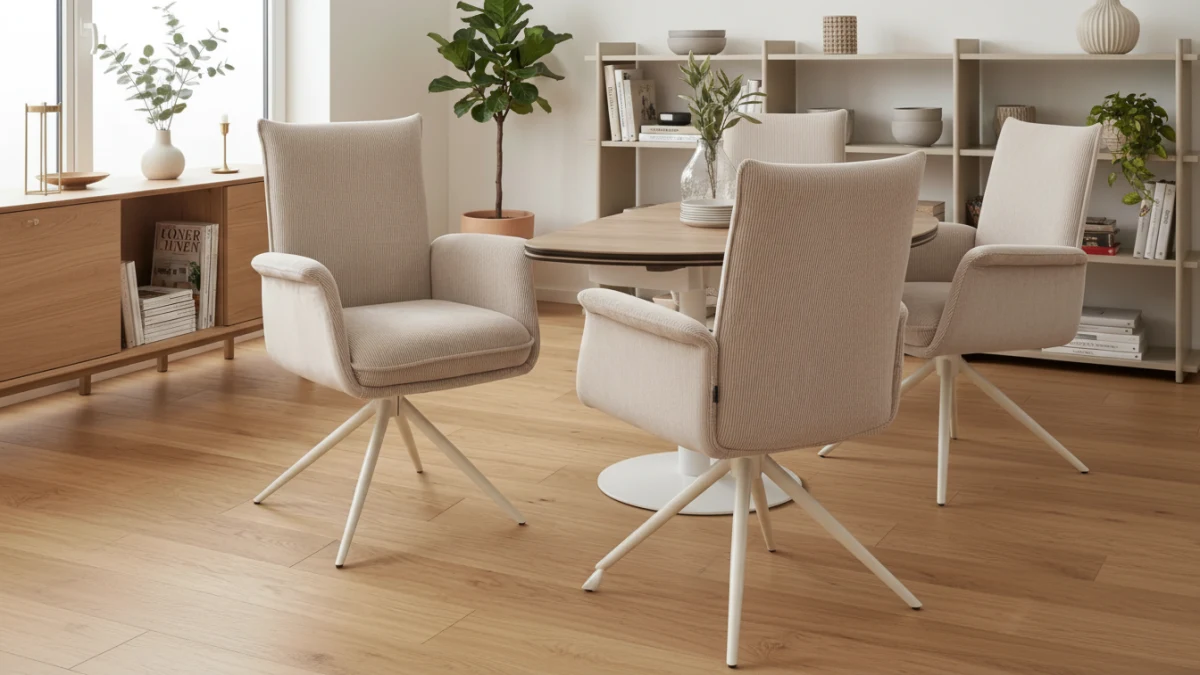
Where to get lounge chairs for commercial use in China?
To discover where to get lounge chairs for commercial use in China, professional B2B buyers should focus on industrial manufacturing hubs in Guangdong (for high-end bespoke designs) and Zhejiang (for efficient, high-volume production). Partnering directly with an experienced, compliant contract lounge chair China manufacturer ensures your products meet European durability standards, pass strict fabric testing, and arrive optimized for container logistics.
Why Should B2B Buyers Partner Directly with a Chinese Manufacturer for Commercial Lounge Chairs?
In commercial projects—such as boutique hotels, corporate breakout areas, and high-end restaurant waiting zones—the demands placed on furniture far exceed typical residential usage. High daily foot traffic requires seating that maintains its structural integrity and aesthetic appeal over years of continuous use. For professional procurement teams, furniture is an investment where any failure directly impacts client satisfaction and operational costs.
Working with an established B2B manufacturer allows buyers to address these demands directly. Rather than dealing with trading companies or consumer-grade wholesale markets, direct factory collaborations grant sourcing specialists full transparency over the production process. A dedicated B2B supplier designs with contract-grade specifications in mind. This means structural reinforcements, commercial-grade density foam, and heavy-duty frame joints are integrated from the beginning of development.
Direct partnerships also streamline communication for custom projects. When implementing custom designs, direct access to the factory's engineering team ensures that technical requirements—such as ergonomic angles, precise dimensions, and specific load-bearing capacities—are accurately executed. This significantly reduces the risk of sample errors and minimizes lead times, allowing buyers to bring custom seating lines to market efficiently while keeping costs optimized.
What Are the Primary Seating Manufacturing Clusters in China for Contract Use?
Understanding the geographical layout of China’s furniture manufacturing sector is crucial for finding the right supplier. The industry is highly concentrated in distinct provincial clusters, each possessing unique material supply chains, structural specializations, and logistical advantages. For contract-grade lounge chairs, the primary regions to target are Guangdong and Zhejiang.
Foshan, particularly the Shunde district in Guangdong, is world-renowned for high-end upholstered furniture and bespoke project customization. The region boasts an incredibly mature supply chain for premium leathers, custom fabrics, and complex metal and wood-crafted bases. If your project demands highly intricate, low-volume custom designs or luxury-tier finishes for five-star hospitality lounges, Guangdong is the premier sourcing destination. However, the bespoke nature of these factories often comes with higher unit costs and longer production cycles.
Zhejiang is the leading hub for high-volume production, functional mechanisms, and metal-framed upholstered seating. Manufacturers in this region excel at industrial scale, combining automated production with strict quality control. The local supply chain is highly optimized for metal fabrication, powder coating, and complex functional components like swivel and auto-return mechanisms. For wholesalers, retail chains, and contract buyers looking for a balance of premium European quality, cost-efficiency, and reliable delivery, Zhejiang is the ideal region. Furthermore, proximity to major deep-water ports like Ningbo and Shanghai provides significant shipping and logistical advantages.
While Northern China is famous for mass-producing low-cost metal-tube furniture, its factories are rarely equipped to meet the stringent quality, durability, and chemical safety requirements of the European contract market. Sourcing high-traffic hospitality seating from this region often introduces significant risks regarding weld integrity, fabric wear, and compliance failures.
| Sourcing Metric | Guangdong (Shunde Cluster) | Zhejiang (Anji/Hangzhou Cluster) | Northern China (Hebei Cluster) |
|---|---|---|---|
| Primary Specialization | Bespoke luxury furniture, premium upholstery, solid wood bases | Metal-frame upholstered chairs, functional mechanisms | Low-cost metal-tube seating, high-volume residential furniture |
| Best Fit for European Buyers | Five-star hotel lobbies, luxury custom projects, boutique designs | Wholesalers, retail chains, contract importers, business hotels | Budget-sensitive retail, entry-level residential markets |
| Core Strengths | Design flexibility, premium hand-craftsmanship | Automated manufacturing, structural durability, consistent quality | Aggressive pricing, high-volume speed |
| Compliance Alignment | High capability to meet European requirements | Excellent alignment with EN testing and chemical safety | Limited compliance experience for European contract standards |
How Can Procurement Teams Evaluate the Technical Capabilities of a Chinese Seating Factory?
When auditing a contract lounge chair China manufacturer, B2B buyers must evaluate actual production capabilities rather than relying solely on polished digital catalogs. The structural integrity of a lounge chair depends heavily on the machinery, assembly processes, and quality control workflows implemented on the factory floor.
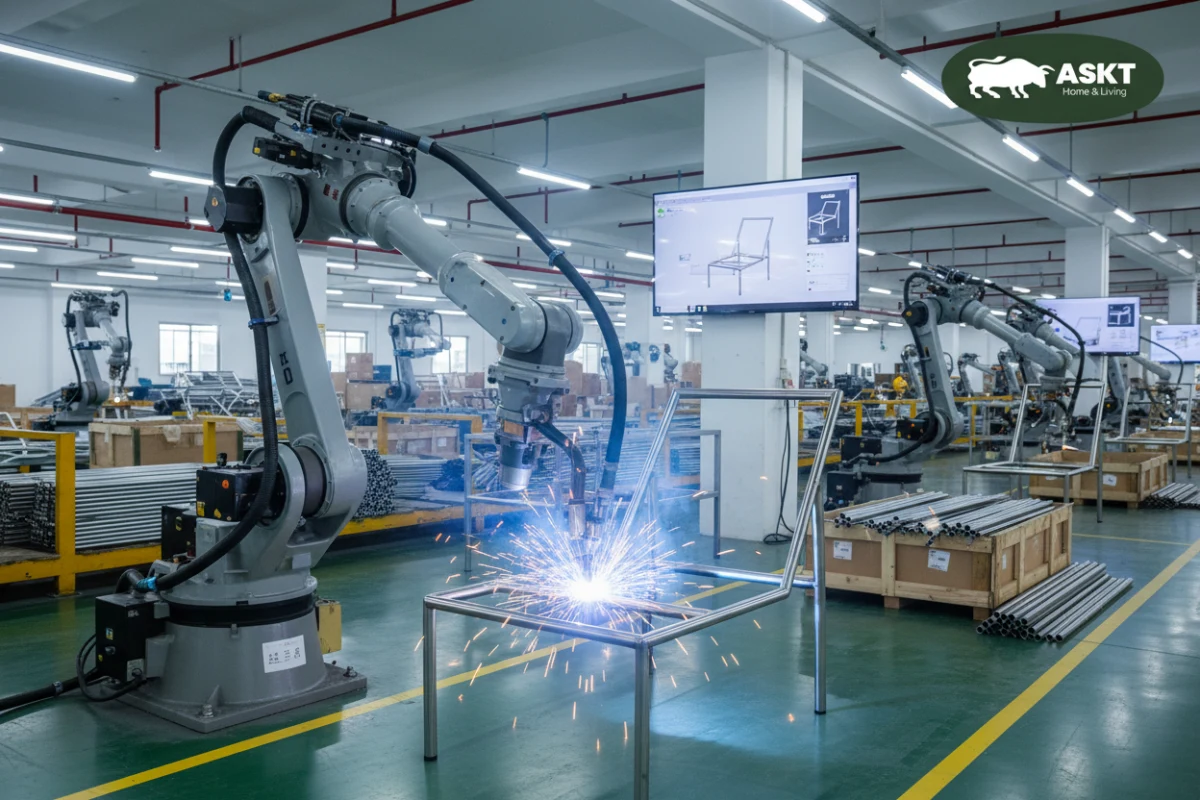
First, examine the frame construction. For high-traffic commercial environments, metal frames are highly preferred for their durability. High-quality manufacturers utilize automated welding processes to assemble internal steel subframes and external legs. Automated robotic welding ensures uniform, deep weld penetration at every joint. This eliminates weak spots or cold welds common in manual welding, preventing structural failure under heavy loads. Following welding, metal components should undergo a thorough powder-coating process with high-temperature curing to create a tough, scratch-resistant barrier against impact and corrosion.
Second, assess the internal seating construction. Premium lounge chairs designed for long-term commercial seating often integrate pocket spring systems within high-density polyurethane foam. This combination maintains structural support and prevents the seat from sagging over years of use, which is a major issue with lower-grade foam-only options.
Additionally, a reliable manufacturer operates with a comprehensive quality control system at every stage of production, including incoming material verification, in-process assembly audits, and final pre-shipment inspections.
Which European Compliance and Testing Standards Apply to Imported Commercial Lounge Chairs?
Importing wholesale commercial lounge chairs into markets like Germany, the Netherlands, the UK, or Poland requires absolute compliance with European safety regulations. Commercial operators and contract buyers face substantial liabilities if furniture fails in public spaces, making third-party certified testing non-negotiable.
The benchmark standard for commercial seating strength, durability, and safety in Europe is the EN testing framework. A professional manufacturer must demonstrate that their products are engineered to pass these strict requirements. Testing protocols typically involve:
- Static Load Testing: Applying extreme vertical and horizontal forces to the seat and backrest to ensure no joint breakage or frame deformation occurs.
- Durability and Fatigue Testing: Subjecting the chair to tens of thousands of repetitive pressure cycles to simulate years of heavy usage in public environments.
- Leg Strength Testing: Testing the stability and resilience of the legs against lateral forces, ensuring they do not bend or buckle when a user shifts weight.
Beyond structural integrity, chemical compliance is highly scrutinized. Under European REACH regulations, all materials used in contract furniture must be strictly monitored. For upholstered items, the adhesives used to bond foam to the internal frames must be eco-friendly and formaldehyde-free. Solvent-based glues can emit hazardous volatile organic compounds (VOCs) that compromise indoor air quality and fail European import checks. Partnering with a supplier that uses eco-friendly water-based adhesives ensures compliance, protects public health, and avoids customs clearance delays.
What Fabric Performance Metrics Are Essential for Commercial Hotel Lounge Chairs?
The durability of a commercial lounge chair is often defined by the performance of its upholstery. For a B2B hotel lounge chair supplier, selecting the right contract-grade fabrics is essential to prevent premature wear, staining, and tearing in active hospitality environments.
When evaluating fabric options for your custom furniture program, demand clear data on several critical performance metrics:
- Abrasion Resistance (Martindale Rub Test): While residential fabrics typically require only 15,000 to 20,000 rubs, commercial contract fabrics should withstand at least 40,000 to 100,000 rubs to ensure long-term durability.
- Colour Fastness to Light and Rubbing: Fabrics must resist fading under UV exposure (color fastness to light) and avoid transferring dye to users' clothing (color fastness to wet and dry rubbing).
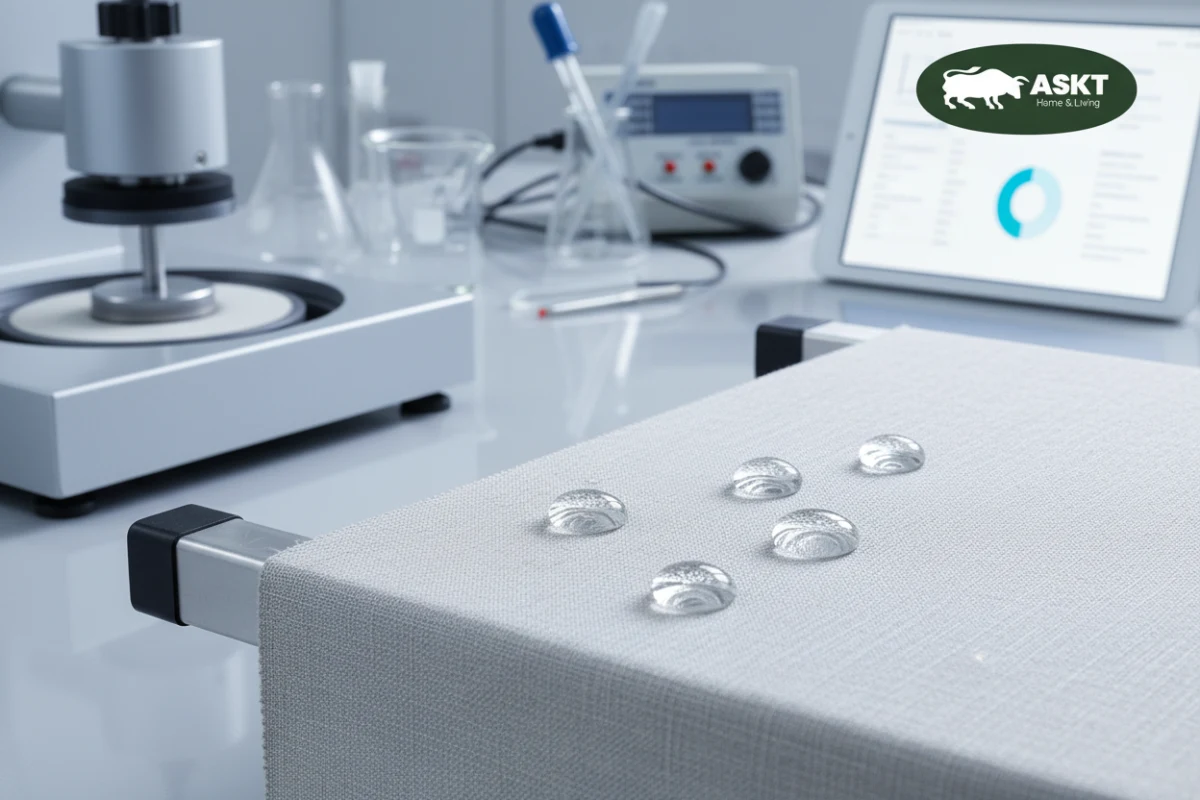
- Waterproof and Easy-Clean Performance: Liquid spills are inevitable in hotels, cafes, and waiting areas. Advanced contract fabrics feature performance treatments that repel water and oil-based liquids on contact. This allows staff to quickly wipe away spills before they penetrate the foam, preventing staining and unpleasant odors.
- Pet-Friendly and Scratch-Resistant Qualities: For commercial environments that accommodate pets, fabrics with tight weaves prevent claws from snagging and pulling threads, extending the overall lifespan of the furniture.
By selecting high-performance, easy-clean, and highly durable textiles, contract buyers can significantly reduce maintenance costs and ensure the lounge chairs maintain their premium aesthetic for years to come.
How Can B2B Buyers Balance Customization and MOQ Risks in China Sourcing?
A common challenge for wholesalers and project procurement managers sourcing custom upholstered lounge chairs China is balancing the desire for unique designs with the risks of high minimum order quantities (MOQs) and complex supply chains.
One highly effective strategy to mitigate these risks is utilizing modular furniture design. By standardizing internal seat shells and structural mounting plates, manufacturers can offer buyers a wide array of visual variations using a single, proven platform. For example, a single upholstered shell style can be combined with different base options:
- A classic solid oak veneer or metal four-legged base for elegant lounge settings.
- A functional metal swivel base with an auto-return mechanism for corporate offices or meeting lounges.
- A sleek, powder-coated wire frame for modern, minimalist spaces.
This modular approach provides several key commercial benefits:
- Lower MOQs for Customization: Because the core internal structure is standardized, the manufacturer can easily accommodate custom fabric colors and finish options without requiring massive production runs.
- Proven Durability: The core structural connections have already been thoroughly tested and refined, reducing the engineering risks associated with entirely bespoke, unproven designs.
- Simplified Inventory Management: Wholesalers can stock standard components and assemble different configurations based on real-time customer demand, maximizing inventory turnover and reducing warehousing overhead.
How Do Sourcing Teams Optimize Packaging and Shipping to Reduce Transit Damage?
International shipping costs and transit damage represent significant sourcing risks for European furniture buyers. To maximize profitability and ensure products arrive in pristine condition, packaging design must be prioritized during the product development phase.
Implementing a Knock-Down (KD) structural design is one of the most effective ways to optimize logistics. By designing lounge chairs where the leg frames can be easily detached and nested, the overall packaging volume is drastically reduced. This allows factories to optimize container loading, often fitting up to double or triple the number of units into a standard 40ft High Cube (HQ) container compared to fully assembled units. To make assembly seamless for the end-user or on-site installers, high-quality manufacturers use robust metal-to-metal threaded inserts instead of self-tapping screws, securing a stable connection that won't loosen over time.
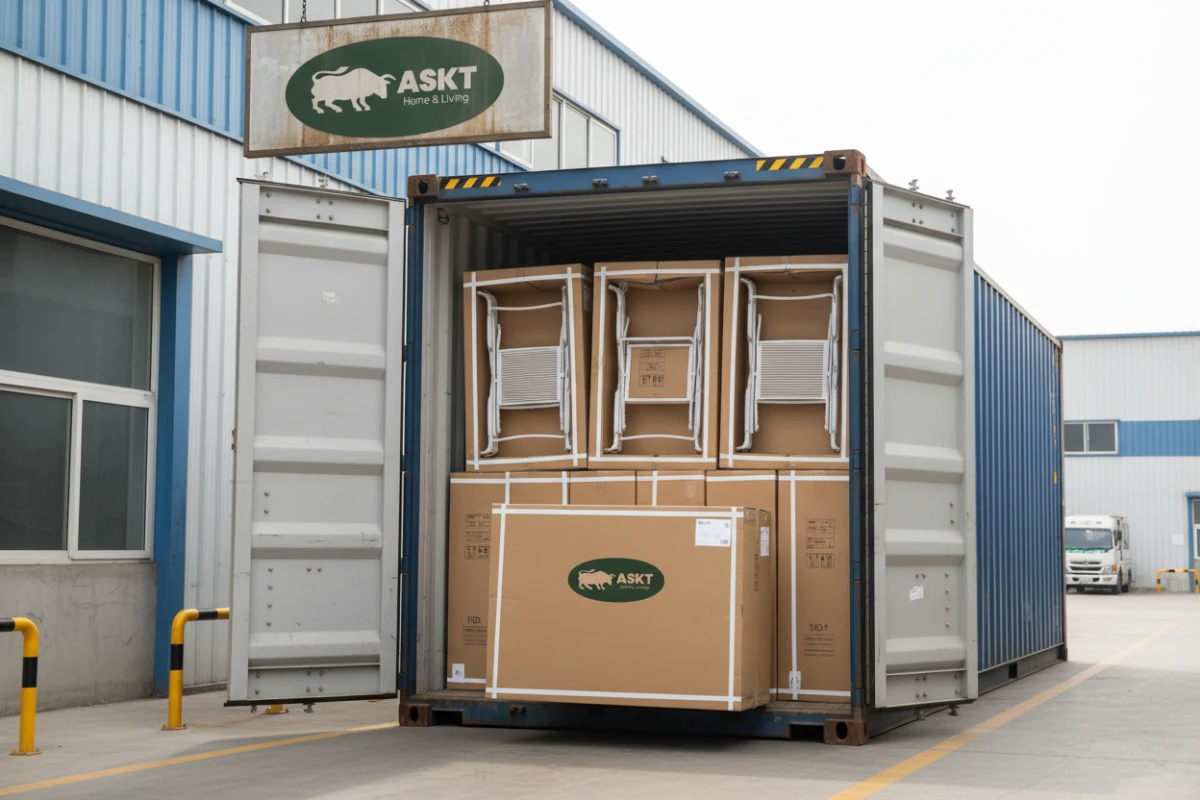
Furthermore, modern packaging must align with European environmental initiatives by reducing single-use plastics. Top-tier B2B manufacturers utilize eco-friendly, high-performance packaging materials, including:
- Heavy-Duty Honeycomb Paper: Replacing traditional expanded polystyrene (EPS) foam to protect edges and absorb impacts.
- Multi-layer Corrugated Cartons: Utilizing 5-ply or 7-ply double-wall boxes to withstand the physical stress of transit and stacking.
- Non-woven Fabric Sleeves: Wrapping upholstered shells to prevent abrasion and dust contamination during shipping.
Sourcing commercial lounge chairs from China requires finding a partner that understands the rigorous demands of the European contract market. By prioritizing manufacturers that invest in advanced fabric performance, automated production machinery, robust safety compliance, and efficient modular design, professional buyers can secure a highly reliable, cost-effective supply chain that drives commercial success.