Why Furniture Buyers Prefer Coordinated Dining Chair Collections: Sourcing and SKU Strategy Guide
Professional furniture buyers prefer coordinated dining chair collections because cohesive design systems, shared base-and-seat modularity, and unified upholstery programs streamline retail furniture SKU management, lower inventory holding risk, and maximize cross-selling revenue across showroom floors and digital channels. By sourcing synchronized dining ranges, commercial buyers reduce product development friction, maximize container loading volumes, and accelerate purchasing decisions across competitive European retail markets.
Why do coordinated dining chair collections simplify retail furniture SKU management?
Managing an expansive furniture catalogue requires balancing visual variety with operational efficiency. For furniture retail chains, purchasing groups, e-commerce brands, and wholesalers across Germany, the Netherlands, the UK, Poland, Switzerland, and Ireland, carrying individual, isolated chair designs creates substantial administrative and logistical overhead. Every standalone model requires dedicated stock keeping units (SKUs), unique spare parts, separate packaging configurations, and individualized supplier communication workflows.
When category managers implement coordinated dining chair collections, they fundamentally streamline retail furniture SKU management. Rather than introducing distinct structural components for every aesthetic variation, coordinated collections leverage shared design platforms—such as matching metal profiles, standardized mounting plate dimensions, and common powder coating finishes. This standardization allows retailers to present a broad, multi-variant catalogue to end consumers while maintaining a compact, highly controllable internal SKU matrix.
The Operational Overhead of Standalone SKUs vs. Coordinated Collections
- Catalogue Maintenance Costs: Standalone SKUs require independent digital asset creation, photographic staging, dimensional drafting, and translation files. Coordinated ranges allow single lifestyle environments to demonstrate multiple chair models simultaneously.
- Inventory Dispersion Risk: Uncoordinated items frequently lead to fragmented warehouse footprints and uneven stock run-outs, leaving orphan pieces that require steep retail markdowns to clear.
- Procurement Multiplicity: Sourcing disjointed models requires negotiating varied minimum order quantities (MOQs), disparate production lead times, and multiple quality control rubrics across scattered production lines.
- After-Sales Simplicity: Carrying standardized replacement glides, universal mounting hardware, and matching spare components drastically lowers the cost and complexity of after-sales customer service.
By adopting a coordinated platform logic, buying departments achieve better SKU leverage. Category planners can track product performance across an entire styling family, discontinuing or introducing seat shells or base variants without dismantling the underlying structural product architecture.
| Operational Factor | Standalone Dining Chair Sourcing | Coordinated Collection Strategy |
|---|---|---|
| SKU Proliferation | High (each chair requires distinct frame, hardware, and packaging) | Low (shared frames, universal hardware, standardized carton sizing) |
| Inventory Risk | High (slow-moving individual models create stranded inventory) | Controlled (interchangeable components allow flexible reassembly) |
| Visual Merchandising | Fragmented styles create visual clutter across retail floors | Harmonious design language strengthens coherent brand presentation |
| Customer Journey | High decision friction due to clashing heights and finishes | Fast buying decisions driven by pre-matched dining and bar seating |
How does modular dining chair manufacturing improve B2B dining chair sourcing flexibility?
In modern supply chain operations, modular dining chair manufacturing provides the mechanical backbone for commercial agility. As an industry, international furniture sourcing has shifted away from rigid, monolithic production models toward standardized, interchangeable component architectures. This shift resolves the long-standing tension between consumer demand for individualization and retailer demand for procurement scale.
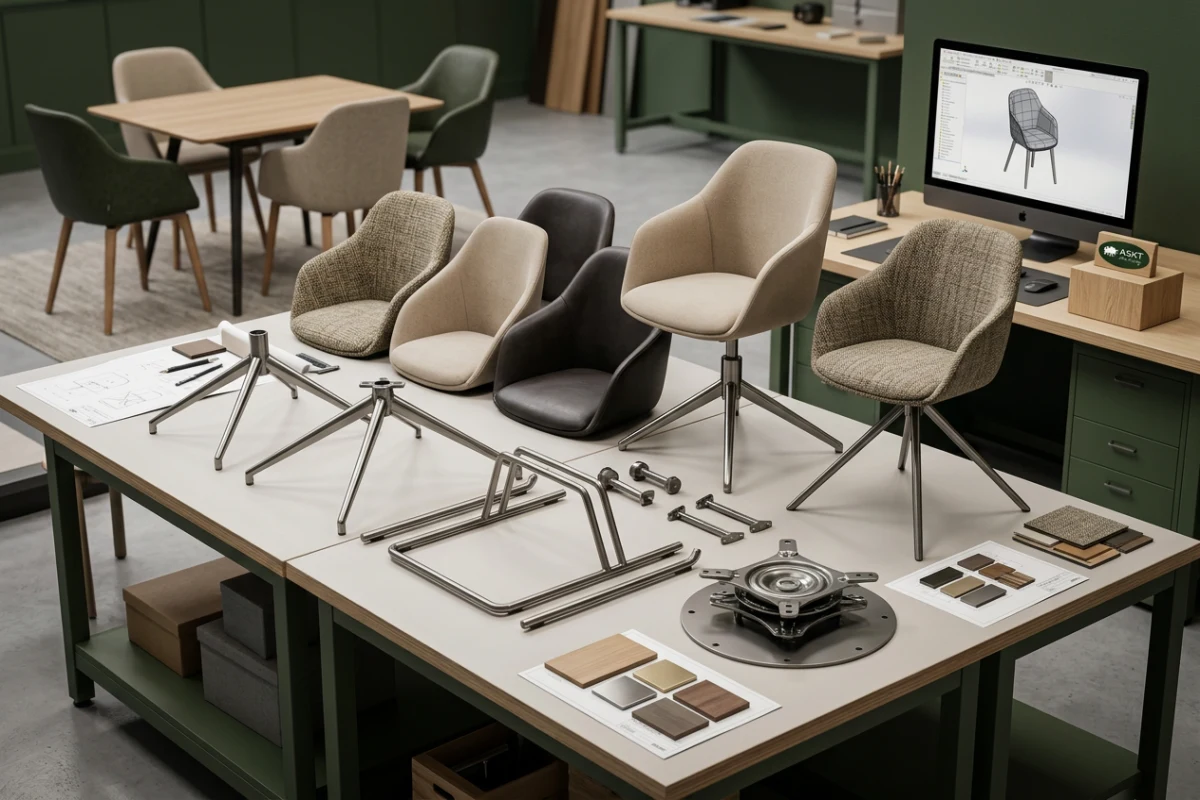
A modular production system functions by engineering a select group of standardized upholstered seat shells capable of mounting onto a uniform matrix of chair bases. These bases include standard four-leg metal frames, sled bases, cantilever structures, and functional swivel mechanisms with auto-return features. This engineering approach transforms B2B dining chair sourcing from a series of high-risk speculative gambles into an agile, demand-driven fulfillment model.
Core Advantages of Modular Manufacturing for European Buyers
- Tooling and Mould Amortization: Developing a bespoke seat shell or internal chassis requires significant development resources. By deploying that single engineered shell across fixed-leg, swivel, armchair, and counter-stool configurations, the tooling investment is amortized across extensive product volumes.
- Agile Sample Development: Sourcing teams can request rapid prototyping by combining pre-validated structural bases with customized upholstery materials, dramatically compressing sampling lead times.
- Manufacturing Consistency: Standardizing structural connection points allows factories to utilize precision metal fabrication, stable powder coating lines, and uniform internal frames, eliminating dimensional drift across production batches.
- Flexible Buyer MOQs: Instead of meeting large factory production thresholds for four completely distinct chair models, buyers can combine orders around shared component platforms, splitting container volume across several market-ready variations.
From a manufacturing standpoint, modularity enables facilities to maintain strict quality control. Because the structural connection points, screw inserts, and frame geometries remain uniform across the collection, production repeatability increases, dimensional tolerances remain tight, and batch-to-batch quality reaches the demanding structural performance required by European commercial and residential standards.
What role do unified fabric and finish programs play in furniture assortment planning?
Upholstery and finish consistency represents one of the greatest operational friction points in furniture assortment planning. When buyers source dining chairs, armchairs, and bar stools from multiple disparate suppliers, they inevitably encounter discrepancies in fabric dye lots, texture grading, backing materials, and surface coatings. When a consumer attempts to pair an armchair from one supplier with a dining bench or bar chair from another, subtle shade variations under showroom or domestic lighting trigger dissatisfaction and product returns.
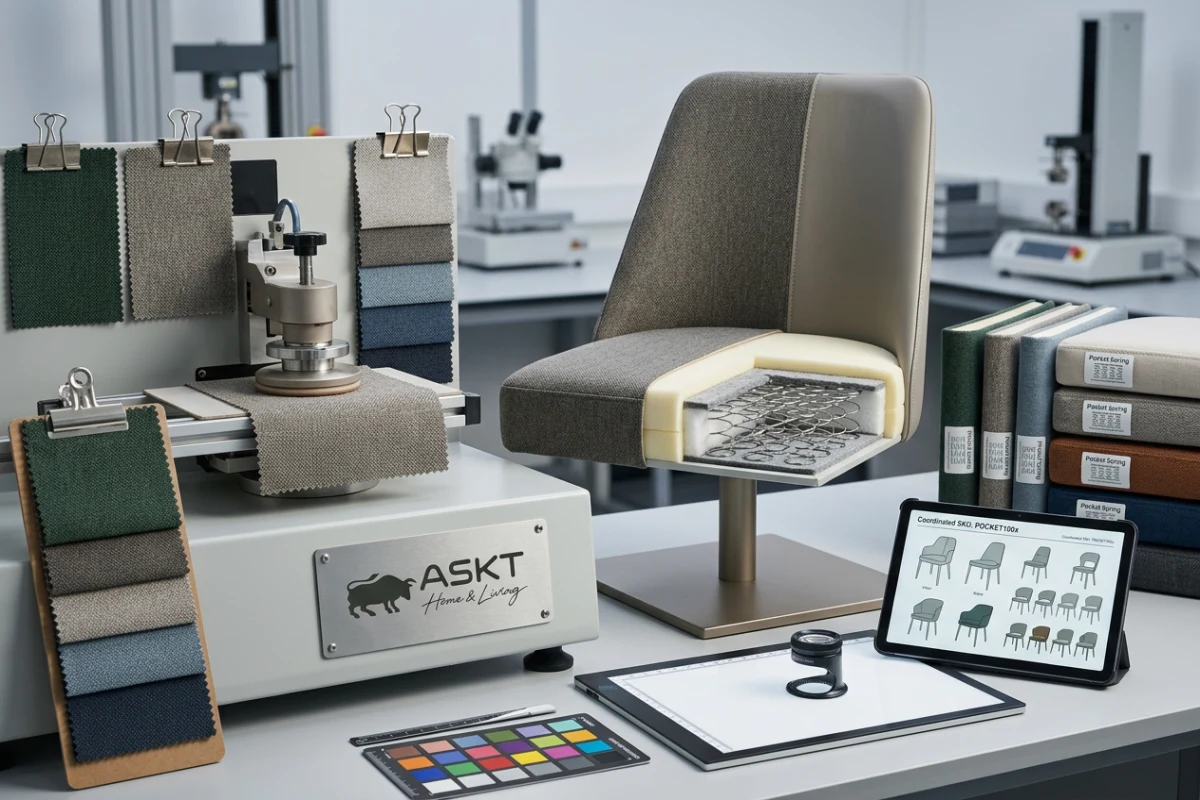
Coordinated dining chair collections eliminate this material divergence by utilizing a centralized, rigorously tested material and textile program. Professional upholstery lines incorporate specialized commercial fabrics selected for high colour fastness, abrasion resistance, and robust everyday performance, including waterproof, easy-clean, and pet-friendly properties that withstand intensive domestic and hospitality use.
Critical Material Specifications for Coordinated Assortments
- Standardized Abrasion Resistance: Dining seating experiences concentrated surface friction. Standardized abrasion testing across all collection fabrics ensures consistent surface longevity without premature pilling or thinning.
- Colour Fastness to Light and Rubbing: Consistent dye formulations prevent UV fading in sunlit dining areas and eliminate colour transfer onto clothing under wet and dry conditions.
- Coordinated Metal Finishes: Standardizing surface treatments—such as matte black powder coating, textured metallics, or brushed effects—guarantees that dining chair bases match bar stool frames and dining table leg structures perfectly.
- Engineered Surface Integration: In broader dining suites, coordinating metal chair finishes with sintered stone or oak veneer dining tables creates a unified material narrative that elevates the commercial value of the entire collection.
Establishing a single, verified textile and surface finish catalogue across side chairs, armchairs, counter stools, and dining benches guarantees that commercial buyers present an impeccably aligned material narrative across their entire retail assortment.
How do coordinated dining ranges optimize container loading and logistics efficiency?
For European furniture wholesalers and importers, ocean freight and land transport represent significant portions of landed product costs. Sourcing poorly planned, irregularly sized standalone chairs often results in sub-optimal container stuffing, high freight costs per unit, and transit damage caused by awkward carton stacking.
Coordinated collections are deliberately engineered for knock-down (KD) assembly and nestable packing geometry. Standardizing the structural dimensions of leg assemblies and upholstered seat shells enables structural packaging optimization, dramatically increasing container fill rates in standard 40ft High Cube (40HQ) export containers.
The Logistics Value of KD Engineering and Nested Packaging
- CBM Reduction: Modular KD structures allow metal frames to nest tightly while seat shells stack in protective forms. This reduces the cubic meter (CBM) volume per chair compared to fully welded or pre-assembled units, maximizing unit density per shipment.
- Sustainable Packaging Optimization: Modern packaging engineering utilizes recyclable outer cartons, edge protectors, and reduced plastic materials, effectively mitigating transit friction while aligning with European sustainable packaging directives.
- Mixed-Container Sourcing: Under a coordinated manufacturing platform, buyers can mix various seat types—such as standard dining chairs, carvers, and counter stools—within a single container, meeting factory production thresholds through shared component volume without over-indexing on a single SKU.
| Logistics Metric | Standalone Welded Seating | Coordinated KD Collection Platform |
|---|---|---|
| Packaging Density (CBM/unit) | Higher volume due to fixed frame profiles | Compact nested geometry with KD frames |
| Container Fill Efficiency | Frequent dead space from irregular carton sizes | Standardized modular carton dimensions optimize 40HQ fill |
| Transit Vibration Risk | Welded joints vulnerable to shipping torque | Disassembled components nested securely with edge protection |
| Warehouse Palletization | Non-standard pallet footprints | Uniform outer cartons allow dense, stable warehouse racking |
Optimizing shipping density directly lowers the landed cost per seat, providing retail chains and wholesalers with healthy operating margins while protecting against transit vibrations that compromise joinery integrity.
How do coordinated collections boost retail sales conversion and average order value?
From a visual merchandising perspective, coordinated collections solve consumer cognitive fatigue. When an end consumer visits a furniture showroom or browses an e-commerce website to furnish an open-plan dining space, selecting complementary chairs, bar stools, and benches from mismatched product lines creates aesthetic anxiety. Consumers fear purchasing pieces that clash in finish, height, or silhouette.
Coordinated collections provide a pre-validated design harmony that removes buying hesitation, driving measurable increases in average order value (AOV) and conversion velocity through natural product cross-selling.
Visual Merchandising Advantages for Retail Channels
- Harmonious Multi-Zone Styling: Modern European living concepts seamlessly connect dining rooms with open kitchen islands. Coordinated ranges allow retailers to display an exact visual match between dining chairs at the dining table and matching bar chairs at the kitchen island.
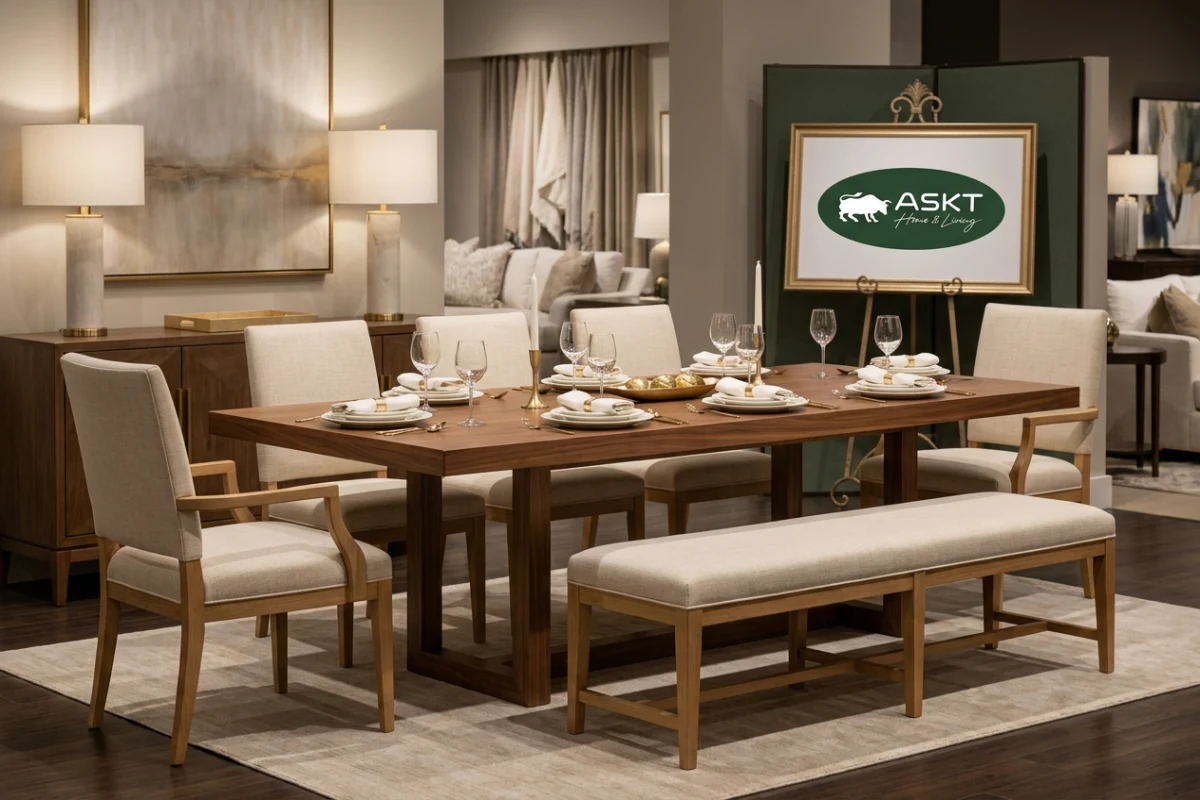
- Dynamic Seating Configurations: Retailers can display dynamic table settings—such as two carver armchairs at the table heads, four armless dining chairs along the sides, and a matching upholstered dining bench—encouraging customers to purchase a complete multi-piece dining suite rather than a basic four-chair bundle.
- Digital Catalogue Scalability: Coordinated 3D models and digital lifestyle renderings can showcase interchangeable base options (such as swapping standard metal legs for an auto-return swivel mechanism) in real time on product detail pages, enhancing online customer engagement without requiring expensive standalone photo shoots.
- Streamlined Assortment Refreshes: Category managers can introduce seasonal colourways or new fabric textures across an entire coordinated collection simultaneously, maintaining a fresh showroom presence with minimal product development risk.
Which structural and ergonomic engineering standards ensure product consistency across collections?
Visual appeal must be supported by sound mechanical engineering. Professional B2B buyers evaluate dining chair collections not only on their aesthetic coherence, but on their structural longevity under demanding daily use. Whether deployed in private residences, high-turnover casual dining spaces, or contract hospitality environments, coordinated chairs must maintain identical safety and performance benchmarks across every variant in the range.
To achieve consistent structural integrity across an entire coordinated program, reliable manufacturers implement standardized internal seating architectures and rigorous testing protocols:
Core Engineering Standards in Professional Dining Seating
- Pocket Spring Cushion Construction: Rather than relying solely on cut foam slabs that sag over time, high-durability dining chairs integrate pocket spring cores encapsulated within high-resilience foam layers. This configuration maintains seat rebound, distributes body weight evenly, and preserves upholstery tension across years of repetitive seating.
- Precision Metal Frame Fabrication: Chair leg assemblies and internal metal chassis must be constructed using precision-cut tubing, uniform bending, and robust welding. Standardized automated welding ensures complete weld penetration and consistent fillets, preventing structural frame fatigue under dynamic shifting loads.
- Precision KD Fastening Platforms: Knock-down connection plates must utilize heavy-duty threaded steel inserts rather than direct wood screws. Standardized mounting patterns allow bases to be swapped easily while preventing thread stripping during retail assembly or flat-pack consumer installation.
- Ergonomic Proportions: European market dining chairs require carefully calibrated backrest angles, lumbar support contours, and seat-to-table height clearances (paired with standard 75–76 cm dining tables or 90–92 cm counter heights) to ensure lasting comfort during prolonged dining.
- EN Durability and Stability Testing: Coordinated programs must be validated through European testing frameworks (including EN standards for seating strength, durability, and stability), ensuring that armrests, seat bases, and swivel mechanisms withstand continuous dynamic cycles without structural failure.
Applying these unified engineering principles across every chair variant guarantees that a retailer's brand reputation is protected by consistent, dependable product quality.
How should professional buyers evaluate manufacturers for long-term collection development?
Selecting the right manufacturing partner is the critical success factor when launching a coordinated dining program. Because coordinated lines rely on shared components, material synchronicity, and rigid quality control, a manufacturing failure in one sub-assembly can disrupt the entire product collection.
When conducting supplier evaluations, purchasing directors and sourcing specialists should use a structured audit framework to assess a manufacturer's technical depth, production compliance, and customization capabilities:
Supplier Evaluation Checklist for Coordinated Dining Collections
- Production Transparency and Quality Control: Does the manufacturer operate transparent inline inspection stages—from raw metal tubing and foam density checks to upholstery sewing precision and final packaging drop tests?
- OEM and ODM Customization Depth: Can the factory modify chair dimensions, adapt seat shells, integrate auto-return swivel mechanisms, and develop private-label packaging to meet specific regional requirements?
- Material Testing and Durability Knowledge: Does the engineering team demonstrate practical expertise in fabric abrasion resistance, colour fastness, tear strength, and structural load testing against European standards?
- Packaging and Logistics Optimization: Does the supplier provide detailed container loading plans, drop-tested KD packaging configurations, and sustainable packaging materials designed to minimize damage and reduce container shipping costs?
- Assortment Compatibility: Can the manufacturer supply complementary dining furniture—including sintered stone or oak veneer dining tables, dining benches, and bar chairs—to enable single-source container consolidation?
Partnering with an experienced, quality-focused manufacturing partner ensures that your coordinated dining chair collections achieve superior product consistency, dependable export timelines, and sustained commercial success across European retail channels.