
Why Chair Testing Matters: How BS EN 12520 Helps Reduce Returns and Warranty Claims
Sourcing dining chairs verified under the BS EN 12520 standard ensures they meet strict European safety, strength, and durability requirements. By demanding certified B2B chair durability testing, professional buyers can systematically identify structural weak points before mass production, drastically reducing retail return rates, preventing brand damage, and helping importers reduce furniture warranty claims in competitive European retail markets.
Why Does Seating Failure Pose a Severe Financial Risk for European B2B Furniture Importers?
Managing an international furniture supply chain involves substantial capital commitment and complex logistics. When a furniture wholesaler, retail chain, or e-commerce brand imports dining chairs from manufacturing hubs to markets like Germany, the Netherlands, the UK, Poland, Switzerland, or Ireland, the initial manufacturing cost represents only a fraction of the total business investment. When a structural seating failure occurs in an end-consumer's home, the direct and indirect costs can quickly erode profit margins.
A single structural failure triggers a complex chain of reverse logistics and administrative actions. The importer must manage the pickup of the defective product, coordinate replacement deliveries, process customer service claims, and pay for localized warehousing and disposal of the damaged items. For e-commerce brands, high return rates due to structural defects can quickly eliminate the profitability of an entire product line.
Furthermore, in the European retail sector, brand reputation is a primary asset. Major retail networks and purchasing groups expect high consistency and structural safety. If a B2B buyer distributes a batch of chairs that fail during normal domestic use, it can damage retail partnerships and lead to contract cancellations, stock liquidations, and potential liability issues. Implementing a comprehensive strategy for dining chair quality control Europe is therefore essential for mitigating financial risks and establishing long-term commercial relationships built on trust.
What is the BS EN 12520 Dining Chair Standard and How Does It Protect Your Business?
The EN 12520 dining chair standard specifies the minimum requirements for safety, strength, and durability of all types of domestic seating for adults. Established by the European Committee for Standardization, this framework provides an objective benchmark for verifying that residential seating can withstand daily domestic use without structural failure.
For professional B2B buyers, compliance with this standard is a critical commercial gatekeeper. Major European retail chains and buying groups routinely require third-party test reports from accredited testing organizations before approving a product for their showrooms or online catalogues. This standard protects multiple stakeholders across the distribution network:
- The End Consumer: Ensures the seating remains stable, strong, and safe under typical residential usage conditions.
- The Retailer: Minimizes customer complaints, high return volumes, and the risk of product recalls.
- The B2B Importer/Wholesaler: Provides a clear compliance record, simplifying customs clearance and market entry across European borders.
- The Manufacturer: Establishes clear, standardized manufacturing benchmarks that align factory output with international quality expectations.
What Are the Key Evaluation Phases in B2B Chair Durability Testing?
Understanding the mechanics of B2B chair durability testing is essential for evaluating product performance. The testing process assesses how seating components respond to various stress and load conditions over time.
This testing framework focuses on three main performance areas: safety, strength, and durability. Static load tests apply concentrated force to the seat and backrest to verify that the core structural elements do not buckle under sudden, heavy pressure. Cyclic durability testing applies repeated force to the seating surface and backrest over tens of thousands of cycles to simulate the wear and tear of daily use.
Stability testing evaluates the chair's center of gravity, ensuring it does not tip forward, backward, or sideways when a user shifts their weight. Additionally, leg strength is tested by applying lateral forces to simulate the strain of dragging a loaded chair across high-friction flooring like carpets. These combined evaluations identify potential fatigue points in joints, weld seams, and fasteners before mass production begins.
| Testing Category | Real-World Action Simulated | Sourcing and Business Value |
|---|---|---|
| Seat Static Strength | A person sitting down abruptly on the center of the seat cushion. | Prevents sudden structural failure of the seat panel and frame. |
| Backrest Static Strength | A user leaning back heavily against the rear support structure. | Verifies the strength of weld points and frame connection joints. |
| Cyclic Seating Durability | Years of daily sitting, shifting weight, and standing up. | Detects material fatigue, loose bolts, and structural degradation. |
| Tipping Stability | Leaning forward, backward, or sideways to reach nearby items. | Identifies tipping risks, verifying that the leg splay and balance are safe. |
| Leg Lateral Strength | Dragging a loaded chair across uneven or carpeted flooring. | Prevents leg bending, fastener shearing, and joint separation. |
How Do Knock-Down (KD) Designs and Metal Frames Impact Compliance Under BS EN 12520?
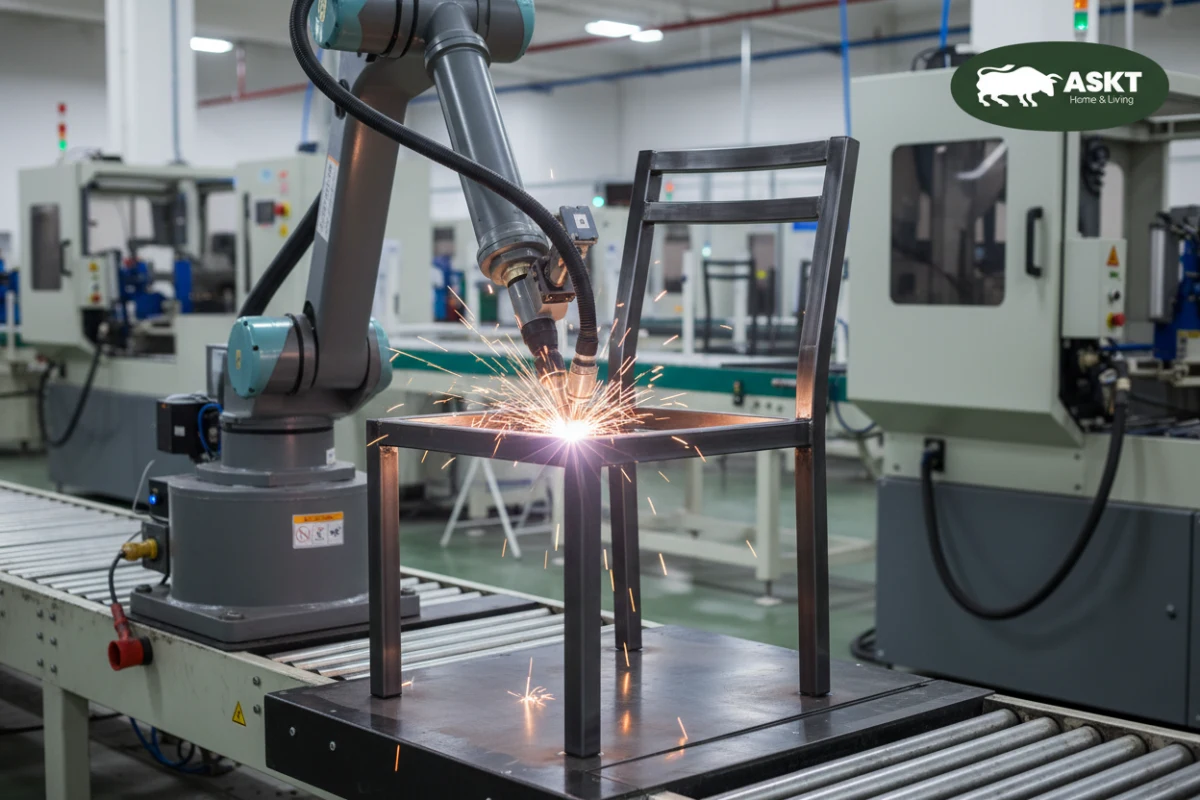
Product design decisions directly influence structural performance and testing compliance. In the contemporary European dining chair market, metal-frame structures are highly sought after for their modern design and robust support. However, the choice between fully welded frames and Knock-Down (KD) designs involves distinct engineering trade-offs.
Many B2B buyers prefer KD structures because they optimize packaging volume, allowing more units to fit into a shipping container. This helps lower international ocean freight costs per unit and reduces local warehousing overheads. However, KD chairs require careful engineering because they rely on mechanical joints, threaded inserts, bolts, and brackets rather than welded connections.
During continuous cyclic testing, the repetitive forces can cause poorly designed KD joints to loosen. If the metal tubes are too thin or the internal mounting plates are insufficient, the bolts may strip the threads over time, resulting in structural instability. To pass testing, KD models require precise alignment, reinforced internal brackets, and high-quality fastening hardware. Fully welded frames, on the other hand, provide excellent structural rigidity but require high-precision welding to prevent microscopic cracks or weak joints. Professional manufacturers balance these requirements through detailed frame development, rigorous powder coating, and precise component alignment to ensure long-term durability.
Why Chair Testing Matters: How BS EN 12520 Helps Reduce Returns and Warranty Claims?
Linking laboratory testing to retail performance highlights the commercial value of pre-shipment compliance. Sourcing products that meet the EN 12520 dining chair standard provides a proactive approach to quality management, allowing buyers to identify and address design issues before the production phase.
When a new seating range is introduced without standardized structural testing, the importer faces unpredictable return rates once the products are in use by consumers. Design or material weaknesses will eventually lead to structural failures, resulting in rising customer complaints and expensive warranty claims.
By requiring BS EN 12520 compliance as a standard sourcing parameter, importers and retailers can address structural weaknesses during the prototyping and sample development phases. If a sample fails initial stability or durability tests, the manufacturing team can quickly modify the leg angles, increase the wall thickness of the metal frames, or reinforce the seat base. This ensures that the final mass-produced products are structurally sound and consistent, helping importers reduce furniture warranty claims and maintain positive partnerships with retail networks.
How Do Upholstery Choices and Fabric Durability Support Overall Seating Compliance?
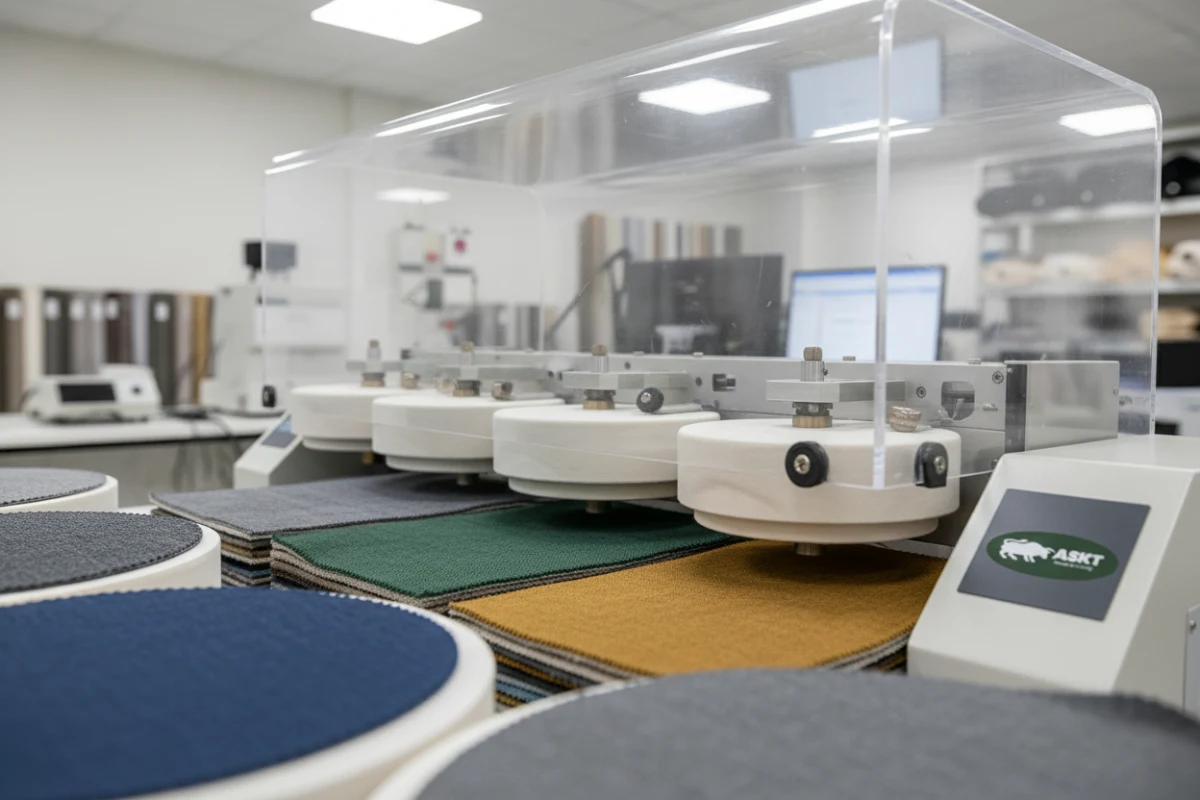
Although BS EN 12520 focuses primarily on structural safety, a dining chair's commercial lifespan is also heavily influenced by its upholstery and surface materials. For contemporary upholstered dining chairs, the choice of fabric and internal cushioning directly impacts the product's long-term performance and customer satisfaction.
European consumers expect upholstered furniture to retain its appearance, texture, and shape over years of daily use. This requires selecting cover materials with high fabric performance, including excellent abrasion resistance, color fastness to light and rubbing, and resistance to pilling. Using low-grade fabrics that wear out, pill, or fade quickly can lead to high return rates, even if the underlying metal frame remains perfectly intact.
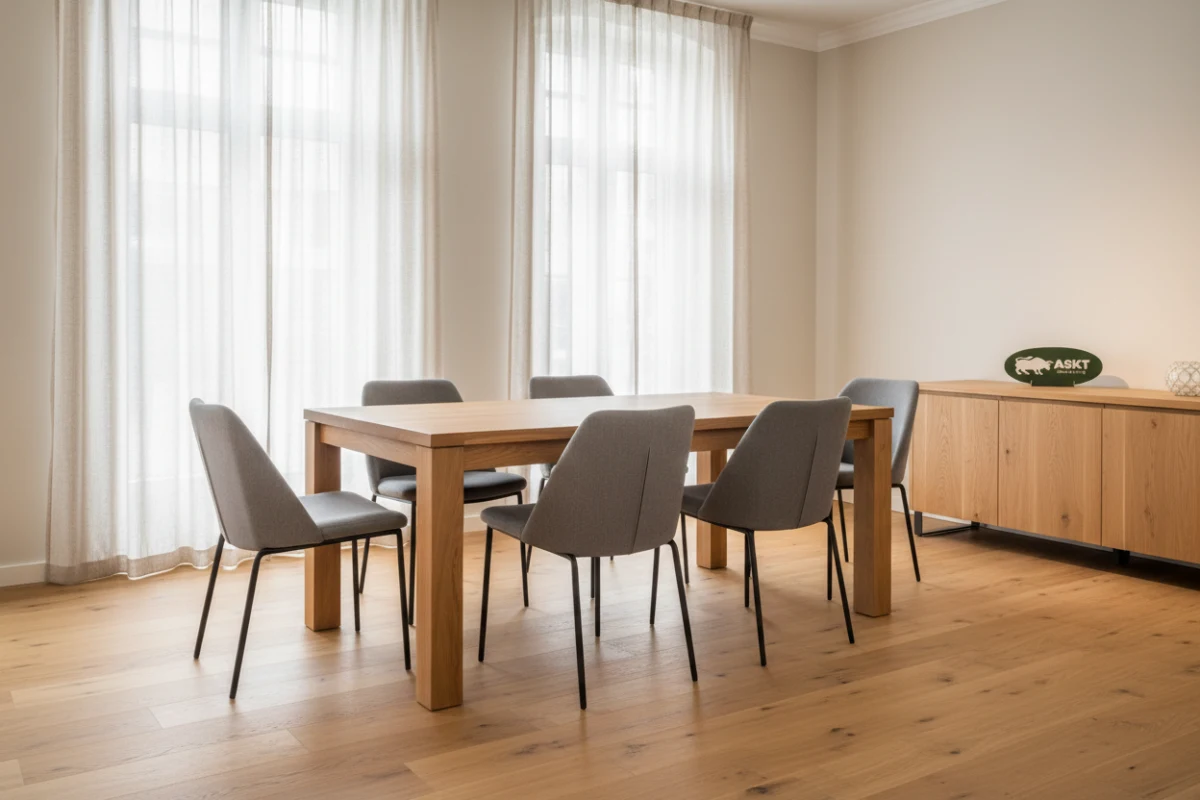
Additionally, contemporary buyers increasingly value practical features like waterproof, easy-clean, and pet-friendly materials. These performance fabrics protect the seating from spills, stains, and wear, ensuring the furniture remains attractive in busy dining environments. Underneath the fabric, features like pocket spring seating and high-density foam help the seat cushion retain its resilience and prevent sagging. This combination of structural strength and quality upholstery ensures a balanced product that meets the aesthetic and durability expectations of the European market.
How Can B2B Buyers Implement a Robust Pre-Shipment Quality Control Framework?
Establishing consistent quality across large production volumes requires a structured quality control and verification process. Importers, wholesalers, and sourcing specialists can follow a clear quality control framework to manage risks and ensure compliance:
- Require Verified Test Reports: Only source from manufacturing partners who provide official, accredited test reports showing compliance with BS EN 12520.
- Establish Clear Specifications: Define precise technical parameters, including metal frame thickness, welding quality, foam density, and fabric performance standards, prior to placing production orders.
- Perform Pre-Shipment Inspections: Use standard Acceptable Quality Limits (AQL) to verify product dimensions, assembly, finishing, and joint strength before products leave the factory.
- Optimize Packaging and Shipping: Design robust packaging that protects the furniture from moisture and impact during transport while maximizing container loading efficiency.
By collaborating with an experienced B2B manufacturer like ASKT, buyers can leverage deep manufacturing expertise, advanced production processes, and transparent quality control systems to ensure every shipment meets the required durability and performance standards.
If you are looking to secure your supply chain, protect your margins, and deliver high-quality contemporary seating to the European market, partner with ASKT for your next sourcing project to access compliant, durable manufacturing solutions tailored to your business needs.