Sourcing Guide to Zero Plastic Furniture Packaging for B2B Importers
For European furniture importers, sourcing high-quality contemporary indoor furniture involves far more than selecting appealing designs. The true bottleneck of any international sourcing program lies in logistics, specifically the structural resilience of the transit packaging. Over the past decades, traditional materials like expanded polystyrene (EPS) foam, plastic wraps, and plastic strapping have been the industry defaults to prevent damage during long ocean voyages from manufacturing hubs to European warehouses. However, as environmental awareness rises and regulatory penalties tighten across Europe, the transition toward zero plastic furniture packaging has shifted from a voluntary corporate social responsibility goal to a core operational mandate.
For wholesalers, retail chains, and e-commerce brands, a damaged upholstery fabric or a chipped sintered stone table corner is a financial setback; but a high plastic packaging tax or a customs compliance failure is an ongoing business risk. Implementing high-performance, non-plastic packaging requires deep engineering coordination between the buyer and the manufacturer. This comprehensive guide outlines the technical, logistical, and regulatory frameworks required to implement a successful transition to plastic-free transit systems.
The Compliance Mandate: Why Sustainable Furniture Packaging is Redefining European Import Risk
The regulatory landscape in Europe is moving aggressively against single-use plastics. Purchasing managers and product developers must evaluate the financial liabilities of their packaging materials alongside the product cost. Extended Producer Responsibility (EPR) schemes across the European Union and European packaging regulations now levy significant financial penalties on importers who bring plastic-heavy packaging into the European market.
Under these strict national packaging acts, central packaging registries enforce reporting and licensing fees. These fees are significantly higher for composite plastics and expanded polystyrene than for highly recyclable paper and cardboard. In key European markets such as Germany, the Netherlands, the UK, Poland, Ireland, and Switzerland, waste management contributions are directly tied to the recyclability of the packaging. Traditional styrofoam blocks can multiply the end-of-life disposal fees for retail partners, creating a barrier to long-term commercial cooperation.
By establishing a robust eco friendly furniture supply chain, European importers can insulate their businesses from these escalating taxes. Standardizing on sustainable furniture packaging is no longer just a marketing strategy for green consumer brands; it is a critical cost-control mechanism for high-volume wholesalers, retail chains, and contract buyers. When a European buyer procures thousands of dining chairs, dining tables, or office desks annually, a reduction in plastic tax liabilities directly improves the net margin of the entire product collection.
Overcoming the EPS Dilemma: Designing Zero Plastic Furniture Packaging That Actually Protects
Historically, expanded polystyrene (EPS) was the preferred material for protective packaging because of its shock-absorbency and low weight. For heavy furniture, such as sintered stone dining tables, oak veneer extension tables, and metal-frame dining benches, EPS acted as a buffer against drops and side-impacts. However, EPS is highly fragile, turning into non-biodegradable debris during unboxing, which degrades the premium end-consumer brand experience. More importantly, it is highly bulky, occupying immense warehouse space and complicating the waste-disposal workflows of retailers and contract furniture clients.
To achieve plastic free furniture transit without experiencing a sudden spike in transit damage rates, manufacturers must replace EPS with engineered paper-based structures. The technical challenge is to match the deceleration and absorption performance of foam. When a heavy box is dropped, the packaging must absorb the kinetic energy by deforming progressively, preventing the shock from reaching the critical structural points of the furniture.
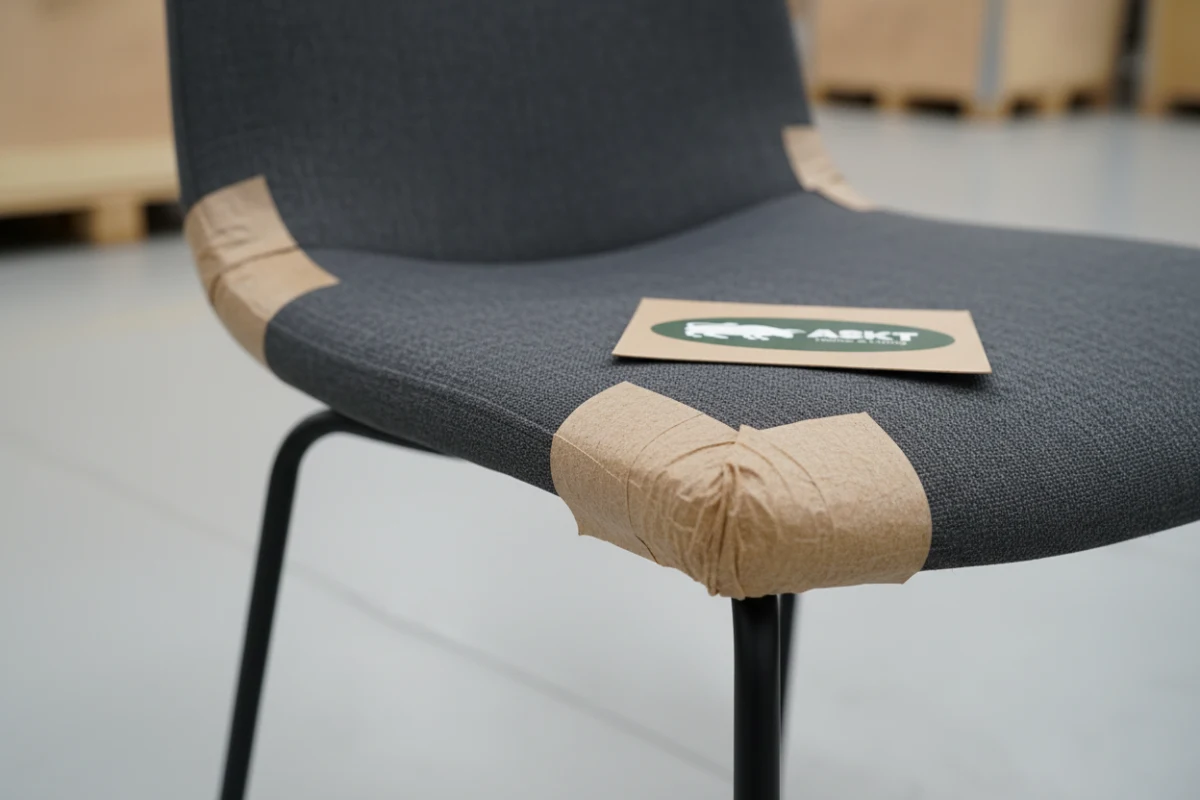
Paper-based alternatives must be designed with varying densities. While lightweight paper wrappers are sufficient for surface protection against dust and minor scuffs on upholstered chairs, heavy structural components require high-density corrugated cardboard or specialized molded pulp. For contemporary indoor furniture that features complex structural joints, powder-coated metal frames, or integrated swivel mechanisms, the packaging must be designed with three main objectives:
- Immobilization: Preventing the components from shifting against each other inside the carton box, which causes paint abrasion and surface wear.
- Corner Reinforcement: Ensuring the corners of the box can withstand vertical compression when stacked multiple layers high in a B2B warehouse.
- Deceleration Buffering: Creating a controlled crushing zone that absorbs the impact energy of a fall before it affects delicate sintered stone or oak veneer tops.
Structural Engineering: How Honeycomb Paper Furniture Protection Replaces EPS
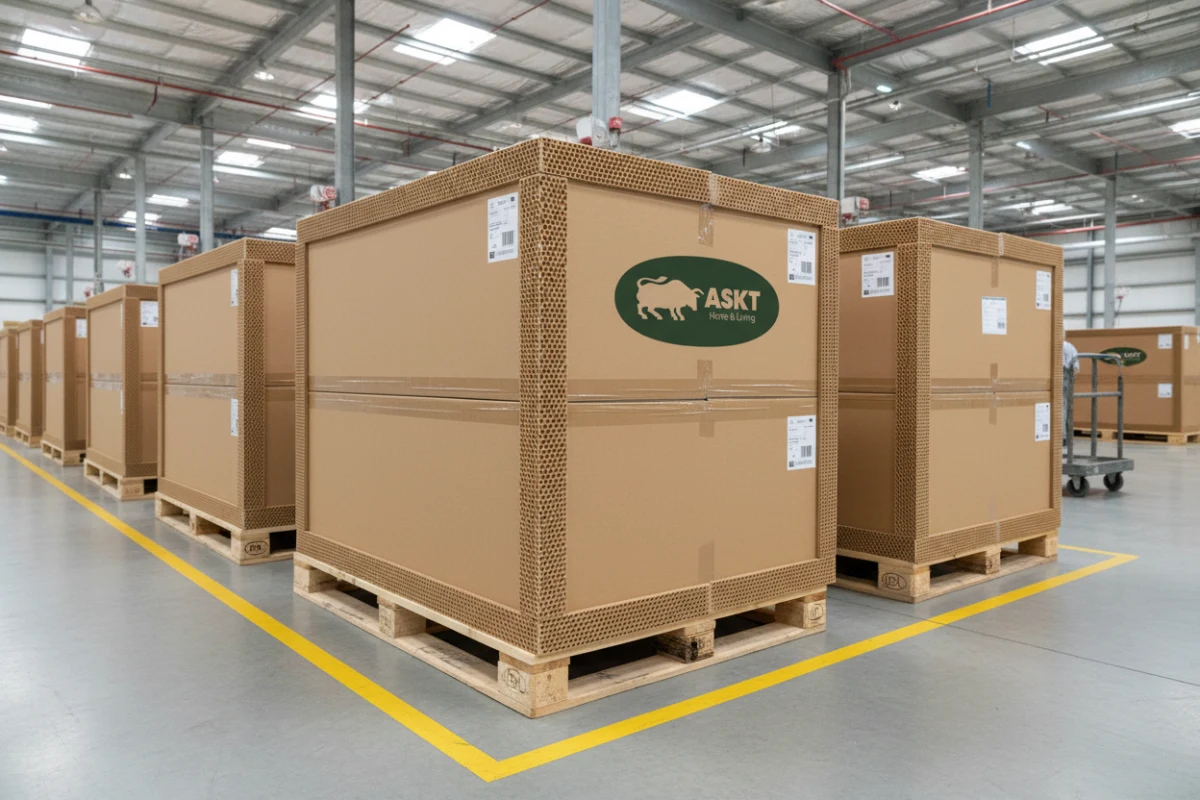
The most effective replacement for heavy EPS structural blocks is engineered honeycomb cardboard. Utilizing a hexagonal inner cell geometry, honeycomb paper provides an exceptional strength-to-weight ratio. The vertical compression resistance of honeycomb panels makes them ideal for securing heavy loads, such as knock-down (KD) dining tables and stacked upholstered dining chairs.
When deploying honeycomb paper furniture protection, packaging engineers specify the cell size and the paper weight of the face sheets and the core. A smaller cell size with a heavier core results in a highly rigid panel capable of supporting high static loads. This is essential for protecting heavy dining tables, which are highly resistant to scratching but vulnerable to point-source forces during transit.
| Packaging Material | Compressive Strength | Recyclability | Disposal Cost (Europe) | Best Applied For |
|---|---|---|---|---|
| Expanded Polystyrene (EPS) | Low to Medium | Low | High | Lightweight items, low-cost furniture |
| Honeycomb Paper | High | 100% Recyclable | Low | Edge protection, heavy dining table tops, structural void-fills |
| Molded Pulp | Medium | 100% Recyclable | Low | Corner caps, complex leg joints, hardware packs |
| Corrugated Board | High (Edge Crush) | 100% Recyclable | Low | Box edge reinforcement, frame alignment |
By integrating honeycomb paper sheets as a structural buffer, manufacturers can build a rigid three-dimensional frame inside the outer carton. This paper-based frame absorbs lateral forces, ensuring that even if the outer carton is compressed in a sea container, the upholstered fabrics, delicate dining chairs, or powder-coated steel legs remain untouched. Furthermore, because honeycomb panels can be precisely cut to match the profile of the furniture, they eliminate the need for plastic bubble wraps and polyethylene foam bags. This level of precise engineering is a cornerstone of professional B2B zero plastic furniture packaging designs.
Validating Performance: The Role of Transit Testing in Sustainable Packaging
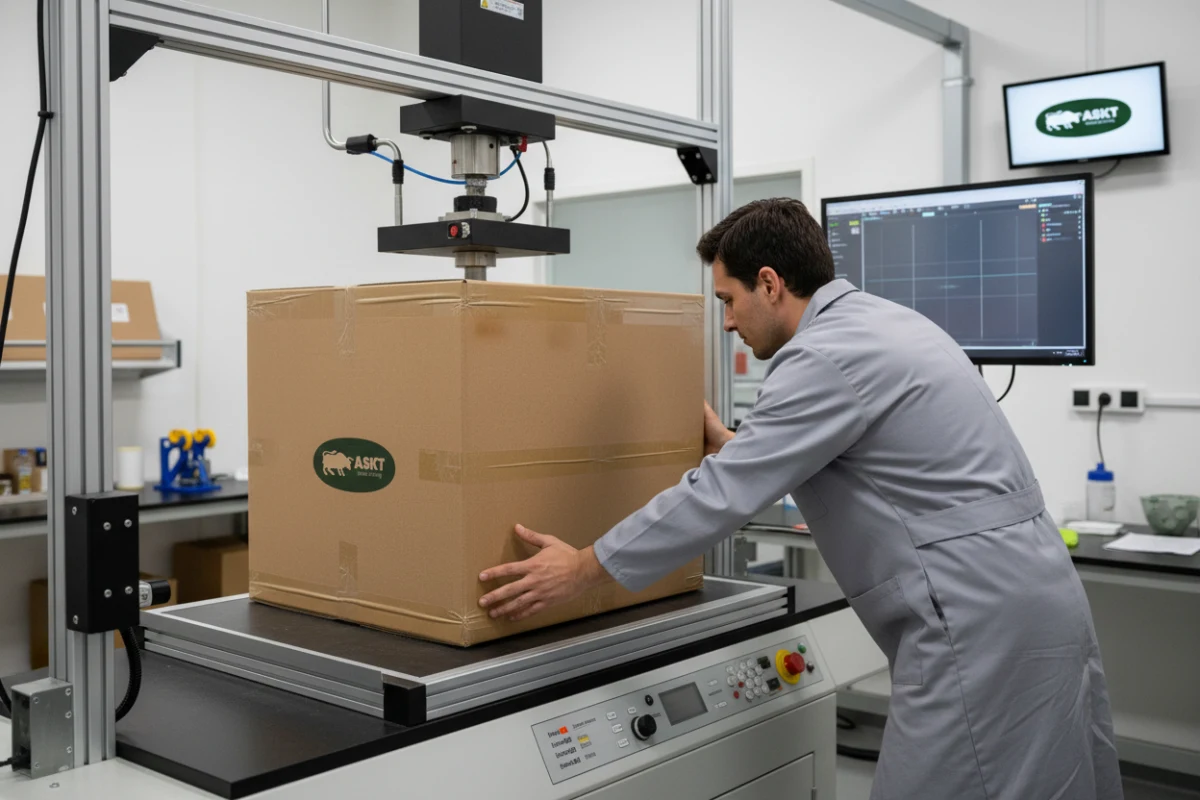
No European importer should transition to a new packaging system without rigorous empirical validation. Relying on paper-based materials requires scientific verification to ensure that damage rates do not compromise commercial viability. The industry standard for validating B2B packaging resilience is systematic transit testing.
For B2B furniture transit, packages undergo testing protocols that simulate the harsh reality of global supply chains:
- Vibration Testing: Simulating the continuous vibration of container transport and truck freight, which can cause metal frames to rub against cardboard, leading to powder-coating wear.
- Drop Testing (ISTA Drop Testing): Subjecting the carton to a series of free-fall drops from specified heights onto concrete surfaces. The drops target the most vulnerable points: the most fragile corner, the edges radiating from that corner, and the flat faces of the carton box.
- Compression Testing: Measuring the package's ability to resist the vertical pressure of stacked inventory in high-density warehousing environments.
At ASKT, our dedication to quality control is guided by our systematic testing methodologies. Before any new dining chair model, extension table, or sintered stone collection is approved for export, the packaging design undergoes extensive drop testing.
By utilizing advanced production machinery, we achieve extreme dimensional consistency in our furniture. This structural uniformity allows us to design highly tight-fitting, custom-engineered paper packaging that leaves no room for product movement. The result is a validated, reliable zero plastic furniture packaging system that matches or exceeds the performance of traditional plastic foam packs, dramatically reducing the risk of commercial disputes for our wholesale and retail partners.
Container Optimization and the Logistics of Flat-Packed (KD) Furniture
A common concern among European sourcing managers is that replacing thin plastic foams with structural paper packaging will increase the overall volume of the package, thereby reducing container loading density and increasing ocean freight costs. In B2B importing, shipping empty space is a major source of financial waste. To maintain a competitive advantage, sustainable packaging must coexist with optimal spatial efficiency.
To balance these requirements, manufacturers must focus on Knock-Down (KD) structural design. By designing metal frames, dining chair legs, and table bases to be easily disassembled and flat-packed, the total volume of the package is minimized. A flat-packed upholstered dining chair or a modular coffee table requires significantly less volume, allowing packaging engineers to use thick, highly protective honeycomb paper edge protectors without exceeding the original volumetric footprint of a fully assembled, plastic-wrapped product.
Furthermore, product standardization supports logistical efficiency. By utilizing standardized, interchangeable components and metal bases, we help European buyers consolidate container loads and lower their Minimum Order Quantities (MOQs), while standardizing the outer carton dimensions. This standardization allows for precise planning of container loading configurations.
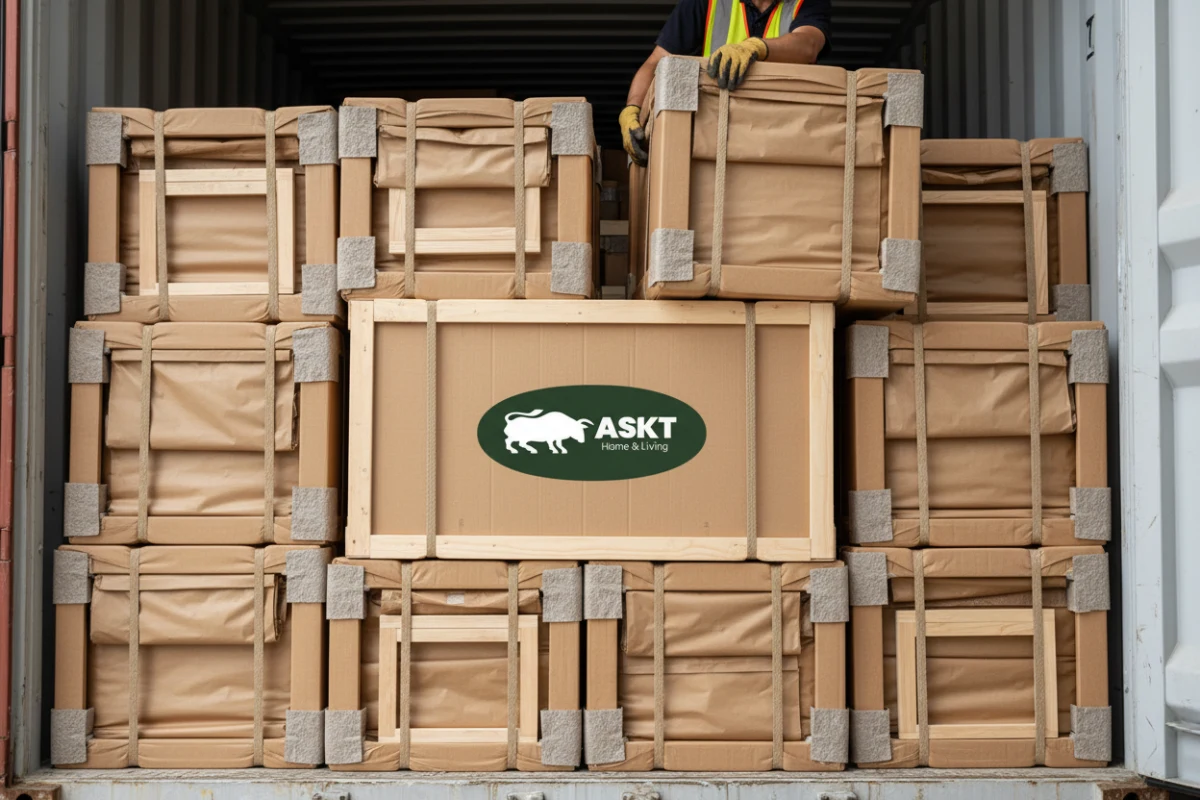
When outer dimensions are perfectly uniform, cartons stack together like blocks, eliminating empty spaces in the shipping container and preventing shifting during transit. This precise alignment distributes the stacking load evenly across the high-density corrugated corner protectors of the boxes, ensuring that the bottom-most cartons do not collapse under the weight of the stack during a long voyage to major European ports.
Sourcing Checklist: Auditing Manufacturers for Plastic-Free Packaging Capabilities
When auditing potential Chinese furniture manufacturers, European purchasing managers must look beyond the showroom. The factory's packaging engineering capability, material sourcing transparency, and social compliance standards are critical indicators of their suitability as a long-term supply chain partner.
Use this practical framework during your supplier evaluation process to ensure they can deliver reliable zero plastic furniture packaging solutions:
- Verify Factory Social Compliance: Ensure the factory is fully compliant with international social standards. A factory that respects human rights, provides safe working environments, and equips its teams with proper safety gear is much more likely to maintain the disciplined quality control workflows required for consistent packaging assembly.
- Assess Technical Packaging Design: Does the manufacturer have a dedicated packaging design team? Ask if they utilize professional software to design custom-fit cardboard inserts and honeycomb protectors, or if they rely on generic, manual wrapping methods.
- Examine Material Certification: Ensure that all paper-based packaging materials are sourced from certified sustainable forestry channels. Additionally, verify that any adhesives used to laminate the honeycomb panels are environmentally friendly and safe, matching the safety standards of the quality fabrics used on the furniture itself.
- Review Physical Testing Protocols: Request detailed drop test reports. A professional B2B partner should have testing equipment or be willing to obtain third-party certification to prove that their zero plastic furniture packaging designs can survive transport hazards without product failure.
Partnering for Long-Term Value in the Eco Friendly Furniture Supply Chain
Transitioning to green transit packaging is not a change that can be made overnight by simply swapping plastic wrap for paper. It requires a collaborative partnership between the importer and a manufacturer that understands the nuances of the European market. For wholesalers, retail chains, and contract buyers in Germany, the Netherlands, and across Europe, aligning with a partner who possesses over 20 years of export experience is the most reliable way to mitigate sourcing risks.
By combining deep structural expertise, advanced automated manufacturing assets, and a transparent approach to quality control, we help our clients build highly resilient, commercially successful collections. Our validated, plastic-free transit systems ensure that your products arrive in pristine condition, ready for the showroom floor or direct-to-consumer delivery, while completely eliminating your exposure to escalating plastic packaging taxes.
If you are ready to evaluate your current import collections, eliminate styrofoam liabilities, and optimize your logistics footprint, our engineering team is here to assist you in designing a customized, high-performance packaging solution that meets the highest European standards. Request Sustainable Packaging Plan